Tag Archives: Wooston Southampton

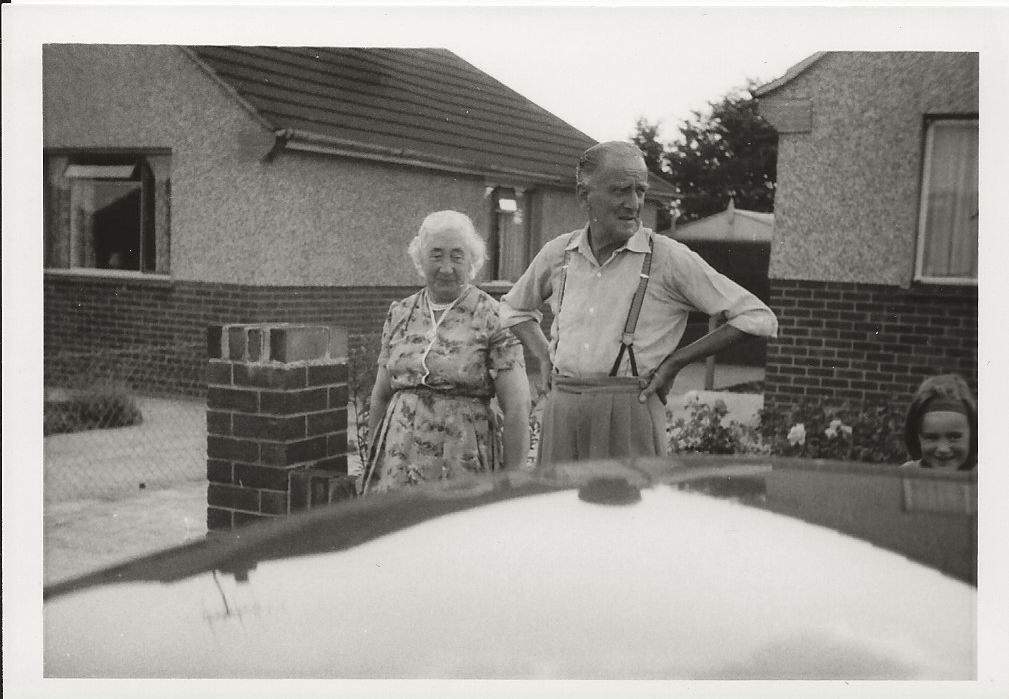
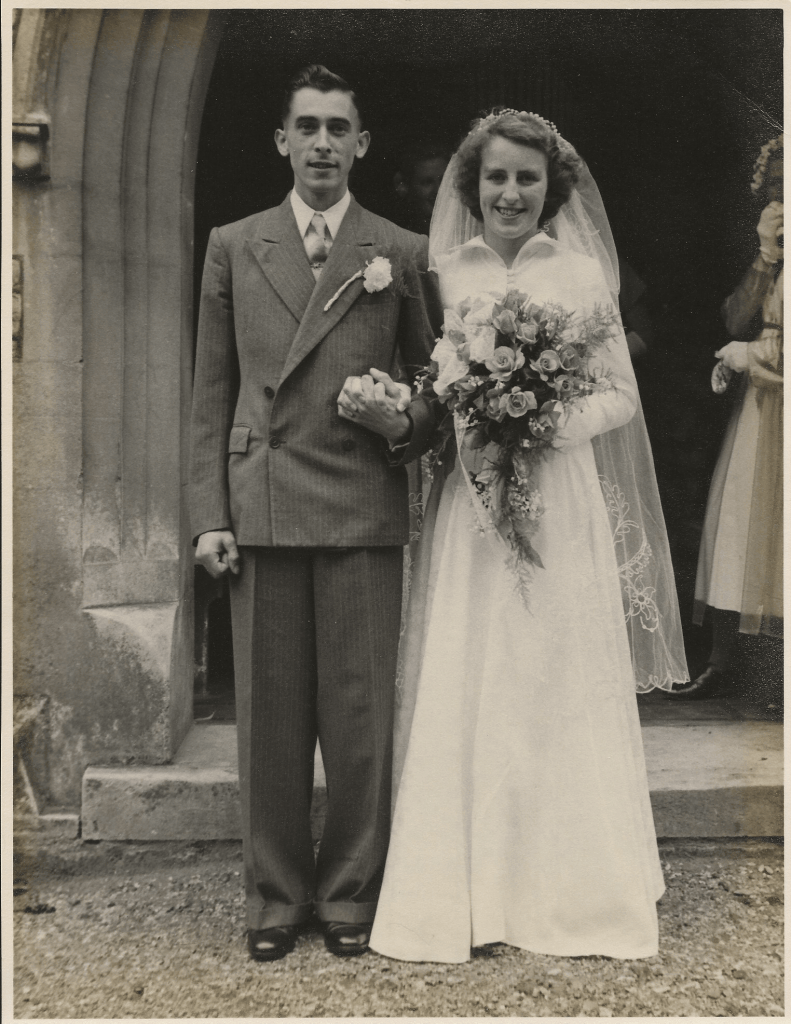
Arthur John William Jackson (b:1927) and Patricia Jackson (b:1932 ne Green)

Married 29th August 1953

Isn’t it heart warming looking at photos of parents when they were young or when they were married!

Following on with my series of blog posts on my family history and how it has influenced my writing, we have reached Mum and Dad.

They were both brought up in the Southampton area and were married at Weston Road Church, Woolston. As a family we made regular visits to see Grandma Green there while growing up, and so the whole area was extremely familiar to me. Being a family of walkers, you get to know a place far better that way. Thus, it wasn’t difficult to make it the main setting for my second novel Ancasta ~ Guide me Swiftly Home.

Over the years my parents have shared many memories of their childhood and adolescent days and I’m sure all of this has coloured my writing too.

Arthur Jackson (my dad) didn’t work at Supermarine, like his father (Arthur Walter Jackson) and sister. He joined the RAF right at the end of WW2, but he did remember seeing the prototype Spitfire fly overhead, before he was evacuated to Bournemouth.

Mum and Dad also shared my Great Grandmother Harriet’s love of dancing and, legend has it, that she could turn on a sixpence.
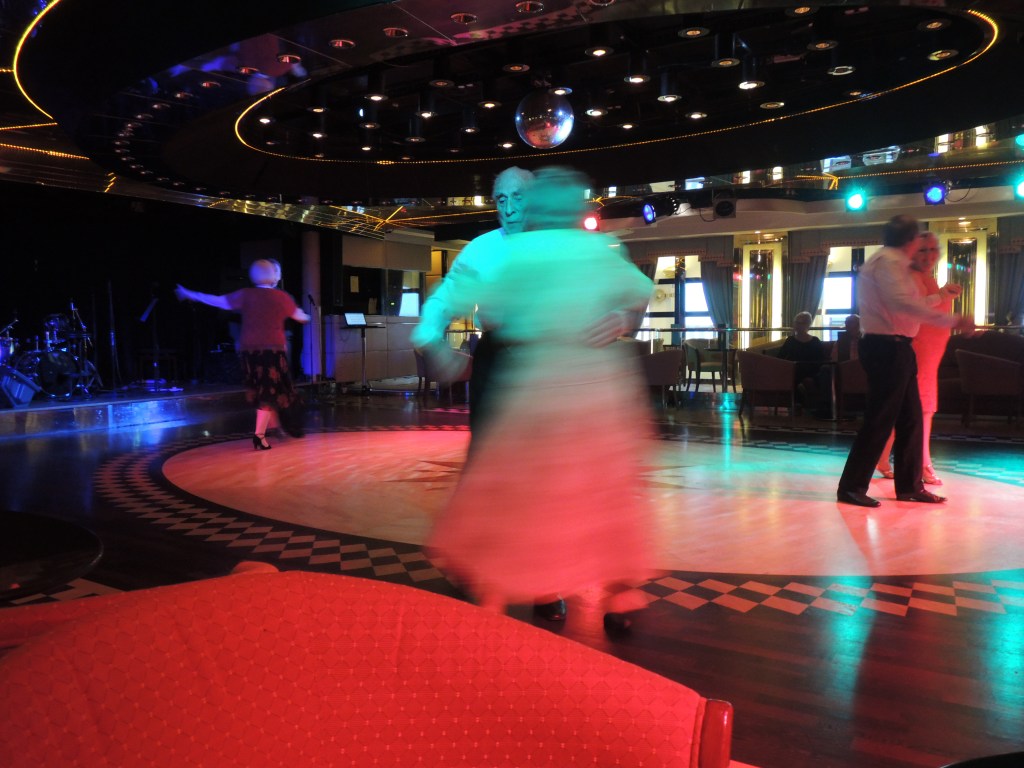
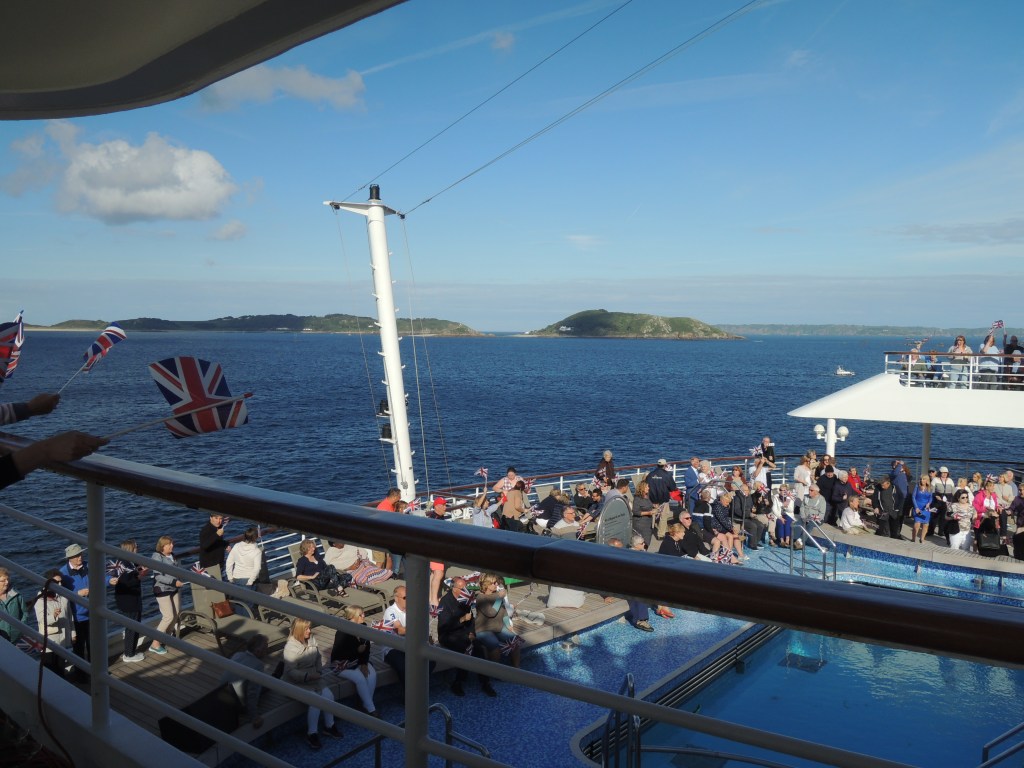
On this trip here, we shared my parents’ last voyage on their favourite P&O ship the Oriana, chosen because it had a good dance floor; our last port of call was (fittingly) Guernsey.

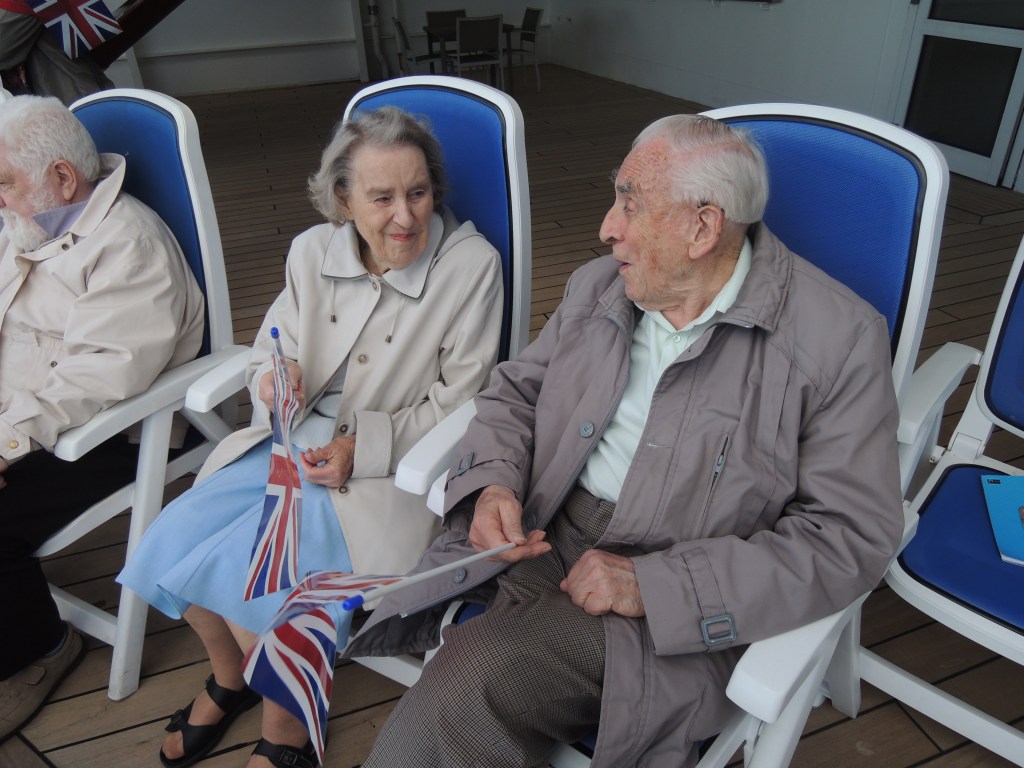
Here are Mum and Dad on deck waving their flags, just as we passed Sark and Herm, two of the smaller Channel Islands.
…and so The Channel Islands, particularly Guernsey and Alderney are in my blood and my family heritage and childhood memories are also of holidays in Wooston, Southampton.

As it happens, when I began writing the first draft of Riduna, my parents decided that they would have a go at writing too. There’s was a sort of prequel to Riduna, set at the time of Elizabeth Quesnel and John Taylor.

I started working on their little book with Dad when they were both showing signs of dementia. He had been frustrated that he couldn’t write conversation. In the end he did not have the patience anymore to focus on it and so, since they passed away, I have spent some time working on their story. It is now at proof readers, but then I hope to work with someone from Alderney Museum to check it for historical authenticity. I won’t say accuracy because, although inspired by our family history, it remains fiction. I’ll keep you posted.
1 Comment

Filed under Ancasta, Channel Islands, Family History, Inspiration, Southampton, Supermarine, Woolston

Arthur Walter Jackson and Daisy Clara Colmer 1897-1981

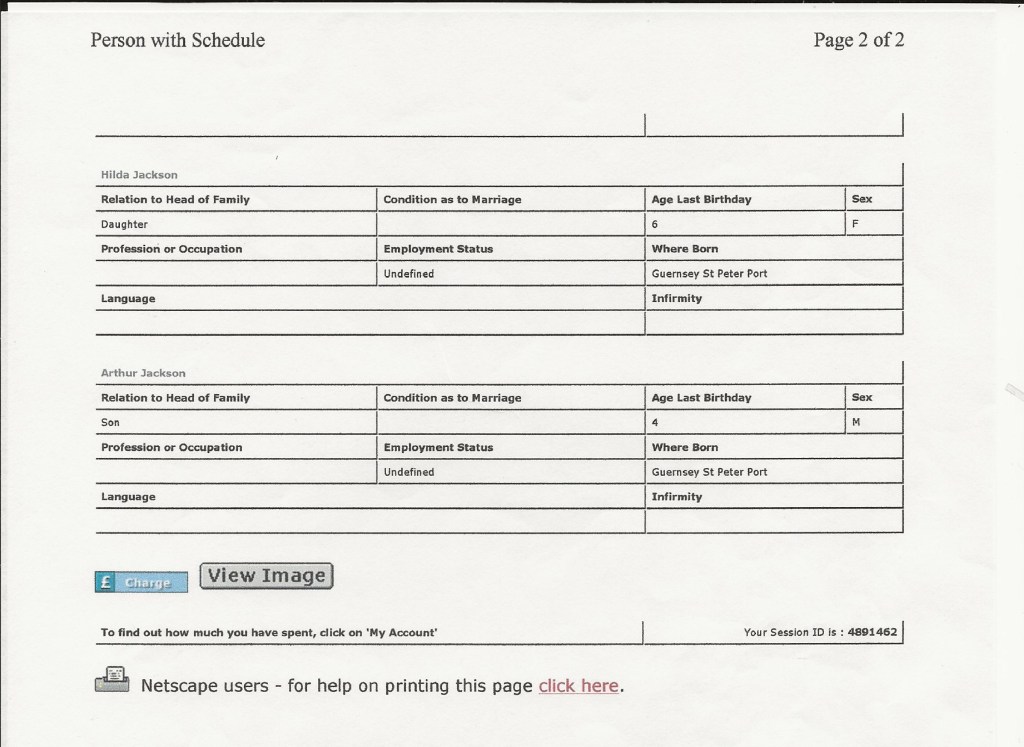
My grandpa Arthur Jackson was born on 30th November 1896 on the island of Guernsey.

Here he is on the 1901 Guernsey census at the age of four, just before the family moved to Wooston Southampton.

The reason for the move was that work had literally dried up for his father, who was a painter of gold leaf at the various military establishments on Guernsey, because by this time the buildings were complete.

Arthur Walter married Daisy Colmer in Woolston 1925.

I remember Grandpa singing ‘Daisy Daisy’ many times when I was growing up.

Here’s Nat King Cole’s version. What memories it evokes hearing in sung once more!

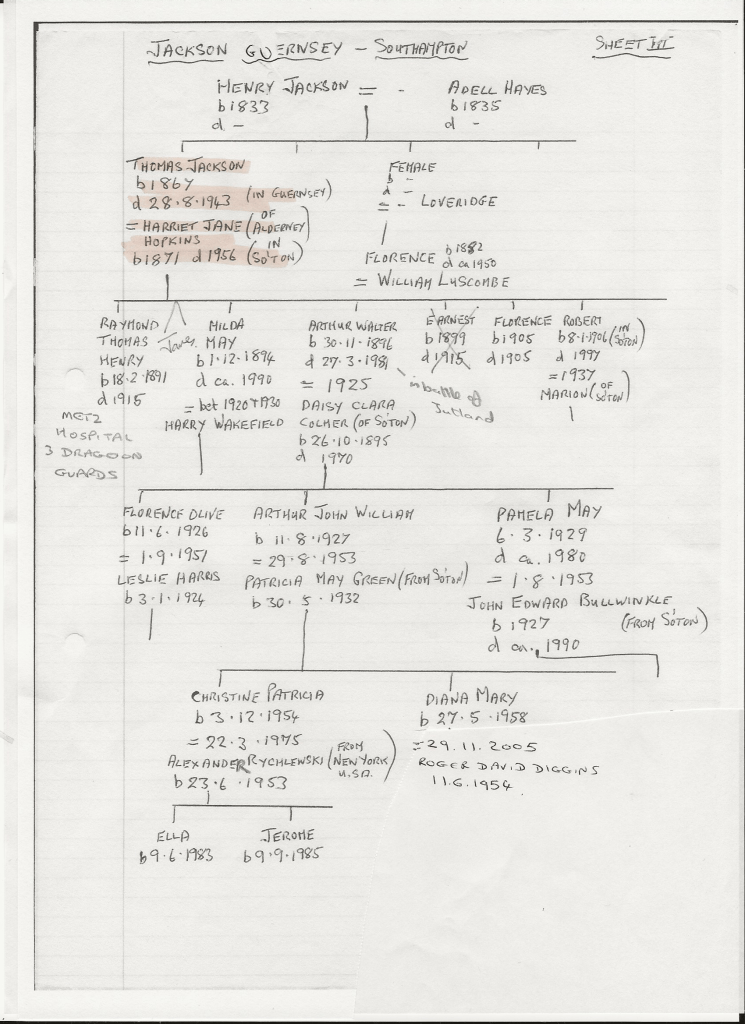
Below is the family tree Dad drew up, with Grandpa and Grandma Jackson at its heart.

Grandpa was in the Navy during WW1 and visited Port Said once, where his brother was in hospital and subsequently died. He was later in the Battle of Jutland.

He worked at Supermarine in Southampton after WW1 in the drawing office/ library, where he looked after all of the drawings and worked alongside RJ Mitchel.

A family story goes that Grandpa was walking home for lunch during WW2 and his friend pushed him to the ground just as Supermarine was bombed. If he hadn’t been saved, then I wouldn’t be here now.

Another story was the everything was recycled and reused in those days. The drawings of prototypes of aeroplanes (eg the Spitfire) were drawn on starched linen. Grandpa used to rescue those thrown in the bin, take them home and Grandma J washed them. I’m told that our mum then used them for my sister Christine as nappies!

This is how I remember Grandma and Grandpa Jackson, living at Whilestone Way, Swindon, where they settled after the war with the move of Supermarine after it was bombed.

It is the story of the birth of Supermarine that I tell in my second novel, Ancasta, Guide me Swiftly Home, the sequel to Riduna.

3 Comments

Filed under Author Diana Jackson, Early Flight, Family History, Southampton, Supermarine, Woolston

Why Ancasta? ~ The Ancasta Stone

Ancasta ~ Guide me Swiftly Home

An unusual title, but as soon as I heard the name Ancasta, I thought she would be  a perfect follow on from my first novel ‘Riduna,‘ allegedly the Roman name for my favourite island of Alderney.

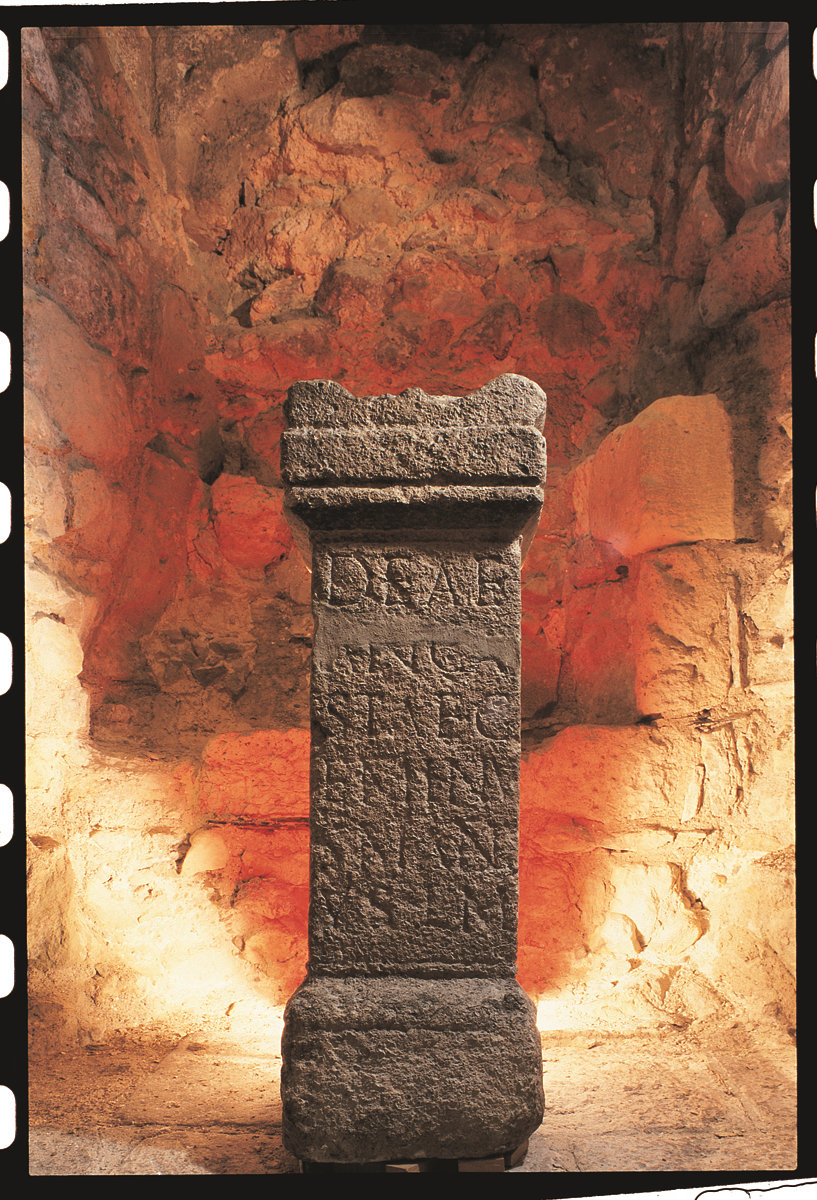
Ancasta is mentioned on an altar inscription from Clavsentvm, a Roman settlement, (possibly the first in the UK) found at Bitterne in Hampshire. It reads: (and I quote Mike Hart’s website here):

“DEAE ANCASTAE GEMINVS MANI VSLM (To the goddess Ancasta, Geminus Mani[lius] willingly and deservedly fulfils his vow), which represents the only known dedication to this goddess.”

In Southampton Sea City Museum

Mike goes on to explain the speculation regarding Ancasta, and it was this speculation which inspired me to name my second novel after her:

“Ancasta is known because of the inscription above and as such was probably a local deity. However, by comparison with the re-construction of proto-Celtic the goddess’ name can be broken down into the components *an-kast-a- (very swift one). It may be that she was a river goddess, asssociated with the nearby River Itchen (which would certainly fit with the interpretation of her name though this is merely speculative).”

It was with excitement that I visited Southampton’s Sea City Museum for the first time this summer. It was not open while I was researching for the novel and here is a photo of the alter stone in its display case, in the ‘Gateway to Southampton Gallery.’

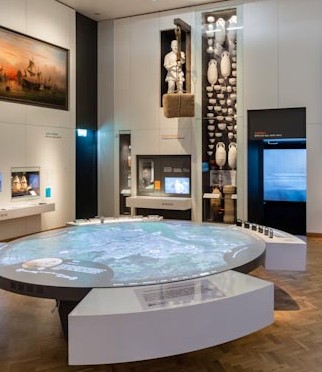
The Gateway Gallery is a fascinating reflection of all the many peoples who have arrived in the port of Southampton over the centuries. With the influx of each new arrivals, whether as an aggressive invader or to avoid deprivation or poverty, or just in search of a new and more fulfilling life, Southampton has changed and adapted.

To Harriet and Joe in my first novel ‘Riduna,’ Southampton represented a promise of work and a new life for their family. It would be a marked contrast to their lives in the Channel Islands on Guernsey (Sarnia) and on Alderney (Riduna) but they would have to adapt to survive, and adapt they did!

This gallery is only a small but interesting part of the whole museum, whose main focus is to tell the story of the Titanic, in a colourful, interactive manner, stimulating all of the senses. I even stood at the Titanic’s helm and attempted to steer her through the narrow permissible shipping lane. This was not only an enjoyable challenge but brought to my mind the realism on the first chapter of ‘Ancasta,’ when Edward, the captain of the LSWR Princess Ena steers his ship  along this course.

This exhibition is excellent, not only to explore the controversial sinking of this infamous ship, but also in giving a greater awareness of the impact of the port on the life of Southampton, from dealing with copious laundry, the infrastructure needed to ensure fresh provisions were available and the connecting services and transport facilities were at hand. Of course, this is as true today as it was back in 1912 when the Titanic left Southampton.

Ancasta ~ Guide me Swiftly Home‘ tells a story of an ordinary family living at that time in Woolston, Southampton. Harriet, in setting up her guest house on the banks of the River Itchen, becomes part of that infrastructure, and as her sons begin to work at Supermarine, it is to the skies they look up to, as much as across the river and along Southampton Water. Many a time they prayed for the swift and safe return of both family and friends and Ancasta tells the story of those who left and those who remained at home waiting for news.

I would like to thank the Arts and Heritage Office from Southampton City Council for kindly allowing me to use the photos. (Please note that taking photographs is not permissible in the museum)

5 Comments

Filed under Ancasta, Riduna, Southampton, Supermarine, Woolston