

Tag Archives: Supermarine

Ancasta, Guide me Swiftly Home ~ FREE ON KINDLE

Eventispress has made my second novel:

ANCASTA GUIDE ME SWIFTLY HOME

FREE ON KINDLE

FROM 12TH TO 16TH NOVEMBER

The novel is a family saga set in Woolston, Southampton between 1910 and 1920, taking each member of the family through The Great War.

For more information:

CELEBRATING AUTHOR DIANA JACKSON’S WORK WITH A GIVEAWAY

THINKING OF ARMISTICE DAY ~ 11th hour, 11th day, 11th month.

Leave a comment

Filed under Author Diana Jackson, Flying Boats and Sea Planes, Historical Fiction, Southampton, Supermarine, The Great War

Arthur Walter Jackson and Daisy Clara Colmer 1897-1981
My grandpa Arthur Jackson was born on 30th November 1896 on the island of Guernsey.

Here he is on the 1901 Guernsey census at the age of four, just before the family moved to Wooston Southampton.

The reason for the move was that work had literally dried up for his father, who was a painter of gold leaf at the various military establishments on Guernsey, because by this time the buildings were complete.

Arthur Walter married Daisy Colmer in Woolston 1925.

I remember Grandpa singing ‘Daisy Daisy’ many times when I was growing up.

Here’s Nat King Cole’s version. What memories it evokes hearing in sung once more!

Below is the family tree Dad drew up, with Grandpa and Grandma Jackson at its heart.

Grandpa was in the Navy during WW1 and visited Port Said once, where his brother was in hospital and subsequently died. He was later in the Battle of Jutland.

He worked at Supermarine in Southampton after WW1 in the drawing office/ library, where he looked after all of the drawings and worked alongside RJ Mitchel.

A family story goes that Grandpa was walking home for lunch during WW2 and his friend pushed him to the ground just as Supermarine was bombed. If he hadn’t been saved, then I wouldn’t be here now.

Another story was the everything was recycled and reused in those days. The drawings of prototypes of aeroplanes (eg the Spitfire) were drawn on starched linen. Grandpa used to rescue those thrown in the bin, take them home and Grandma J washed them. I’m told that our mum then used them for my sister Christine as nappies!

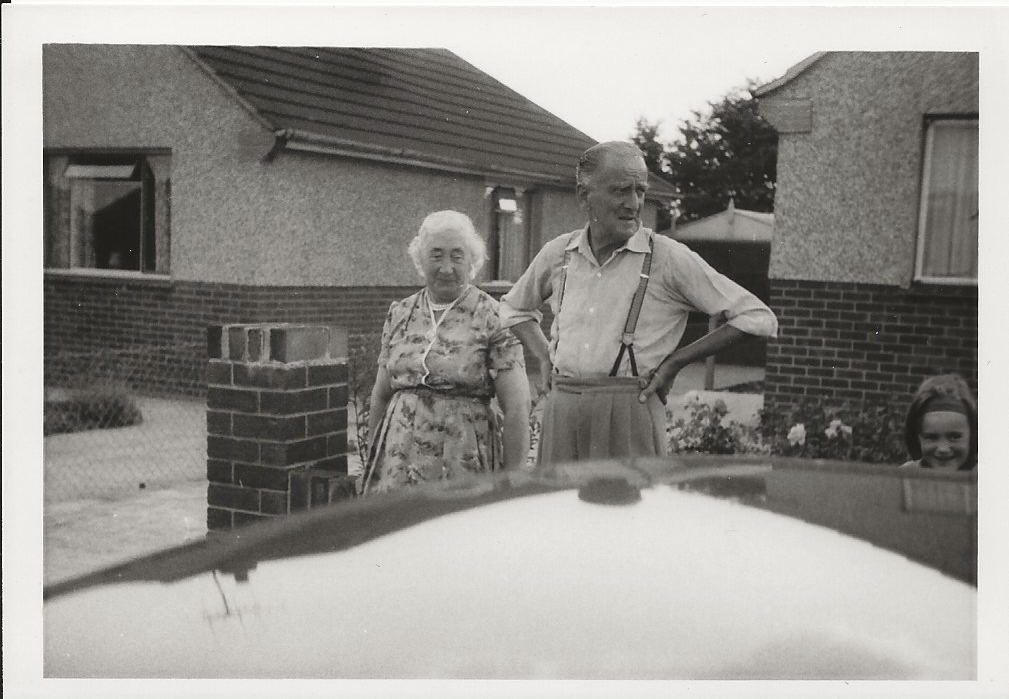
This is how I remember Grandma and Grandpa Jackson, living at Whilestone Way, Swindon, where they settled after the war with the move of Supermarine after it was bombed.

It is the story of the birth of Supermarine that I tell in my second novel, Ancasta, Guide me Swiftly Home, the sequel to Riduna.

3 Comments

Filed under Author Diana Jackson, Early Flight, Family History, Southampton, Supermarine, Woolston

Diana Jackson’s World War One @Home Series ~ Industry of Woolston in WW1

In recognition of the BBC World War One at Home Series and in parallel to it, I aim to write posts of significant places and themes related to my writing and their impact on local people. These will include:

Industry of Woolston Southampton in WW1

Flying Boat Stations of the UK in WW1

The Hampshire Regiment

The Channel Islands and WW1

INDUSTRY OF WOOLSTON, SOUTHAMPTON DURING WORLD WAR ONE

There were two main employers in Woolston during both world wars, Thornycroft and Company, later to become Thosper Thornycroft and also Supermarine.

The Thornycroft shipbuilders occupied a large site on the banks of the River Itchen for 100 years from 1904 to 2004, when Thosper Thornycroft relocated to Portsmouth. This left a gaping hole in the heart of the area both in terms of employment but also in the scar on the landscape, which has only recently been reclaimed and redeveloped.

The first ship to be built and launched from the Woolston site was HMS Tartar in 1907 which served in the English Channel and the North Sea during World War One. For one hundred years generations of Southampton families worked there, called by the siren to herald the start of the day. I still remember hearing this during my visits to grandparents as a child.

I cannot better the tribute written by Keith Hamilton on February 2009 to Vosper Thornycroft telling of the importance of company for the well being and lives of Southampton’s and especially Woolston’s people, stressing the pride in their work to  serve the nation:

The End of an Era for Thornycroft by Keith Hamilton

The second major industry in Woolston since before World War One was Supermarine, of which I have written numerous posts, since it features in my novel

‘Ancasta ~ Guide me Swiftly Home.’

Just a little up the River Itchen, the other side of The Floating Bridge on Hazel Road, White’s boat builders was taken over by Pemberton Billing and began to develop flying boats in 1913. Although registered with the telegraphic name of Supermarine from its conception, Supermarine was the official name of the company in 1916, during the war.

Initially the skills of the boat builders would have been put to good use as the company diversified into developing flying boats, until the latter became their major focus. These must have been exciting times for local people in the early days of flight, not only to be involved in working at Supermarine but for families and friends to witness the unusual craft being launched on to the River Itchen and taking off and landing on Southampton Water. Like Vosper Thornycroft, Supermarine was a business of families, where many generations worked there, including the women during both WW1 and WW2. Both companies contributed to the prosperity of the local area of Woolston and its businesses and would have provided reserved occupations for workers in their contribution to the war effort.

Although better known later for The Schneider Trophy wins in the 1920’s and 1930’s and then the development of the Spitfire in the mid 1930’s I believe the seed for success was sown during World War One when a young, nineteen year old designer, RJ Mitchell joined the firm. My opinion is that it was Mitchell’s vision which turned the company into an international success story of which Southampton is understandably very proud.

Leave a comment

Filed under Ancasta, Early Flight, Flying Boats and Sea Planes, Southampton, Supermarine, The Great War, Woolston, WW1