Category Archives: Supermarine

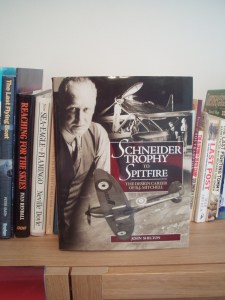
‘Schneider Trophy to Spitfire’ by John Shelton

Schneider Trophy to Spitfire by John Shelton

I bought a copy of John Shelton’s comprehensive reference book ‘Schneider Trophy to Spitfire‘ when visiting the RAF Museum in Hendon. With its chronological factual information, enhanced by original photographs, diagrams, adverts and anecdotes, it a an extremely readable history of early flying boats leading to the development of the Spitfire. Looking at the double page photo of Flt Lt B.D Hobbs in his Supermarine Sea Lion in the sea at Bournemouth is so clear, although black and white, that it looks as if it could have been taken yesterday and not in 1919.

My specific interest in reading background for my novel Ancasta Guide me Swiftly Home was only up until 1920, but with my family connections with Supermarine Woolston, with both my uncle and grandfather working there at the start of WW2, I was compelled to read it to the end.

RJ Mitchell was an amazing man with a vision for the future.  His engineering skills in designing the first flying boats and then sea planes, culminating in the Supermarine Rolls Royce S.6B winning the Schneider Trophy outright in 1931 over the Solent was an inspiration. John Shelton’s knowledge on the subject and his extensively detailed and meticulous research  has produced a volume which would be enjoyed by any person interested in history, especially that of flight.

I was able to refer to ‘Schneider Trophy to Spitfire’ on two occasions recently away from the context of my writing. One was the question posed, ‘When were metal rather than wooden hulls introduced?’

(John Shelton discusses in detail the Napier ‘Lion’  engine which could be supplied with either a metal or wooden hull in the ‘Southampton’ which appeared in March 1925)

The second was, ‘The Schneider Trophy winner was a sea plane, or float plane. When did the design suddenly change from flying boats?’

(Again Shelton describes the Supermarine Napier S4 ‘designed in an inspired moment… the greatest credit is due to RJ Mitchell for his courage in striking out on entirely new lines……..((from ‘Flight’)) and was first flown by Biard in 1925)

Supermarine’s Chief Designer was only 29 years old at the time and it must have been quite revolutionary for its day!

It was not until a recent visit to Solent Sky, the air museum in Southampton, when I looked at an exhibit of small model aircraft in the upper gallery that I could see even more clearly the development from the Schnieder Trophy to the Spitfire. Once the S4 had been established, and the world record in speed had been gained, it was not such a big leap to develop a sleek, fast and enduring landplane, the Type 224 Spitfire which is on display in Hendon today.

As a writer of historical fiction, you need to read around your subject in depth in order to weave the lives of your characters around the facts in certain moments in time so that the story is natural and believable. I would like to thank John for writing such a readable and interesting account, the fact that some of it went way beyond my technical understanding was irrelevant and I can highly recommend his book.
Leave a comment

Filed under Book reviews, Early Flight, Flying Boats and Sea Planes, Historical Fiction, Schneider Trophy, Southampton, Supermarine

Why Ancasta? ~ The Ancasta Stone

Ancasta ~ Guide me Swiftly Home

An unusual title, but as soon as I heard the name Ancasta, I thought she would be  a perfect follow on from my first novel ‘Riduna,‘ allegedly the Roman name for my favourite island of Alderney.

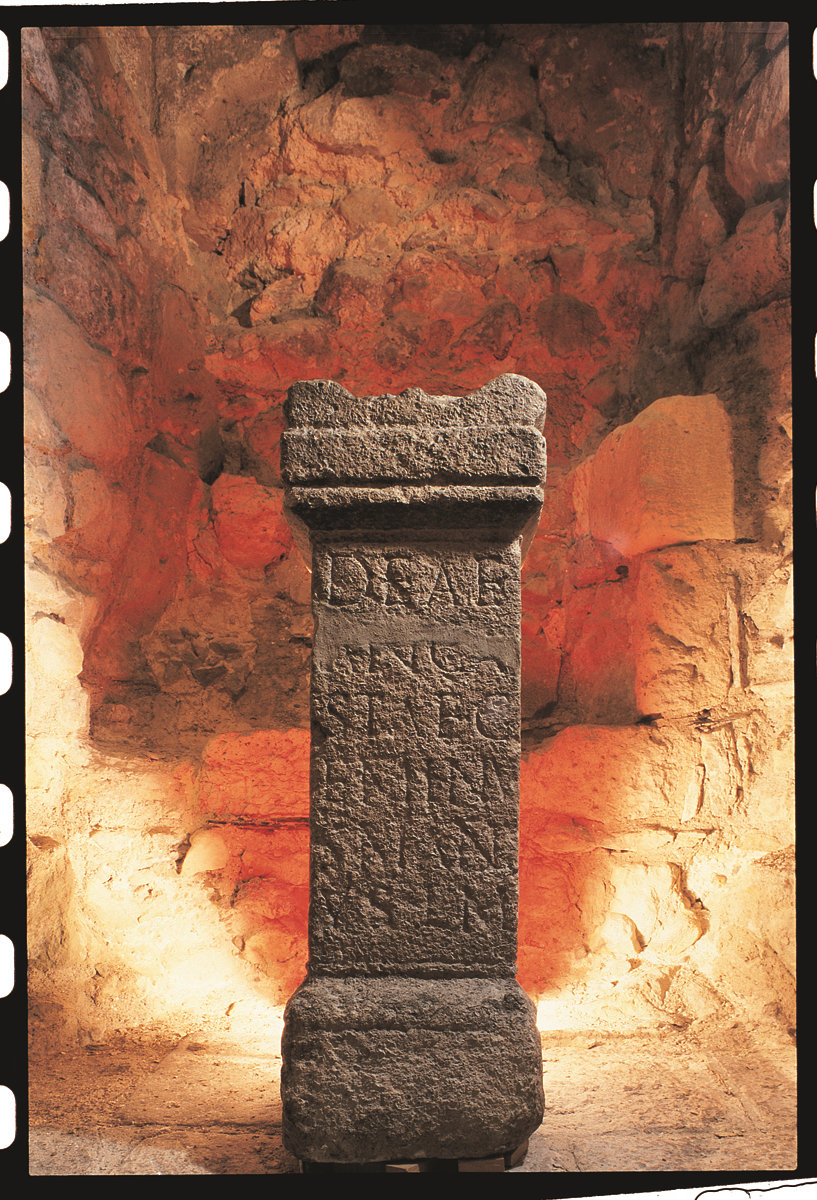
Ancasta is mentioned on an altar inscription from Clavsentvm, a Roman settlement, (possibly the first in the UK) found at Bitterne in Hampshire. It reads: (and I quote Mike Hart’s website here):

“DEAE ANCASTAE GEMINVS MANI VSLM (To the goddess Ancasta, Geminus Mani[lius] willingly and deservedly fulfils his vow), which represents the only known dedication to this goddess.”

In Southampton Sea City Museum

Mike goes on to explain the speculation regarding Ancasta, and it was this speculation which inspired me to name my second novel after her:

“Ancasta is known because of the inscription above and as such was probably a local deity. However, by comparison with the re-construction of proto-Celtic the goddess’ name can be broken down into the components *an-kast-a- (very swift one). It may be that she was a river goddess, asssociated with the nearby River Itchen (which would certainly fit with the interpretation of her name though this is merely speculative).”

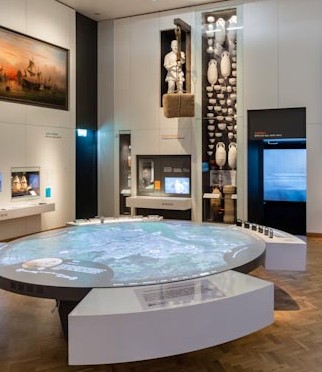
It was with excitement that I visited Southampton’s Sea City Museum for the first time this summer. It was not open while I was researching for the novel and here is a photo of the alter stone in its display case, in the ‘Gateway to Southampton Gallery.’

The Gateway Gallery is a fascinating reflection of all the many peoples who have arrived in the port of Southampton over the centuries. With the influx of each new arrivals, whether as an aggressive invader or to avoid deprivation or poverty, or just in search of a new and more fulfilling life, Southampton has changed and adapted.

To Harriet and Joe in my first novel ‘Riduna,’ Southampton represented a promise of work and a new life for their family. It would be a marked contrast to their lives in the Channel Islands on Guernsey (Sarnia) and on Alderney (Riduna) but they would have to adapt to survive, and adapt they did!

This gallery is only a small but interesting part of the whole museum, whose main focus is to tell the story of the Titanic, in a colourful, interactive manner, stimulating all of the senses. I even stood at the Titanic’s helm and attempted to steer her through the narrow permissible shipping lane. This was not only an enjoyable challenge but brought to my mind the realism on the first chapter of ‘Ancasta,’ when Edward, the captain of the LSWR Princess Ena steers his ship  along this course.

This exhibition is excellent, not only to explore the controversial sinking of this infamous ship, but also in giving a greater awareness of the impact of the port on the life of Southampton, from dealing with copious laundry, the infrastructure needed to ensure fresh provisions were available and the connecting services and transport facilities were at hand. Of course, this is as true today as it was back in 1912 when the Titanic left Southampton.

Ancasta ~ Guide me Swiftly Home‘ tells a story of an ordinary family living at that time in Woolston, Southampton. Harriet, in setting up her guest house on the banks of the River Itchen, becomes part of that infrastructure, and as her sons begin to work at Supermarine, it is to the skies they look up to, as much as across the river and along Southampton Water. Many a time they prayed for the swift and safe return of both family and friends and Ancasta tells the story of those who left and those who remained at home waiting for news.

I would like to thank the Arts and Heritage Office from Southampton City Council for kindly allowing me to use the photos. (Please note that taking photographs is not permissible in the museum)

5 Comments

Filed under Ancasta, Riduna, Southampton, Supermarine, Woolston

Launch of Ancasta ~Guide me Swiftly Home – A Trifle Damp but Delightful!

What with gloomy weather forecasts warning of storms and floods as we headed towards Southampton on Saturday morning, I decided to keep an open mind of expectation!

In fact, torrential rain hit us not long after we were on the M3 heading South and we wished we’d stopped in the service station we’d just passed by for a comfort break. As it happens the rain eased up as we pulled up at Winchester services beginning the positive pattern for the day.

Arriving in Woolston half an hour early we found a little cafe for a welcome cuppa, where I left my husband enjoying a bacon bap while I went to introduce myself at the library, a wonderful building of character on the corner of Oak Road and the Portmouth Road. In fact it is only a few doors away from where we think my Great Grandmother ran her guest house in the early 20th Century.

Martyn Basford from the Bitterne Heritage Centre was there to meet me and I set up to greet the folks who had braved the inclement weather. I was warmly received and my short talk about my family links to Woolston, Supermarine, my research and the inspiration for my writing prompted people to share their own memories, especially of the Floating Bridge or Itchen Ferry. Here are a few of them:

“Do you remember when the buses used to leave just as the floating bridge touched the hard? Wasn’t that annoying.”

“And if you were on a bike your feet would get wet because there was always a gap of water as the ramps came down.”

“My sister was on the floating bridge the day the chains broke loose and it floated down the River Itchen”

“It was great, just like you my sons were allowed to pull down the lever to start the floating bridge once. They were so excited!”

“When we were children we sometimes went over and back just for fun.”

“One of the floating Bridges is now a restaurant in Bursledon. It’s called The Ferry Restaurant.”

After signing books we followed Martyn to the Heritage Centre where we held more in depth conversations about Supermarine and its effect on the area and John had kindly made a display of some of the excellent resource books they have in their archives. It is a wonderful place for anyone interested in local history, of not only Bitterne but the surrounding area too. Time rushed on and Martyn prompted us that we needed to be making our way to our last venue at Bitterne Library.

Even though there were only a handful of people at Bitterne Library, including Barbara, the editor of Bygone Bitterne, it was nevertheless a lovely experience, not only to share my thoughts, but also to answer their many questions in an informal way. It was interesting to me that no one knew about ‘Ancasta’ their local Goddess! In fact no one knows exactly where the stone, originally found in Bitterne, with the unique inscription to Ancasta on it, is now. It was apparently in an exhibition in Southampton for a while. Any ideas? I’d love to see it and take some photos.

I want to thank Martyn particularly for organising the morning and ensuring that all went smoothly. It was so fitting to launch ‘Ancasta Guide me Swiftly Home’ in Woolston, just up the road from the solitary plaque which reminds us of the great times for Wooston, when the first ever Spitfire was developed and tested, under the shadow of the ‘new’ bridge.

After a busy morning we drove along Weston Shore,  by which time it was raining quite hard so we didn’t stop, but continued to the Victoria Park for a bite to eat, after which we sat in the car for a while watching the Isle of Wight Ferry sail past, before heading home.

Next planned venue is at the Herald Offices in Hythe on 4th August. More details to follow shortly.

2 Comments

Filed under Ancasta, Family History, Southampton, Supermarine, Weston Shore, Woolston