Category Archives: Supermarine

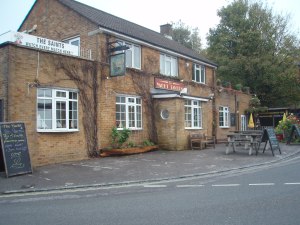
The Yacht Tavern ~ Woolston, Southampton

UPDATE UPDATE! I WILL BE POPPING INTO THE YACHT TAVERN WOOLSTON

AT 2.15PM

ON SATURDAY 16TH MARCH 2013

to have chat to Woolston folk as promised! (before the match)

UPDATE: APOLOGIES THAT, DUE TO CIRCUMSTANCES BEYOND MY CONTROL, MY BOOK SIGNING THIS SUNDAY AT THE YACHT HAS BEEN POSTPONED TO TAKE PLACE IN MARCH NEXT YEAR. IF ANY WOOLSTON PEOPLE WOULD LIKE SIGNED COPIES OF ANCASTA FOR CHRISTMAS PRESENTS THEN THEY WILL BE FOR SALE IN ‘THE FUN SHACK’ ON VICTORIA STREET AND ‘CRAFT DEVIL’ ON THE PORTSMOUTH ROAD, WOOLSTON, IN A FEW DAYS TIME.

On Sunday 2nd December 2012 I am happy to be returning to The Yacht Tavern Woolston, where the friendly landlady Jacqui was so interested in my novel that she suggested I return to do a book signing at the pub! An unusual venue but it should be fun meeting and talking to local people. It is a tavern where you would more often be there to see a football match, cheering on the Saints as they play at home just over the River Itchen, or away.

Having said that, Jacqui has built up quite a library of books to enable the single visitor to feel content to enjoy a drink and perhaps a home cooked meal whilst reading. These books include those of local interest as well as a varied selection of novels. An excellent idea, I thought, on my first visit there a month ago. Some of the pictures on the walls have a local flavour too. Well worth a look!

The Yacht Tavern is in fact in the old village which was called ‘Itchen Ferry,’ and not Woolston, which was on the other side of the Floating Bridge hard. There had been a ferry across the River Itchen for hundreds of years, hence the name, but many locals still think back to the days of the Floating Bridge with nostalgia, and even fondness. Whilst rummaging though a cupboard recently I found the ‘Woolston Ferry Song‘ brought out when its service came to a halt back in June 1977, when the new bridge was opened. Click on the link for a bit of fun!

Mind you, it was a sad day for Woolston, as the little town was effectively bypassed and people are still heard to say,

“It’s just not been the same since they built the bridge!’

The whole area was bombed during the Second World War, to destroy the Supermarine Works, famous for designing and building the first Spitfires. In fact, The Yacht Tavern was the only one of three pubs in Itchen Ferry to be rebuilt after the bombing in 1940 and it still offers a warm welcome for food and drink and a place for locals to enjoy watching Saints play, even though, if they step outside, they can hear the roar of the crowds at the stadium just over the water.

The original Yacht Inn featured in my novel Ancasta Guide me Swiftly Home, and so it is apt that I should be there just before Christmas gossiping to local people, just as my menfolk did in 1912, when rumours abound as to why such famous people as Pemberton Billing were visiting the boatyards, where many of the locals worked.

So, if you are in the Southampton are on 25th November, or even better living in Woolston, then drop in at lunch time and say hello! I will be there to have a chat and sign copies of my new novel, which is set in the area. If you can’t make it then it is available in Waterstones, West Quay or you can click on the book cover to find Ancasta on Amazon:
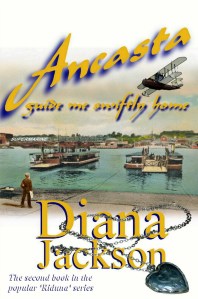
Ancasta available on Amazon

6 Comments

Filed under Ancasta, Events, Southampton, Supermarine

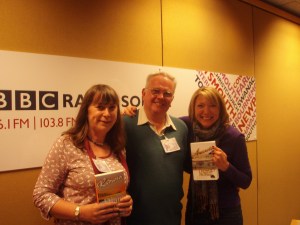
BBC Radio Solent. Diana and Colin have a chat with Katie Martin

Diana, Colin and Katie

I met Colin van Geffen, (the local artist who designed my covers and historian who checked some of my facts) outside the Bitterne Heritage Centre. Both Ancasta ~ Guide me Swiftly Home and Riduna are for sale there. It seemed a fitting place to meet since that’s where my research in the area began several years ago.

Colin suggested The Yacht Tavern for our lunch, down in Itchen Ferry. For those of you who have not been locals to Woolston for very long, Itchen Ferry is the area to the north of the Woolston Bridge, the south side being Woolston, and the villagers have been very protective of their patch for a couple of hundred years or more.

The Yacht Tavern, Itchen Ferry, Woolston

The welcoming landlady Jacqui was really interested in Ancasta, and that we were going to be on Radio Solent in the afternoon. She confirmed that, although the current buildings had probably been there since that area of Woolston was regenerated in the years after WW2, (The Supermarine Works was bombed out during a severe air raid over Southampton) she believed that there was an original public house called the Yacht Inn, on the same site before the war. This confirmed the truth of some of my research and so I was able to say that The Yacht Inn is featured in Ancasta Guide me Swiftly Home. (watch this space)

We had very pleasant,freshly made baguettes before thanking Jacqui and heading over the bridge for Southampton.

Once through the security of the BBC we waited in the foyer, sipping tea and chatting. I was trying not to be too nervous, especially when it was 2.25 and we had not been called, but Colin took it all in his stride and reassured me that it was normal and any minute now we would be collected.

Sure enough, a few seconds later, the friendly face of Rebecca the producer popped her head around the door and lead us up to the studio. I had no time to worry at that point, since Katie greeted us cheerfully before we were positioned in front of two large black microphones and within moments the introductions were made, the questions came and we were on air, with no time to think.

Katie, is a natural. The conversation flowed quite naturally between the three of us, my nerves dissipated and within moments it was all over.

We took photos are were soon ushered out, with Rebecca putting us both on the spot to ask us to share any special memories on Southampton, before we left through the revolving doors.

As I tried to get to sleep last night I was buzzing with all the things I could have said to the people of Southampton.

  • Why Ancasta ~Guide me Swiftly Home is such an appropriate name for the novel and why it is part of Southampton’s important heritage.
  • Yes Ancasta tells the story of the birth of Supermarine through the eyes of the family who lived in Woolston between 1910 and 1920 but it is about far more than that – The change in women’s roles during WW1, life at Gillkicker Foft and The Queen Victoria Hospital-Netley and the role of the Hampshire 9th Cyclist Regiment in the war………… in fact the history of the area during that time, including the Titanic

On reflection though, in the light of this morning, it all went extremely well and I would like to thank Jacqui, Rebecca and Katie for making me feel so welcome.It was not only an enjoyable experience but a truly memorable day out in Southampton.

Leave a comment

Filed under Ancasta, Early Flight, Flying Boats and Sea Planes, Historical Fiction, Marketing your novel, Research, Riduna, Southampton, Supermarine, Woolston

Muse on Feminine Issues in Ancasta

You may be forgiven for thinking from reading my blog posts, that my novel Ancasta Guide me Swiftly Home is all about flying boats, the Hampshire Regiment, Palmerstone Forts and the Schneider Trophy. Yes they do feature, threaded through my story, but Ancasta addresses huge feminine issues of the time too.

Ancasta is actually a multi layered story of love and resilience, stressing the fortitude of women to adapt and sometimes take over men’s roles; in fact it is a story of how, with determination and strength of character women showed their worth at the time of World War 1 in a way rarely seen before, in British culture certainly.

My husband has gone to watch Speedway tonight and though I have promised to go with him once a year, an evening standing in a cold draft, watching little bikes race around a track is not my idea of fun on a Saturday night. Each to his or her own. This made me wonder why I have focussed on perceived to be masculine interests when promoting my new novel. (please forgive me if I’m being sexist or perpetuating stereotypes)

If someone had told me ten years ago that I would be reading non fiction on the Schneider Trophy and the Spitfire,  taking a lesson in fishing and getting excited on numerous air days, I would have laughed but I think it is because they are areas I really have had to work hard on, in order to research them thoroughly, so that I’ve become so absorbed.

I can only liken it to reading Shakespeare when I was about 14 yrs old. At first I didn’t really want to read it or try to understand it. I enjoyed going to see Romeo and Juliet at 15 and watching A Mid Summer Night’s Dream in Regent’s Park is still etched on my memory, but then I was lucky to have an inspiring teacher, Mrs Yates. It was she who made me look more carefully at the language and start to appreciate the beauty of it, but even now I admit to finding the Henry’s and Richard’s a bit challenging.

It’s the same with my research. It is meeting people who are fascinated by their subject, reading anecdotes and amusing stories as well as facts and experiencing live performances in places like Shuttleworth, which has made the subjects come alive for me, and also learning more about my family links with Supermarine.

So turning back to the women; I was inspired initially by my great grandmother who set up a guest house in Woolston and by reading about the magnitude of The Royal Victoria Hospital in Netley, not so long after Florence Nightingale opened the way for women nurses to travel the world. (In fact Florence was quite rude about the ‘magnificent’ hospital on the banks of Southampton Water)

We all know that women did a great deal of the work when their menfolk went off to war but what sort of work? I was particularly interested to note down any details and here are two examples.

I was talking to one of the mechanics in the Shuttleworth Air Museum in Biggleswade. (the chap turned out to be from the island of Sark, which was also a coincidence) I asked him about the wings of the aircraft and what they were made of and he explained how each aeroplane design had a unique pattern in the frayed fabric on the wings, and it was the women who stitched them so carefully during the war. This made sense to me but I was even more pleased to read in a book in the Bitterne Heritage Centre that some women were also taught to do the welding at Supermarine.

My women characters are strong. They have to be. Even before the war the reader will be aware of the tensions building up of the need for women to express themselves and for their opinions to count. As war progresses the women have no choice but to change, to run the home or a business, to work in a factory or become a nurse here in England, or in far distant places. The balance of relationships and responsibilities changes; it is tipped over and never really sees the same level again.

Leave a comment

Filed under Research, Role of Women, Supermarine