Tag Archives: writing a novel

To The Shuttleworth Archives ~ Many thanks!

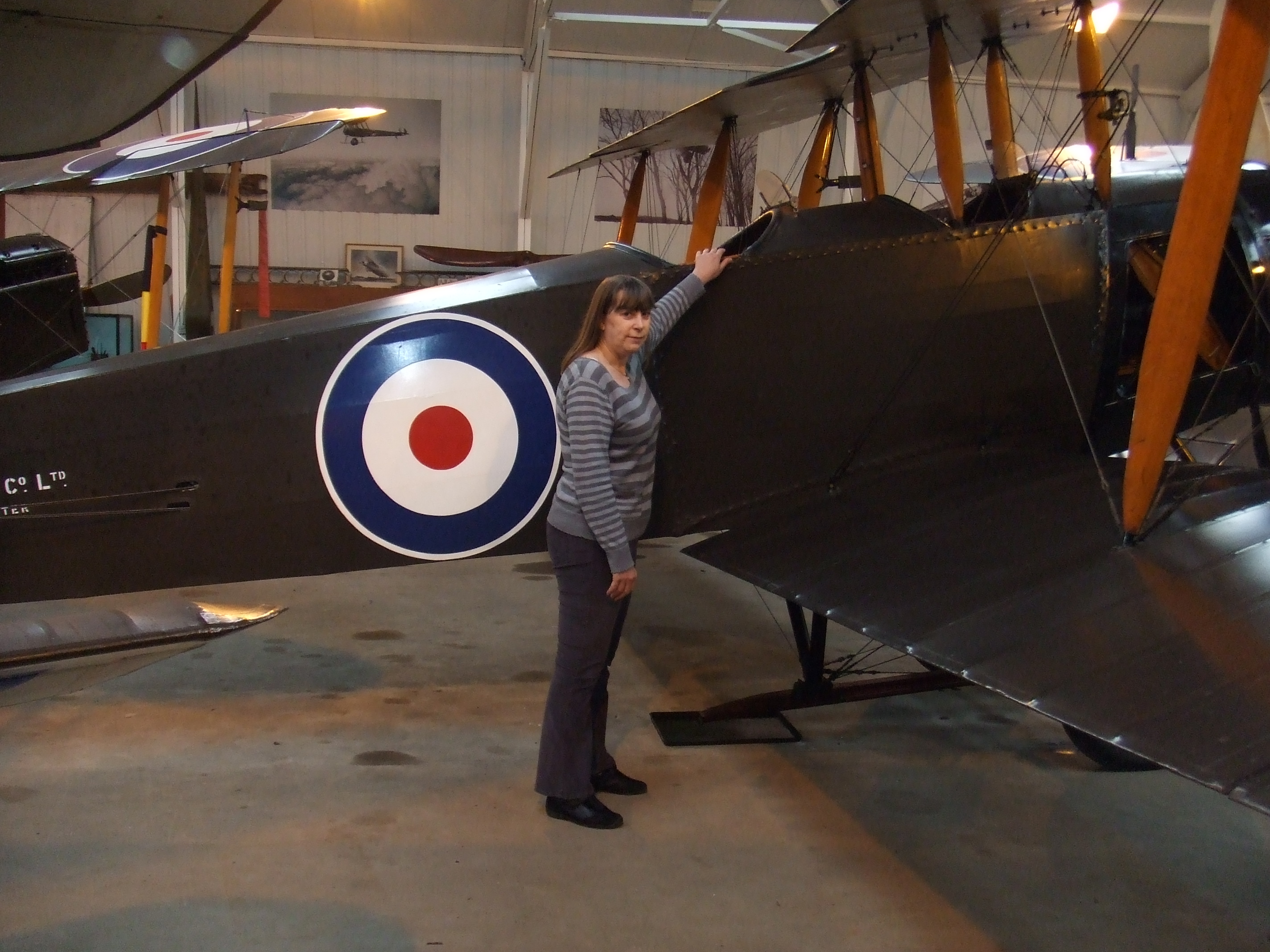
Diana with the Avro504K

In the first few months of my research I spent several days at the Shuttleworth Collection Archives under the guidance of John Benjamin and Richard Greaves. I skimmed through many books about early flight, especially flying boats, Supermarine and the first sea plane carriers used in the Great War. I was also very kindly allowed to bring home a couple of books I wished to read in more detail. (I will write some book reviews later this year)

I believe I’m no different to any other writer of historical fiction in that I only expect to use about 5% of my research materials. At first I use the books as a guide to writing my plan and developing the first draft. During the first draft I found myself homing in on certain aspects and needing to return to the archives for more specific information.

It may seem a little bit strange that I should go to Shuttleworth, especially for information about the history of flying boats, but the main reason is simple; I am fortunate enough to live near-by and their planes often fly over our garden. Once I became a member of the SVAS I was allowed to gain access to the archives and I was greatly impressed by the extensive range of books and other resources available. It is open on a Tuesday, being manned by enthusiastic and knowledgeable volunteers, meaning that my visits had to coincide with my holidays. This had the bonus of giving me enough time to assimilate my materials, consolidate my ideas and be increasingly specific about my queries.

Both John and Richard were extremely patient with me, often answering emails with smaller queries in the meantime. I was so grateful that, on asking if they would mind checking through my relevant chapters, both gentlemen were willing to check through the complete document. Their support, input and encouragement was invaluable and I can’t thank them enough.

I supplemented these visits with walks around the aircraft in the museum, getting into conversation with the people carrying out maintenance, who give me snippets of detail about the manufacture of the planes, for example the distinctive style of stitching on the wings.

Shuttleworth is unique in that, the majority of the aeroplanes you see in the museum, you can also enjoy the pleasure of watching them fly on one of their monthly air days through the summer. I have written a couple of blogs about these memorable days, and it is certainly a thrill to see planes like the Avro 504, similar to one featuring in my novel, taking off and soaring above our heads. Amazing!

Here is the Shuttleworth Website.

I am pleased to announce that the bookshop at Shuttleworth have agreed for me to do a pre- launch exclusive book signing for 

Ancasta ~ Guide me Swiftly Home

at their

Air Pageant Day

on July 1st

one week before the national launch on July 7th!

Fingers crossed for the weather.
Leave a comment

Filed under Ancasta, Book Shops, Early Flight, Flying Boats and Sea Planes, Libraries, Research, The Shuttleworth Collection, Writing a novel

100th Post! Diana Jackson gives an on line Interview

What are your earliest memories of writing when you were a child?

My earliest recollections of writing creatively for pleasure must have been in my mid teens when I started writing poetry and short stories. I still have some of them in my memories box!

What inspired you to write Riduna?

Well, I wrote a whole blog about this, but after several family holidays on Alderney I was fascinated to hear my Dad talk about my Great Grandmother Harriet who was born on Alderney in the mid nineteenth century. I started my research for Riduna at the same time as my parents began their family history research. Riduna is certainly fiction, but its inspiration came from thinking about what Harriet’s life must have been like. Her true story is quite a tale too!

Why Riduna? It’s not a name many people will understand.

Some people have said that the title is too obscure for people to remember and others have said that they were drawn to read the novel because the title sounded mysterious. I’ve always loved the name ‘Riduna’, the Roman name for Alderney. I can see the argument from both sides but the story has been ‘Riduna’ in my head for years. I couldn’t imagine changing it.

What have you enjoyed most about getting a book published?

Meeting people and talking to them about my writing. I’ve now done five talks, the most successful being to audiences in Bedfordshire libraries. The people have been brilliant. Book signings have been good fun too but they’ve tailed off now.

Did you receive any publicity in the press?

Yes I did as a matter of fact. I had two articles in The Luton News and three on the Channel Islands, one in The Journal (Alderney) one in The Alderney Press and another in The Guernsey Press. I never did find out if it reached The Echo in Southampton. They certainly said they’d consider doing a book review. Did anyone see it? It would be great to know.

What about reviews. Did you have any interesting ones?

I was so proud of the positive comments from The Historical Novel Society’s online reviews. This link will take you to it if you missed it back in August 2010.

You have mentioned on Twitter hoping to get the sequel out for Christmas. What happened?

I really had hoped to get my next novel out by now, but these things take time and sometimes these decisions are out of our control. I do apologise for this, but instead of feeling downhearted by the delay, I see it now that the novel will come out at the right time. (I must admit that I was less cheerful a month ago but in the end you have to be philosophical about it.) Spring 2011 is the hopeful horizon I’m looking towards at present. Many thanks for being patient.

Can you tell me something about your new novel?

In a word no. I have given a few hints along the way. You’ll just have to wait and see!

This will be my last post before the festive season and so Happy Christmas to all who celebrate Christmas and happy holidays to everyone else!

Leave a comment

Filed under Alderney, Book reading, Book reviews, Channel Islands, Family History, Marketing your novel, Riduna, Writing, Writing a novel

A novel impression – unsung heroes v familiar friends and foes

Have you ever thought of the people who never experience the accolade they deserve for their contribution. Last week we focussed on Steve Jobs, remembering his greatness rather than the technology he created.

When you listen to a wonderful  rendition of Mozart, Bach or Beethoven do you ever think of the individual violinist or percussionist?

When you watch a  drama or documentary on the TV do you ever sing the praises of the director or each bit part actor?

When you visit Wiseley or any other famous garden do you ever think of the person who does the weeding?

An author, on the other hand leads you from general truths and events to minute details of individual lives. A successful writer will know how to draw on the reader’s empathy and involvement until the dividing line between the reader’s reality and that of the fictional characters begins to blur at the edges.  The reader needs to understand intimately all of the key players as the drama unfolds.

When a wonderful piece of music comes to an end you are often left with an impression; an echoing but lasting memory of  the experience, but when you come to the end of an excellent novel,  do you ever feel you’ve just said goodbye to a dear friend or a close family member? Do you sometimes feel at a loss for a day or two; almost bereft?

How do we achieve this as an author? How do we leave our readers looking forward to more?

  • Innate ability?
  • Ever learning more about the craft of writing?
  • Forethought and careful planning?

Probably all three!

Tools a writer uses:

  • Sticking to a successful format that readers become familiar with (Agatha Christie)
  • Using a main character or characters within different story lines
  • Writing a series – sequel, prequel..
  • Using the same setting – location for a several stories
  • Setting several novels in the same time period

Leave a comment

Filed under Planning a novel, Reading a novel, Writing, Writing a novel