Tag Archives: writing a novel

There’s a time for every season – Which period to choose?

I’ve never written in the here and now. Always inspired by social history and the classics it was not a surprise that I chose the Victorian Age for Riduna. Writing its sequel in the Edwardian era and through the First World War has been an even more rewarding journey since I have reseached a period in history which I did not cover at school and have always wished to do so.

So how do you choose the time zone for your novel?

Did it just creep up on you?

Did you just happen to stumble on an ancient monument or something which intrigued you….  a newspaper article, tv programme, scene, …… and it set you thinking and on a new path of research?

Are you more comfortable writing in the present?

Have you always loved Sci Fi?

Is it costume dramas/ historical events or people from the past who make you tick?

Are you an expert in a certain period in history?

Most of you will say that’s obvious. We choose a time frame we are familiar with and we enjoy unleashing our imagination in that period, but does it have implications to the way we write?

  • Time taken to complete a novel

If you choose ‘Chic Lit’ or Sci Fi, it is likely that most of the story will flow from your over active brain. You could write a novel in a few months and have it sent to the publishers within six. It could be the next best seller and could certainly earn you a living if it’s good enough. Am I right?

Whereas, if you write in a period in history which is less familiar to you then the time taken to research may be a year or more before you even start to put pen to paper to weave your fiction. Setting, background, language, events, facts; they all have to be checked.

  • Is it a period in history which few have chosen?

Recently several authors have set their work in the time of the Romans. This is particulary pertinent here in England and in much of Europe, where Roman remains abound and it’s not hard to imagine the invaders making their mark say when walking through Verulamium in St Albans or in Northumberland at Hadrian’s Wall. Unless of course you are Italians in which you are also especially proud of your country’s past influence in the world.

Are there any periods in history not covered by authors of the present and past?

  • Is it a period in history well covered?

The World Wars have already inspired copious successful novels and biographies and yet there is always an interest in them and there is certainly always a new angle, or a less familiar story to tell? Maybe this is because the majority of us have a father, grandfather, grandmother or great grandfather who played their part in some way and we are fascinataed by family history. It is still of course in living memory for many and we are approaching the centenary or World War 1. What better time than now to remember?

  • The same but different

This phrase is well used in expressing what a publisher is looking for. Why? Because that’s where the market is. Readers don’t always want to read unusual, obscure books, however well written. They read a novel they enjoy and immediately look for something similar and if there’s nothing more written by that particular author then they will search for other similar authors. It’s a bit like chocolate. Once a Cadburies chocolate lover then other chocolate is fine, but there’s nothing like the treat of even a small bar of Dairy Milk!

  • Is it sustainable?

A publisher, so we’re told, is looking for a book which has potential to grow into a series, whether it’s a sequel or totally different stories, it doesn’t matter. For this reason the choice of time, characters and location all needs carefully thinking through and planning before we start.

Can we afford the luxury of just writing for our own enjoyment and ignoring these issues, or do we need to begin to be less precious and more street wise when gaining inspiration for our novels?

The title of this this blog has a double meaning too, because it also reminds me of one of my favourite songs from the Zombies.

Our novels needs to be memorable too.   
Leave a comment

Filed under Book reading, Historical Fiction, Marketing your novel, Planning a novel, Writing, Writing a novel

Which characters – Who gave you inspiration?

Choosing the right characters for your novel is vital but how do we do it? I have already written about the joys and pitfalls of choosing a name on another blog but where do we begin choosing characters?

I must admit that my characters seem to creep up on me like new aquaintances many of whom, over subsequent months, become well loved friends.

Real or Imaginary

If real people inspire us, and I’m sure most of our heroes and heroines are based on a rainbow of many people we know all rolled into one, then like with familiar settings it makes it easier to:

  • Describe their personalities and looks
  • Imagine realistic conversations
  • Make the thread of our story believable
  • Fix the period and events, giving a web on which to base our tale if we include some real characters in historical fiction

Harriet in Riduna was inspired by my Great Grandmother. I had only met her twice; once when I was about three and I remember seeing an old lady in a rocking chair as I stepped down into a dark old New Forest farmhouse kitchen. On the second occasion she was in a nursing home. I have been told that she was quite a formidable woman and it was not these encounters which inspired me most, but my inquisitive mind as to what she had been like as a girl and how her nature had been moulded by her experience of being banished from the island of her birth.

If we choose real characters there can be disadvantages too:

  • Even if your novel or story is set in the past you are still in danger of upsetting someone, even if you claim that you are writing fiction -‘that didn’t happen.’ ‘He didn’t do that.’
  • In trying to weave real and imaginary characters within a story then ‘pure historians’ may be offended, claiming that we are trying to rewrite history
  • Obviously if your novel is set today or in recent years then even more care needs to be taken in including real people for obvious reasons. The law will be quick to step in if anything you have written is defamatory.

If you choose purely imaginary characters then:

  • You can let your imagination truly take over
  • You can bend their looks, trait and behavioural tendancies to suite the occasion, so long as you describe them well

The most important points to remember about the characters you choose is:

  • To be consistent
  • To keep a careful record of the description of each
  • To have a clear idea of relationships and how they connect with each other
  • To have a clear record of the order of events where each character appears
  • If your novel is many facetted it helps if there is a link through the threads, or that the connection with your main character is clear throughout the novel

The sequel to Riduna, which I hope to have in print shortly, has a mixture of real and imaginary characters, setting my novel in a particular place and time, though the real characters only appear fleetingly to add flavour and realism to historic events.

How do you choose your characters?

Leave a comment

Filed under Historical Fiction, Planning a novel, Research, Writing, Writing a novel

Which Setting? An Inspiration to Write

Choosing the right setting for your novel is vital but how do we do it?

Familiar or Imaginary

If we choose a familar location it has loads of advantages:

  • You can imagine each scene and the descriptions flow effortlessly as you write
  • Your audience loves to read about places they know
  • Promotion is more straight forward because  your initial drive can focus on reaching out to people with links with that location

If we choose a local setting there are added advantages:

  • You are more likely to have success with local papers if it is local interest
  • You are more likely to be interviewed on local radio
  • Local bookshops will feel more parochial and will be happy to promote your work in their ever popular local interest section
  • Talks in libraries and to various local groups will be popular
  • It is easier for a new author to begin making a name locally

If you choose a holiday location:

  • You may have a fresh audience for some years to come
  • People often buy books to read on holiday
  • People often buy books to remind themselves of a memorable holiday
  • The setting is usually beautiful, inspiring, exciting……
  • It is a setting which lifts readers beyond their everyday lives

If you choose an imaginary setting then:

  • You can let your imagination truly take over
  • You are not restricted to accurate detail as long as it is plausible
  • You are aiming for a wide audience
  • The scenes you evoke stand for themselves and do not need association to be successful

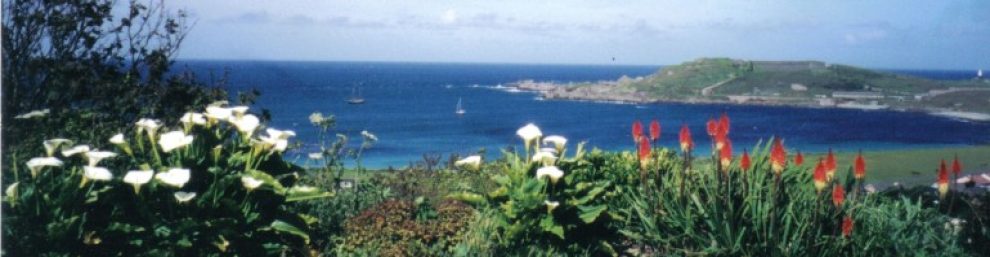
Your setting may have been your original inspiration, as Alderney was mine. As I stood on the Butes wondering what life might have been like in Victorian times I knew I just had to carry out some research. Alderney is unique as a setting for a novel. Many have been written on Guernsey and Jersey but, as far as I know, ‘Riduna’ is the first novel inspired by the beautiful island of Alderney.

My current writing was inspired looking out over a field one day. Very different!

Was it a location which inspired you to write?

Leave a comment

Filed under Marketing your novel, Planning a novel, Riduna, Writing, Writing a novel