Tag Archives: writing a novel

Are you a Hare or a Tortoise in your writing?

The Hare and the Tortoise

Some writers are hares. They are either fortunate or blessed with amazing talent to write a best seller first time or they go haring off in search of success. A writer’s race is an individual one. Of course the eyes of the world see us competing with each other to win prizes and fame too but do we see ourselves that way?

To my way of thinking writing is lifelong journey. Each good review, acceptance letter, positive feedback given by word of mouth, twitter, e mail, letter, facebook or any other way boosts our feeling of self worth. Today I was contacted by a ladies group wanting me to give a talk and share my experiences and the background to my writing. This request lifted my spirits to an unexpected high.

Of course, like any person writing to share in the public arena you have to harden yourself against the knocks as well. Rejections and criticism are part and parcel of the experience but listening and learning from others can be empowering too. Being prepared to adjust, amend, rewrite or even change direction are also skills we need to hone or even acquire; but sometimes we need to stand firm and accept that people have differing opinions.

With technology opening up a world of communicating to your audience in a way unheard of even ten years ago it is still possible to be a hare, but it is also quite satisfying being a tortoise, gradually building up an audience both virtually and in the real world. Being a tortoise also has the advantages of learning to value feedback but also to learn from it along to way.

I recently read in a Writer’s magazine of someone who was an apprentice writer for several years and only when he had strived to reach perfection did he open his work to the world. My question to him is ‘How did you know that you had reached the one? Are you sure that one of your earlier works would not have been enjoyed equally by your now avid readers?

No, I’m quite happy to be a tortoise. As long as people genuinely enjoy my writing and are interested in what I have to say I will share it.  I’m also sure  that the tortoise appreciates every moment of his experience in the race, taking time to acknowledge the world around him. His limbs may ache with effort at times but how satisfying it is when he reaches his goal(or each individual goal)?
3 Comments

Filed under Marketing your novel, Writing, Writing a novel

The Tapestry of Writing

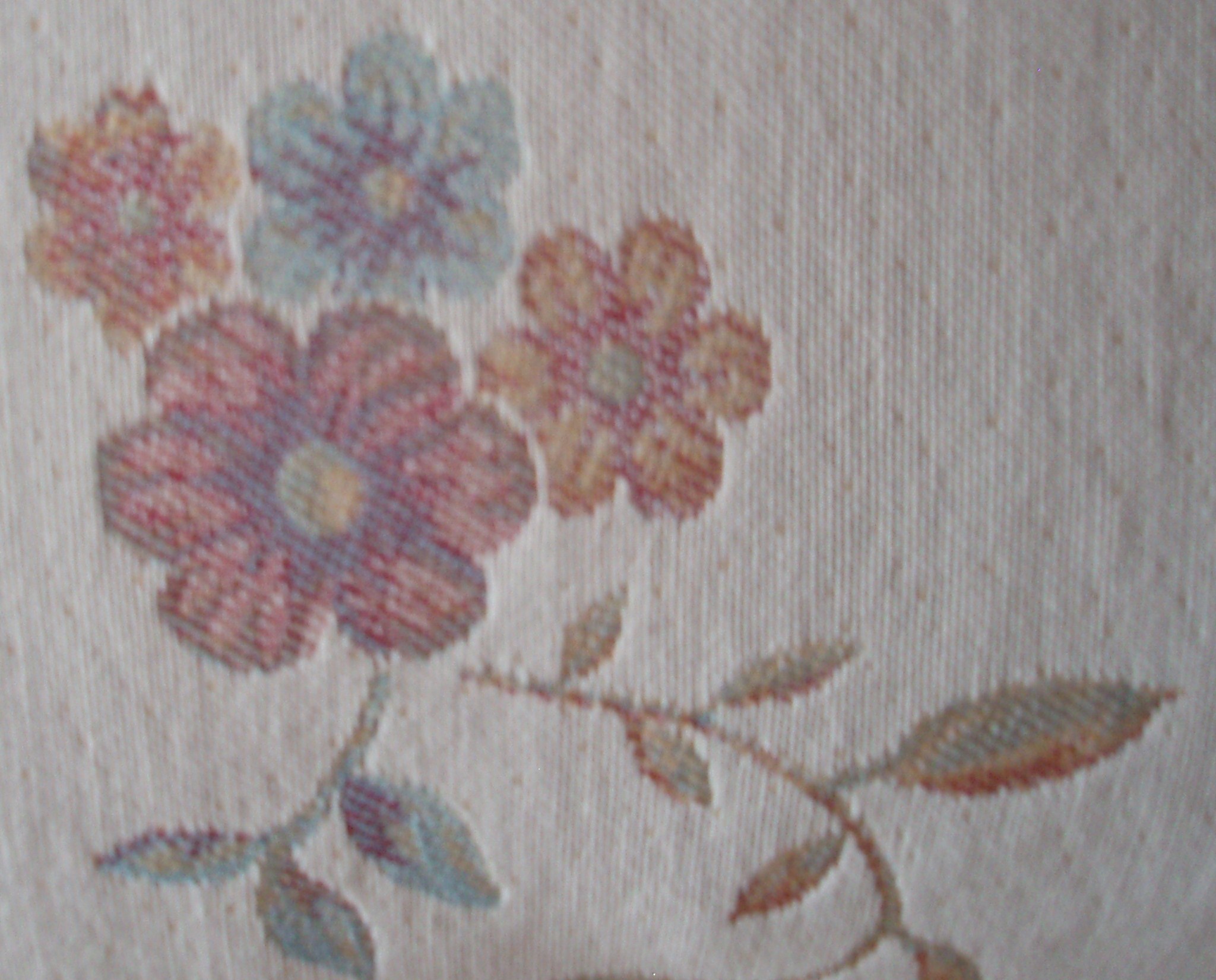
I was talking to a friend the other day and he likened writing a story to weaving. This is a quote from Wikipedia about weaving a tapestry:

Tapestry is a form of textile art, woven on a vertical loom. It is composed of two sets of interlaced threads, those running parallel to the length (called the warp) and those parallel to the width (called the weft); the warp threads are set up under tension on a loom, and the weft thread is passed back and forth across part or all of the warps. Tapestry is weft-faced weaving, in which all the warpthreads are hidden in the completed work, unlike cloth weaving where both the warp and the weft threads may be visible. In tapestry weaving, weft yarns are typically discontinuous; the artisan interlaces each colored weft back and forth in its own small pattern area. It is a plain weft-faced weave having weft threads of different colours worked over portions of the warp to form the design.” 

When writing a story or novel first we set up a framework or story plan, the warp of the story, with an outline of where the story is going to, research to base the novel on and a description of our main characters. In my friend’s analogy this is the warp; those threads which will be almost hidden when the story is completed.

After this careful preparation it is time to add the colourful storyline and allow our imagination to take over. Our story weaves through our plan and the bare bones of our characters and research, bringing them to life. Each section is painstakingly crafted, including detailed accounts of each scene, which is the weft of the story. 

Mind you, I would like to add another step to this analogy because the weaver always works from the back, tying up any loose threads and beginning new colours so that the joins are invisible. The weaver always makes sure that there is just the correct amount of tension. Too little and the tapestry will be disjointed and may show holes but too much and the final picture will be buckled and spoilt. 

When the weaver has completed the final thread of his work, he or she makes sure that all loose ends are secure and as neatly trimmed as possible.

 It is only at that point when the author believes that he or she has reached perfection that the work is turned over to reveal the whole picture for the very first time. 

Interestingly my mind leapt at this point to the idiom:

To spin a yarn

Tell a story, especially a long drawn-out or totally fanciful one, as in This author really knows how to spin a yarn , or Whenever he’s late he spins some yarn about a crisis. Originally a nautical term dating from about 1800, this expression probably owes its life to the fact that it embodies a double meaning, yarn  signifying both “spun fiber” and “a tale.”

Quote from: http://dictionary.reference.com/browse/spin+a+yarn

So there you have it. From the initial planning stages through to writing the novel, proof reading, editing and finally revealing the published novel to an appreciative audience; I wish you good fortune in weaving your masterpiece.

Does anyone know any more interesting analogies?

©Diana Jackson 03/08/2011

4 Comments

Filed under Planning a novel, Writing, Writing a novel

Watch the word count 85,000, 90,000, 100,000…

I was interested to read an article in the newspaper recently which discussed the new fashion of shorter novels to fit in the the e reader life style. Novellas are coming back into fashion, as are short stories, bite commuter sized reads to while away the hour travelling by train.

When I wrote   ‘Riduna’ I did not think of an optimum length. I just wrote the story until it was finished and, although the editorial process was fairly vigorous, it did not run to cutting out chunks of the novel to make it shorter.

Thus the final word count was just over 102,000 words; (Not 200,000 as mentioned in one newspaper article and I’m not sure whether it was a slip of the tongue on my part or a slip of the pen on behalf of the journalist! I’ll give the journalist the benefit of the doubt since I was quite nervous to be interviewed in those early days)  The actual word count of 102,000 seemed ok for a first novel but larger than the optimum count I’ve heard mentioned of 85,000 since.

I hoped to aim for nearer 85,000 for my second novel, which I hope to be out before the end of the year, but even then I have finished up with over 98,000. Unlike Riduna, which is a very gentle book describing the weaving in and out of island life through the eyes of my key characters until half way through when the pace quickens and every page is full of drama as the saga unfolds, my new novel is action packed throughout. It would take an expert with an independent eye to trim it down, if it was felt necessary to do so.

In my eyes the length  (within reasonable parameters) makes little difference  to a paper based novel, so long as the story is compelling and the characters believable, except maybe in the temptation to decrease the size of print, but is it the same for e books? If my publisher were to bring Riduna out as an e book would it be better to offer an abridged version?

I’m inclined to think the answer is ‘yes.’ What do you think?

2 Comments

Filed under Planning a novel, Riduna, Writing, Writing a novel