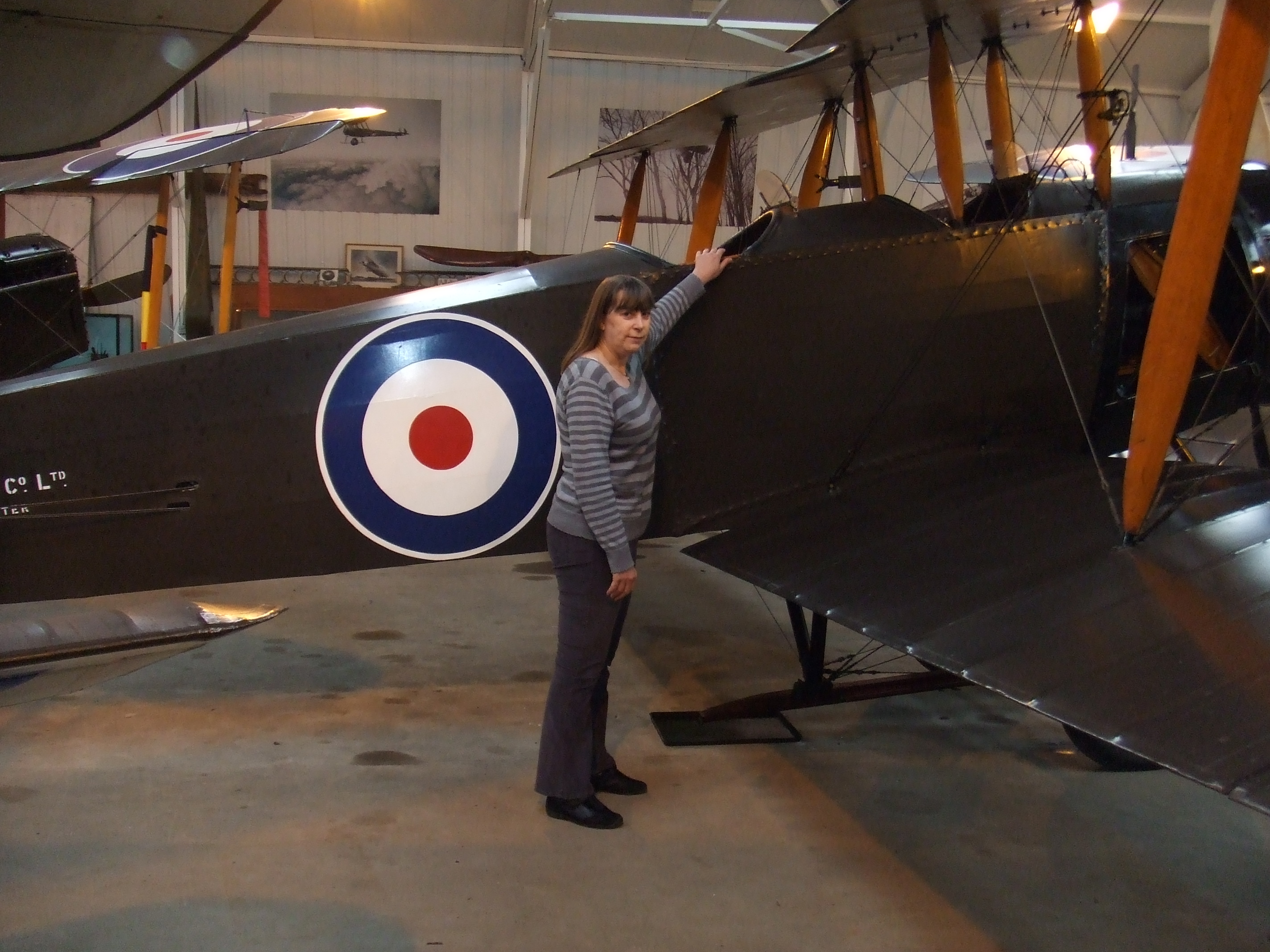
Diana with the Avro504K
In the first few months of my research I spent several days at the Shuttleworth Collection Archives under the guidance of John Benjamin and Richard Greaves. I skimmed through many books about early flight, especially flying boats, Supermarine and the first sea plane carriers used in the Great War. I was also very kindly allowed to bring home a couple of books I wished to read in more detail. (I will write some book reviews later this year)
I believe I’m no different to any other writer of historical fiction in that I only expect to use about 5% of my research materials. At first I use the books as a guide to writing my plan and developing the first draft. During the first draft I found myself homing in on certain aspects and needing to return to the archives for more specific information.
It may seem a little bit strange that I should go to Shuttleworth, especially for information about the history of flying boats, but the main reason is simple; I am fortunate enough to live near-by and their planes often fly over our garden. Once I became a member of the SVAS I was allowed to gain access to the archives and I was greatly impressed by the extensive range of books and other resources available. It is open on a Tuesday, being manned by enthusiastic and knowledgeable volunteers, meaning that my visits had to coincide with my holidays. This had the bonus of giving me enough time to assimilate my materials, consolidate my ideas and be increasingly specific about my queries.
Both John and Richard were extremely patient with me, often answering emails with smaller queries in the meantime. I was so grateful that, on asking if they would mind checking through my relevant chapters, both gentlemen were willing to check through the complete document. Their support, input and encouragement was invaluable and I can’t thank them enough.
I supplemented these visits with walks around the aircraft in the museum, getting into conversation with the people carrying out maintenance, who give me snippets of detail about the manufacture of the planes, for example the distinctive style of stitching on the wings.
Shuttleworth is unique in that, the majority of the aeroplanes you see in the museum, you can also enjoy the pleasure of watching them fly on one of their monthly air days through the summer. I have written a couple of blogs about these memorable days, and it is certainly a thrill to see planes like the Avro 504, similar to one featuring in my novel, taking off and soaring above our heads. Amazing!
Here is the Shuttleworth Website.
I am pleased to announce that the bookshop at Shuttleworth have agreed for me to do a pre- launch exclusive book signing for
Ancasta ~ Guide me Swiftly Home
at their
Air Pageant Day
on July 1st
one week before the national launch on July 7th!
Fingers crossed for the weather.


 Diana Jackson