Tag Archives: writing a novel

Capitals or not capitals – do lower case letters in a title irritate you?

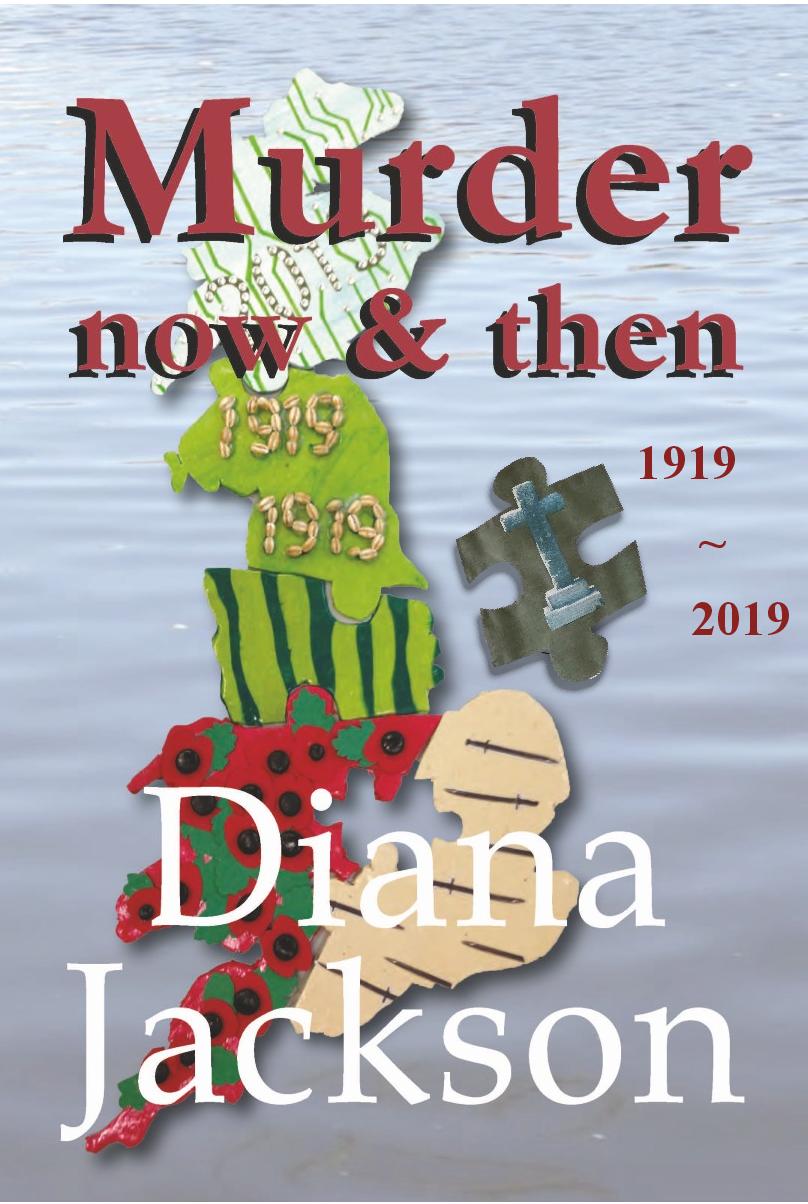
When I was looking at options for a cover design for my latest book ‘Murder, now and then’ a friend suggested I set the task as a challenge for design students at his college. The tutors are always on the look out for ‘real business opportunities’ to give their students experience of following specifications, meeting deadlines and working with the business world.

I was delighted to think that my new book cover would be designed by local students and, as a college tutor in a previous life, I looked forward to working with them both actually and virtually. There was also a certain amount of nervousness about the outcome too.

After an eventful but enjoyable time the proposed covers were submitted for a competition. The outcome of this was that I chose the two covers which won the most votes, one to be used for the paperback and the other for the ebook.

Murder, now and then available on Amazon

~  Murder, now and then available on Amazon

This is the overall winner and paperback cover. It is intriguing, combining:

~ the elements of time – the poppies and dagger-like objects – WW1

~ the circuit board at the top – the future – 2019

~ farming – with the fields

~ the missing piece of the puzzle over Bedfordshire

~ the grave of the girl murdered in 1919


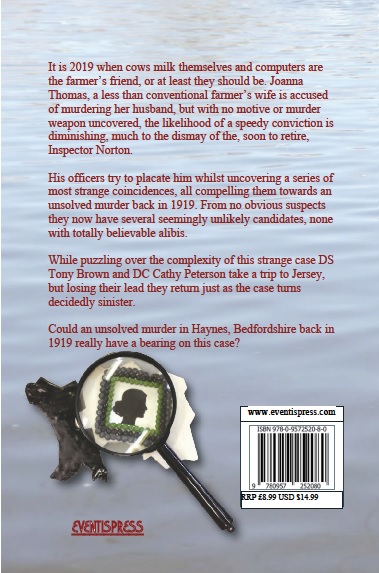
Back coverMNAT


~ and on the back a Sherlock Holmes spyglass

~ over the island of Jersey

~ and the cameo of the missing girl from 1919 !!!!

Would readers grasp even half of the symbolism embedded in this cover? Did it matter? Would readers think about it afterwards? Yet again did it matter?

Strangely, this cover was particularly liked by female potential readers.

Does it have effective impact as a design? These were all questions I set aside as I prepared for the launch.

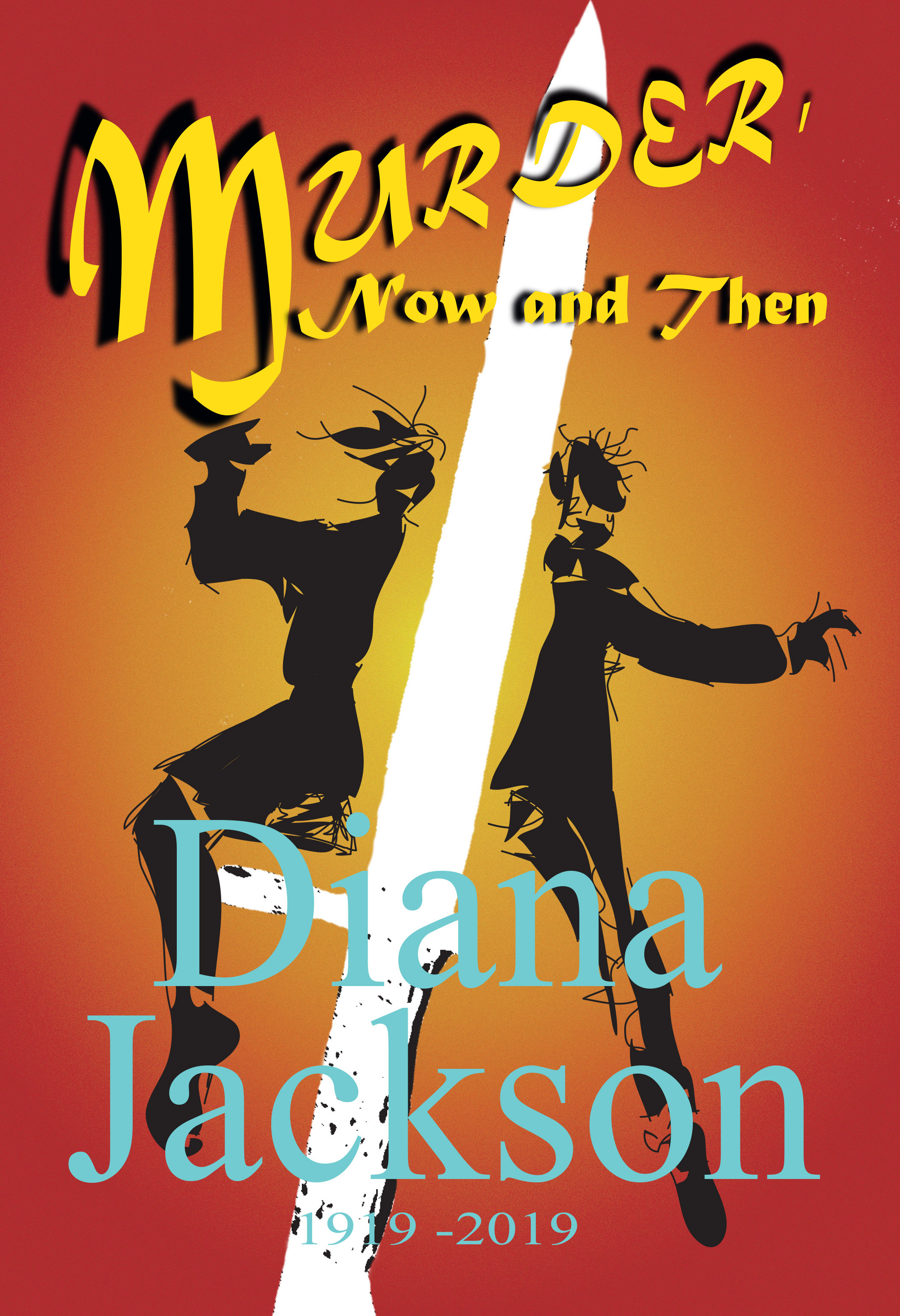
The e book, which was preferred by the men who voted, was quite different.

Available on Kindle

Available on Kindle

~ it had an impact with the colours red and yellow

~ the dagger-like weapon slashed through the centre

~ the figures spoke of scarecrows or of country dancing –  a link to country roots

~ it had a retro feel with the lettering, speaking of days gone by – the dual time zones of 1919 and 2019


Using two covers has been great, but they have also caused a few problems. One of them being the title. In my specification I suggested that the ‘now and then’ should almost be an aside and did not have to be in capitals. That was fine but one chose to use them and the other didn’t. My dilemma now  is how do I write about the novel – with capitals or not? Often I have used a comma and not used capitals, but sometimes I felt it appropriate to be more conventional.

My question to you is ‘does it matter’ as long as I am consistent? What do you think?

Leave a comment

Filed under Bedfordshire, Book reading, Murder Now and Then, Writing a novel

Welcome to Historical Fiction Author ~ Tony Riches

2014Hello Tony. Thank you for appearing as a guest on my blog today. Can
you tell us a little about your latest book Warwick in no more than
twenty words?

Hi Diana – and thanks for inviting me. Subtitled The Man behind the Wars of the Roses, Warwick is about Richard Neville, Earl of Warwick, known as the ‘Kingmaker.’

Can you remember the inspired moment which led you to write Warwick or was it partWarwick of a journey of discovery?

I was watching the BBC series The White Queen, (based on Philippa Gregory’s books) and wondered why the richest man in England would risk everything to back the young Edward IV – then change sides to support Queen Margaret of Anjou, his sworn enemy. I guessed there was more to his story than the BBC suggested – and found no one had ever tackled Warwick’s life as a novel.
Historical fiction is a tricky market and a controversial one. I should know. There will always be historians out there who know far more than we do, though we try our best to ensure authenticity in our writing. Was it your intention to write a good read or to stick as close to historical ‘facts’ as possible?

I enjoyed the research for Warwick and was amazed at what I found out about his life. It can be difficult but I feel historical fiction authors should try their best to ensure that details are checked. It’s fine to ‘fill in the gaps’ but not to ignore well-documented facts. The truth, of course, is often stranger than fiction, so this needn’t be at the expense of a good read.

I agree with you there. It has been said to me that historical fiction is a way of reaching a wider public with key moments in history and may stir an interest in the reader delving into the subject in greater depth. What do you think?

Yes, feedback from readers supports this – it would be great if more people were inspired to look into the pre-Tudor history of England.

That’s true Tony – there are many novels inspired by the Roman period in English history and the 18th and 19th century, but little in between.  On reading Warwick I have been prompted to look into this particular history of St Albans, of which I was totally unaware, even though I grew up there.

You have also written a business management book and one for authors on building a social media platform. Would you say that you are most comfortable writing fiction or non fiction? (or both of course!)

I enjoy being a multi-genre author. My management book was my first US best-seller, based on my work in project management and my previous  novel, The Shell, is set in present day Mombasa.  I’m currently working on another fifteenth century historical fiction book (about Eleanor Cobham) and am planning a trilogy to follow on from Warwick.

Those sound exciting projects for us to look forward to.

Finally, since you are experienced in book marketing, what is the one most important piece of advice you would give an author when launching a novel in order to reach a wider public?

Plan ahead. Set aside time in advance to work with book bloggers and reviewers. I support book launches on my writing blog and am sometimes surprised that authors don’t even have the basic information ready, so you can make life much easier for yourself by having all the links, images, blurb and your bio to hand before the big day.

Is there anything else you would like to add ~ an anecdote maybe?

In an audacious bit of ‘forward planning’ I set up a Twitter account for @EleanorCobham  on the same day I drafted the first chapter of my WiP. Since then she has gained 1,800 followers – and from the comments I wonder how many think she is a real person…

Wow – that’s something to think about. I wonder if it would work with an imaginary character too?

Well Tony, many thanks again for taking the time to appear on my blog and I wish you well. Do let us know when your next project comes to fruition.

###

Tony Riches is a full time writer and lives with his wife in Pembrokeshire, one of the most unspoilt areas of the UK. His first novel, Queen Sacrifice was written after looking into the early history of Wales and seeing the parallels to a game of chess, with kings and queens, bishops and castles – and the people becoming pawns in their civil wars. When not writing Tony enjoys sea and river kayaking. He also enjoys hiking and plans to complete the full 186 miles of the Pembrokeshire Coast path which passes fifty-eight beautiful beaches and fourteen harbours. You can find him on Twitter @tonyriches and his new Facebook Author Page

Links: 

Books: http://tonyrichesauthor.wordpress.com/

Blog, The Writing Desk http://tonyriches.blogspot.co.uk/

Goodreads: http://www.goodreads.com/author/show/5604088.Tony_Riches

Warwick Video Trailer: https://www.youtube.com/watch?v=J6y5FcLgpRg


Leave a comment

Filed under Book reading, Book reviews, Events, Marketing your novel, Reading a novel, Research, Social Media Networking, Writing, Writing a novel

Location, location, location ~ How important is a sense of place in a novel?

Is a strong sense of place important for a novel’s success?

Good characterisation is vital for a successful novel, as is a sense of the time period. In fact the era, whether a modern setting or in the past,  needs to seep into every nook and cranny of the plot, dialogue, setting and language too, but I also believe that the best novels are rooted firmly in a clear sense of place. A good novel transports you to somewhere else, allowing you to travel without leaving your favourite  armchair. The reader should be able to picture the location in their mind and live with the characters as their lives weave through the plot.

Which places are associated with authors and which authors use a sense of place as part of their identity?

Crime and mystery novels use the setting to give atmosphere, tension and contrast; the latter being the key…. danger and safety……. dark and light……the sandy, sunlight beach and the gloomy alleyway for example, but to make a series there also needs to be consistency to draw the reader back. You associate Peter James with Brighton, Ian Rankin with Edinbugh, (whose latest novel is ranked number 12 in the Amazon top 100 today) Colin Dexter with Oxford (Inspector Morse!), Stieg Larsson with Sweden……the list goes on.

Then there’s the popular fiction of the late Maeve Binchy, rooted firmly in Ireland and more recent successful authors like Victoria Hislop, who I will always associate with the deep-blue seascapes of Greece, although her latest novel is set in Spain, I believe.

Jodi Picoult’s successful books are challenging and thought provoking. She chooses topics to be controversial and stretch the reader’s understanding of their own values and sometimes highlight their misconceptions, but ‘place’ is important in each of her novels, whether it be a prison, hospital or courtroom. I loved ‘The Tenth Circle’ as much because its descriptions of Alaska and the way of life of modern Eskimos was describes so vividly, that it took me out of my comfort zone and transported me to a world I know nothing about.

Certainly the classics, which influence many writers, reflect this view of an identity with ‘place’…. Daphne De Maurier’s Cornwall, Thomas Hardy’s Wessex and  The Bronte sisters’ Yorkshire. Mind you, although Jane Austen is associated with many places including Bath, her characters went all over England and I can’t count the number of towns where I’ve seen claims of connections with Dickens.

Should you only write about a location you know well?

The advice is to write only about a place you are truly familiar with but, if you don’t live there, certainly you need to spend a considerable amount of time on location, researching, walking and observing, noting down characteristics, descriptions of places, atmosphere and associated events. It is helpful to keep a map to hand and check details as meticulously as you can.

In the first edition of my novel Riduna, I was coloured by childhood visits to the island of Alderney. We called the town ‘St Anne’s’ and not ‘St Anne’ and pronounced Saye Bay, ‘Say’ Bay and not ‘Soy’ Bay, as the locals do, and they have since been quick to put me right. As I’ve visited regularly as an adult, the island has seeped deeper into my psyche and I am influenced more by experience than memories.

Does it matter if you don’t get the facts right? After all it’s fiction.

Yes it does actually. Having said that, it doesn’t pay to be defensive if someone tells you that you have made a minor error. Embrace it and be pleased to receive feedback. It means that the person has read your novel and has cared enough about it to contact you. Local people are understandably defensive about their own patch and you need to reach out to them and gain their trust. I’ve met some wonderful people when I’ve been out and about, who have shared all sorts of memories and personal stories over the last few years. Build bridges and not fences. When I was researching for Riduna a local historian remarked, ‘There’s so little actually written down about Alderney in Victorian times, and much that was written was destroyed during the occupation of WW2. Mind you,’ he said with a sudden thought, ‘why don’t you write about the previous century. You could virtually make the story up since records are virtually non-existent!’

If you don’t know a place well, then why not create one?

An alternative is to dream up a totally imaginative world, the most famous being Tolkein’s Middle Earth, but more recently Bernard Cornwell’s series, although set in Viking and Saxon England, contains a world so far in the past that it has a huge scope for pure imagination and creativity. This requires as much planning, and time consuming cross referencing, as visiting a real place, if the finished result is to be authentic and believable, but it does have the advantage that you have no need to travel away from your front room.

Can a place be as powerful as a character?

Yes, it certainly can. A place can be compelling, drawing the characters and the reader forward to their goal, or repelling and driving them away. It can live deep within the heart of a hero or heroine, as moving as any love affair, ever pulling them back. The word ‘home’ is an extremely emotive word. Where is home? This is an important question to ask. The character may be a  lost soul, with no true roots, but even then they may have a desire to be rooted, which moves the story forward, or a desire to cover their tracks at all costs and start a new life anew, reinventing themselves.

Does your narrative paint a picture in the eyes of the reader?

If you see a photograph, what captions or stories do they evoke?
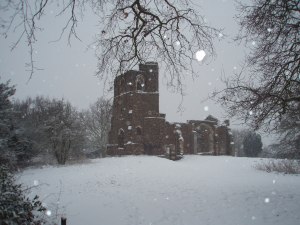
 A church ruin on an icy evening
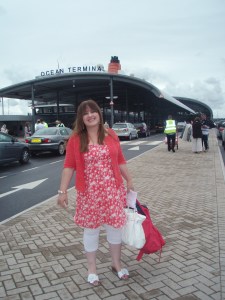
A single traveller on a cruise of a lifetime
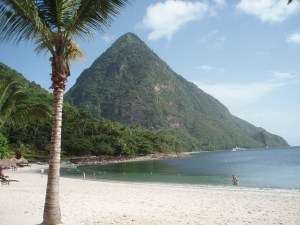
An exotic location; an island of mystery?

With each photograph my mind races with ideas for a novel or story, but does your novel transport the reader to an exciting destination as powerfully as a photo. I believe it should do, but does it have to?

Does there need to be a sense of place in a novel? A personal view.

I have enjoyed books where ‘place’ is not so important and the plot shines, weaving it’s way through the lives of the characters, but I don’t find them nearly as memorable, however well written, exciting, funny or compelling they seem to be at the time of reading. It doesn’t matter whether it is a place I know well, or have visited on holiday, or dream of going to one day. For me, it is the setting of the novel which tends to be the deciding factor in whether the book remains on my shelves or be taken to the nearest charity shop. If it is given a home then the book reminds me to look out for the author’s next release, otherwise it just joins the thousands of stories in the ‘library of forgotten book.’ Now that was in a great novel wasn’t it….. what was it called?
2 Comments

Filed under Book reading, Planning a novel, Reading a novel, Research, Writing, Writing a novel