Tag Archives: Researching for Historical Fiction

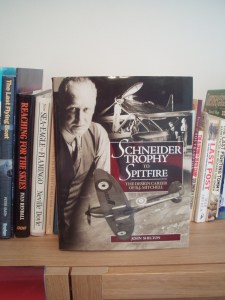
‘Schneider Trophy to Spitfire’ by John Shelton

Schneider Trophy to Spitfire by John Shelton

I bought a copy of John Shelton’s comprehensive reference book ‘Schneider Trophy to Spitfire‘ when visiting the RAF Museum in Hendon. With its chronological factual information, enhanced by original photographs, diagrams, adverts and anecdotes, it a an extremely readable history of early flying boats leading to the development of the Spitfire. Looking at the double page photo of Flt Lt B.D Hobbs in his Supermarine Sea Lion in the sea at Bournemouth is so clear, although black and white, that it looks as if it could have been taken yesterday and not in 1919.

My specific interest in reading background for my novel Ancasta Guide me Swiftly Home was only up until 1920, but with my family connections with Supermarine Woolston, with both my uncle and grandfather working there at the start of WW2, I was compelled to read it to the end.

RJ Mitchell was an amazing man with a vision for the future.  His engineering skills in designing the first flying boats and then sea planes, culminating in the Supermarine Rolls Royce S.6B winning the Schneider Trophy outright in 1931 over the Solent was an inspiration. John Shelton’s knowledge on the subject and his extensively detailed and meticulous research  has produced a volume which would be enjoyed by any person interested in history, especially that of flight.

I was able to refer to ‘Schneider Trophy to Spitfire’ on two occasions recently away from the context of my writing. One was the question posed, ‘When were metal rather than wooden hulls introduced?’

(John Shelton discusses in detail the Napier ‘Lion’  engine which could be supplied with either a metal or wooden hull in the ‘Southampton’ which appeared in March 1925)

The second was, ‘The Schneider Trophy winner was a sea plane, or float plane. When did the design suddenly change from flying boats?’

(Again Shelton describes the Supermarine Napier S4 ‘designed in an inspired moment… the greatest credit is due to RJ Mitchell for his courage in striking out on entirely new lines……..((from ‘Flight’)) and was first flown by Biard in 1925)

Supermarine’s Chief Designer was only 29 years old at the time and it must have been quite revolutionary for its day!

It was not until a recent visit to Solent Sky, the air museum in Southampton, when I looked at an exhibit of small model aircraft in the upper gallery that I could see even more clearly the development from the Schnieder Trophy to the Spitfire. Once the S4 had been established, and the world record in speed had been gained, it was not such a big leap to develop a sleek, fast and enduring landplane, the Type 224 Spitfire which is on display in Hendon today.

As a writer of historical fiction, you need to read around your subject in depth in order to weave the lives of your characters around the facts in certain moments in time so that the story is natural and believable. I would like to thank John for writing such a readable and interesting account, the fact that some of it went way beyond my technical understanding was irrelevant and I can highly recommend his book.
Leave a comment

Filed under Book reviews, Early Flight, Flying Boats and Sea Planes, Historical Fiction, Schneider Trophy, Southampton, Supermarine

Thanks to the Palmerstone Fort Society

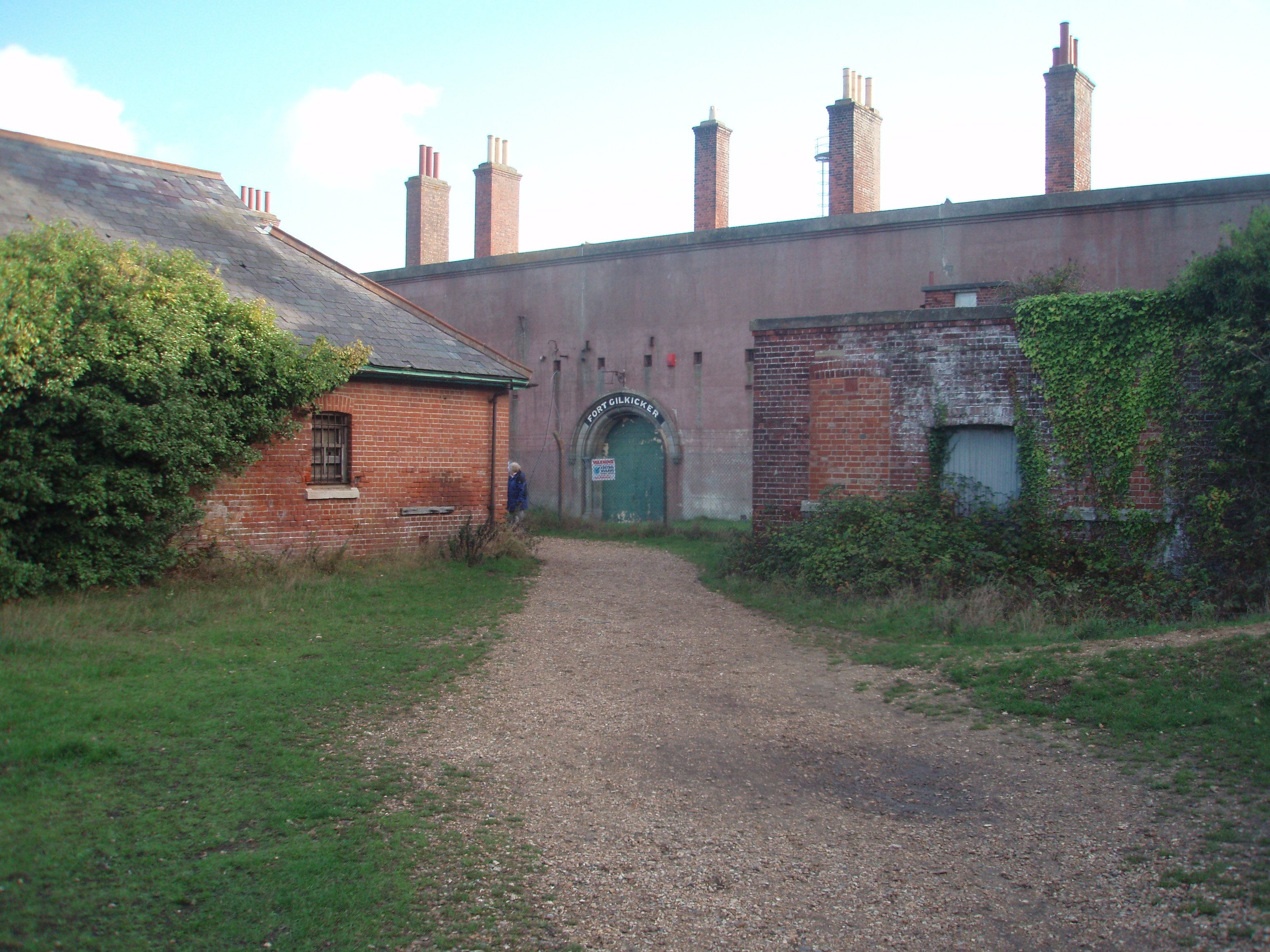
Gilkicker Fort, Stokes Bay taken in 2009

Continuing my series of thanks to all the people who helped me with my research for ‘Ancasta ~ Guide me Swiftly Home‘ I would like to thank The Palmersone Fort Society, in particular  Stephen Fisher who was extremely helpful in sending information about life at a fort at the turn of 20th Century and also checked relevant chapters for me.

One of my characters, an army corporal who had recently undertaken officer training back in 1910 needed to live in married quarters, since at the end of Riduna he had married Harriet’s only daughter Sarah. Harriet is the key figure in Riduna, and the matriarch who keeps the whole family together in Ancasta. The area around Portmouth is surrounded and defended by a multitude of Victorian Fortresses, both along the coast, out at sea and a couple of miles inland.

When searching for somewhere appropriate for my Corporal Parker to live with his new wife Sarah following officer training, I stumbled upon Gilkicker Fort, when doing an internet search. With married quarters completed in 1910 this was the perfect place for them to settle, within a day’s reach of Woolston by buggy. Once decided, I needed to go down to  spend time researching locally.

Back in the summer of 2010 I spent a morning in Gosport local history centre and then drove past the impressive Fort Brockhust and along to Stokes Bay. There I had a coffee in the cafe before taking a stroll between the smaller No 2 Battery Stokes Bay towards Fort Gilkicker. It was quite a cool and windy August day, unlike the fantastic weather we’ve enjoyed this year, adding colour and happiness to Olympic 2012 in London this year. (alongside the volunteers who made everyone smile!)   I digress!

I must admit thinking that it must have been pretty bleak living there in the winter, although the railway line and small pier still existed in those days, and the picture and atmosphere conjured up ideas as to how it might have been living in such an exposed spot. The place was derelict, overgrown in parts with brambles, but it was still possible to see that the structure of the outer and inner defences were relatively intact and the name was still proudly showing on the gate.

With the help of my visit and the article I was sent called ‘Tommy Atkins Married,’ I was able to picture what life might have been like before WW1 for Anthony and Sarah. I could sense her restlessness of spirit and Anthony’s excitement at witnessing the earliest planes flying overhead from Fort Grange at the newly formed RNAS station in 1914.

As ever, the characters told their own story in my mind’s eye, linking with Harriet in Woolston by letter and a visit to mark the occasion of the birth of Timothy, Sarah and Anthony’s only son.

Thus the story Ancasta, although based in Woolston Southampton, spans from Gilkicker along the Solent, up Southampton Water and over to Calshot. Until, that is, some of my characters venture further afield to the Channel Islands and the world beyond.

There are now plans to restore Fort Gilkicker to nearer its former glory, but not for visiting but to turn it into homes. From the plans they appear to be keeping to the original layout, with the semi circular sweep of granite with windows looking out over the Solent, forever guarding the entrance to Portsmouth Docks, as it was originally intended. In fact the open day has been announced for 22nd September 2012. It will be interesting to visit one day and see the difference and I only hope that the spirit of Fort Gilkicker and its historical significance has been preserved.

Leave a comment

Filed under Ancasta, Research, Riduna, Woolston

To The Alderney Museum and Society ~ Many thanks

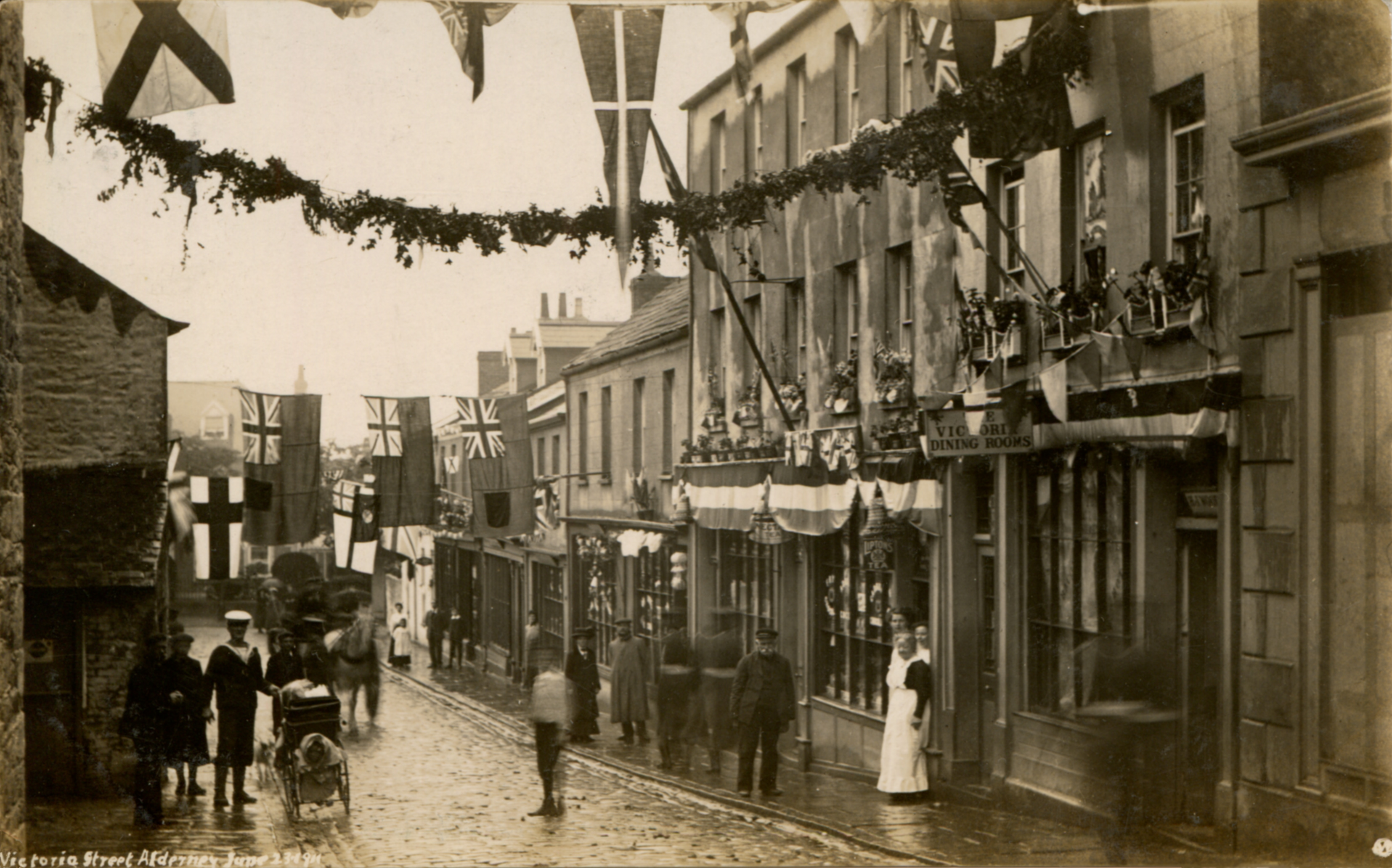
Victoria Street Alderney


(Many thanks to John Elsbury for the use of the Westness Postcards in this blog post)

I have spent many pleasant hours at the Alderney Museum browsing around their interesting displays and special exhibitions, but in the last few years my visits have become more purposeful. First of all I joined the Alderney Society, gaining access to their growing number of books, documents and other materials. The majority of these items have been donated to them, since many books were burnt for fuel during the Occupation in WW2.

The volumes cover history, flora and fauna of Alderney and all of the Channel Islands, with personal accounts and memoirs adding a real flavour to the picture of life on the island in days gone by for the researcher.

I would particularly like to thank Francis Jeens who, for the past two years, has acted tirelessly as the curator of Alderney Museum, inputting fresh ideas and positive links with the school and community. Under her guidance I was fortunate to be given access to materials from their substantial archives, delving into artefacts, pictures, newspaper cuttings and photos from the early part of the twentieth century and The Great War.

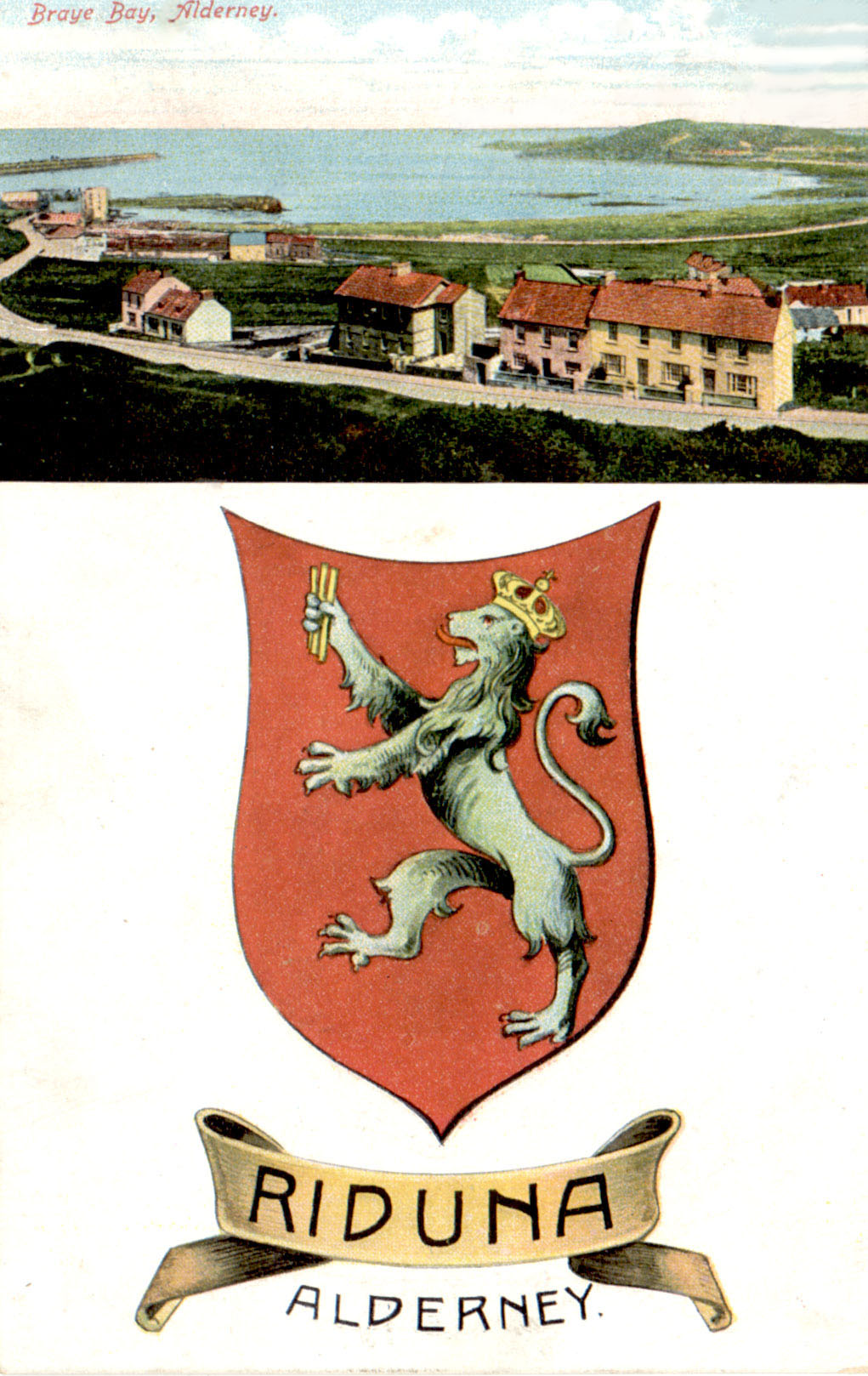
Then, on my last visit in October 2011,  Trevor Davenport offered to read through the relevant chapters of my manuscript. His valuable feedback not only ensured that the details relating to Alderney in Ancasta – Guide me Swiftly Home, were as accurate as possible, but also enabled me to amend a few details in the revised version of Riduna, my novel which bears the Roman name for the island of Alderney. Here is a web link to the Alderney Society and Museum:

The Alderney Society 

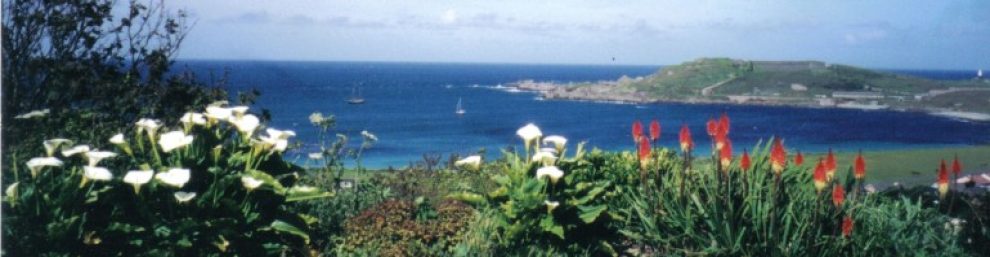
The island of Alderney is a very special place; one worth visiting not only for its rich history, but also for its unspoilt coastline, unique wildlife like the albino hedgehogs and black rabbits and popular sightings of puffins and gannets, but also not forgetting its very friendly people!

Leave a comment

Filed under Alderney, Ancasta, Channel Islands, History of Alderney, Research