Category Archives: Woolston

When was the last flight from the River Itchen, Woolston, Southampton?

As Woolston is regenerated from a forgotten backwater, passed without a second thought by drivers taking the Itchen Bridge which was opened back in 1977, I hope it will remember its fascinating history. As I research Woolston, this little suburb of Southampton, the more fascinating the history becomes in my mind.

I’m not old enough to remember the first flight of the Spitfire, like my father, or the famous Schneider Trophy winners taking off from Woolston and practicing off Calshot along Southampton Water watched by my grandfather and great grandmother, but I do remember the hovercraft. In fact the last flight out of Woolston, from the River Itchen was neither a flying boat nor a sea plane, but a hovercraft. 

There was a regular hovercraft service from Woolston to Cowes in the Isle of Wight which began in 1962, with its terminal just over the Floating Bridge linking Portsmouth Road Woolston with Southampton before the Itchen Bridge was built, but there is still a hovercraft service from Southsea, Portsmouth to the Isle of Wight today.

 The fact which most excited me recently was finding out that there is a company who works in the development of hovercrafts still thriving in Woolston called Griffon Hoverwork Ltd, based at Hazel Road close to the site of the original Supermarine Works. 

If you would like to know more about this strange mode of transport with a skirt where you fly on water, it’s worth visiting the only Hovercraft Museum in the world only along the coast towards Portsmouth at Lee on Solent. Amongst more serious craft you will see the hovercrafts used by James Bond in ‘Die another Day’ in 2002.
 

4 Comments

Filed under Early Flight, Southampton, Supermarine, Woolston

Why Woolston and The Channel Islands are Linked in History

 Woolston and The Channel Islands have been inextricably linked over the last few centuries!

Steamers to Guernsey, Jersey and Alderney left from docks just across the Itchen Ferry from Woolston for over a century and previously by sail. In fact before that, in the 18th century, Jersey was the fourth largest shipbuilder in the UK.

I’ve just found a wonderful new website which tells the history of Steamers to Alderney Click on the link to read more details.

With the advent of flight around the beginning of the 20th century, especially flying boats, it was not long before successful attempts were made to reach the islands by air.

The end of the First World War, of course, was a turning point. What to do with all those redundant aircraft and aircraft factories, let alone capable pilots at a loose end, those who remained intact anyway?  

Many of the factories could revert to making cars and various motor vehicles, which they had produced before the war, but what of the others? To many entrepreneurs, the Richard Branstons of their day, commercial flight was the most obvious solution and by autumn 1919 Supermarine were flying passengers from Woolston, Southampton to Bournemouth, The Channel Islands and to France. 

Following this Imperial Airways continued an international service using amphibians from Woolston between 1924 and 1929, whilst using Croydon for their land based aircraft.

Where does my interest stem?

With a Great Grandfather born on Guernsey and a Great Grandmother born on Alderney and parents brought up in Woolston, this history seeps into my soul and makes my heart sing!


With a Great Grandfather born on Guernsey and a Great Grandmother born on Alderney and parents brought up in Woolston, this history seeps into my soul and makes my heart sing!

It was not a coinicidence that the many early flights to The Channel Islands were made from the Woolston area and that

Leave a comment

Filed under Alderney, Channel Islands, Early Flight, Family History, Flying Boats and Sea Planes, Southampton, Supermarine, Woolston

Frivolous Flying Fact No 4 The rum and the umbrella!

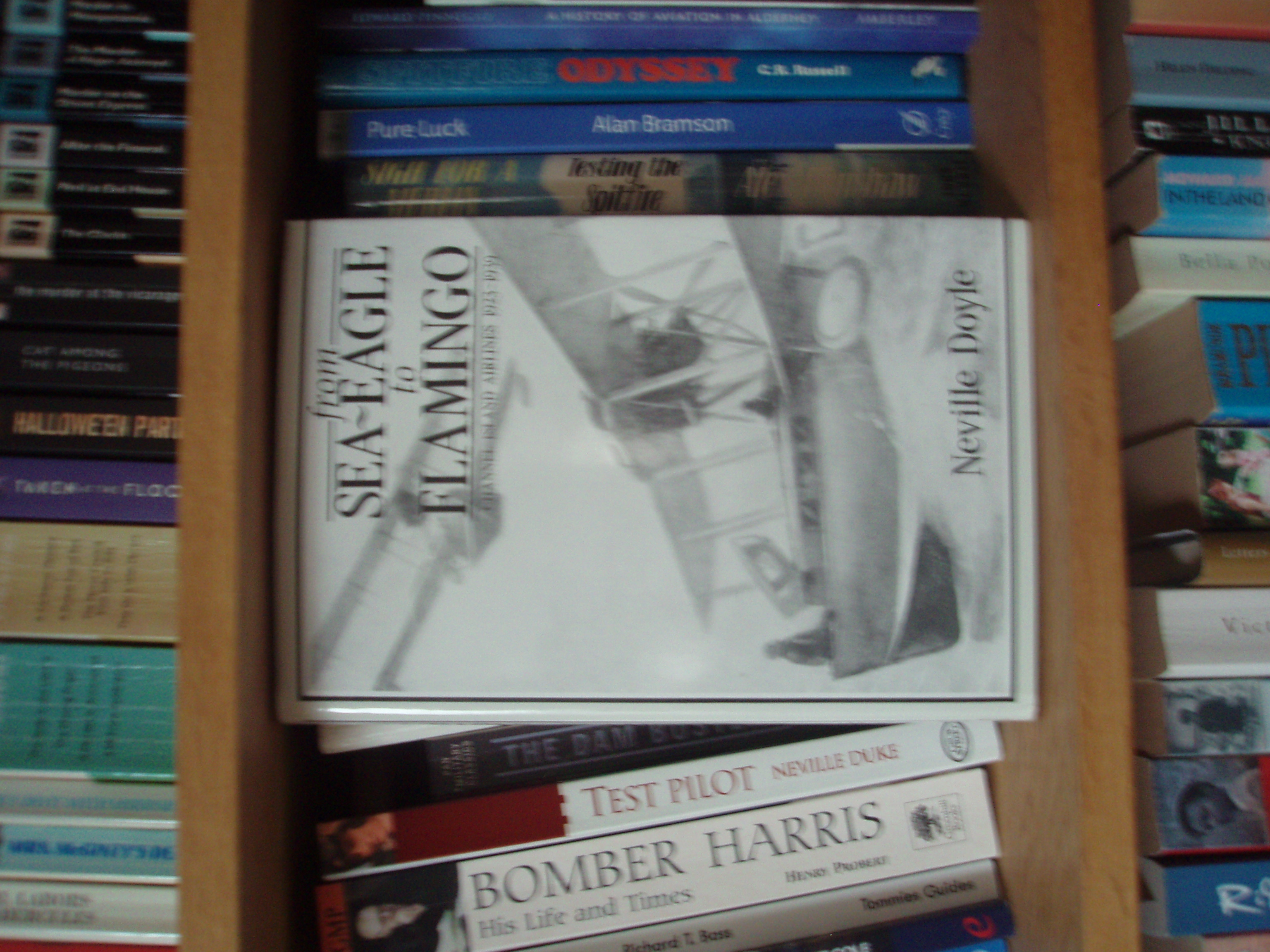
I read this amusing story in a wonderfully detailed account of early flght to The Channel Islands called:

                 From Sea Eagle to Flamingo – Channel Island Airlines 1923 – 1939

                                           by Neville Doyle

You can buy this through stockists via Amazon  or Brian Cook’s Aviation Bookhouse

Here’s the story paraphrased for your enjoyment:

The pilot Henri Biard explains that one passenger could sit in a cockpit in the bow of the plane and two more seated behind this. The pilot was sat just in front of the wings and engine.

It was a stormy day at the end of September1919; extremely cold with gale force winds and hail to contend with. Apparently back in Woolston Hubert Scott Paine ran out just before they set out and thrust a bottle of rum into the hand of one of the passengers, a Swedish millionnaire, to help to keep out the cold.

After about half an hour into the flight the temperature was deathly and the Swedish passenger took a swip from the bottle of rum, after which he tried to pass it back to the pilot. Unfortunately, all the rum poured out and was blown in the slip stream right back into the face of the pilot Henri, making him blinded for a few moments.

Not content with this, the passenger pulled out a gold handled umbrella, which he attempted to open above him. Quick thinking on the part of Henri, who could imagine disaster if the umbrella got caught in the propeller, he grabbed the umbrella and bashed the passenger on the head, knocking him out for the duration of the flight, another five hours!

Leave a comment

Filed under Book reviews, Channel Islands, Early Flight, Flying Boats and Sea Planes, Frivolous Flying Facts, Woolston