Tag Archives: Supermarine

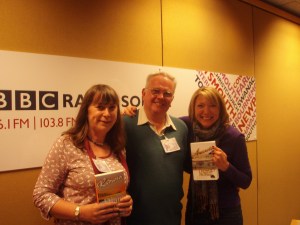
BBC Radio Solent. Diana and Colin have a chat with Katie Martin

Diana, Colin and Katie

I met Colin van Geffen, (the local artist who designed my covers and historian who checked some of my facts) outside the Bitterne Heritage Centre. Both Ancasta ~ Guide me Swiftly Home and Riduna are for sale there. It seemed a fitting place to meet since that’s where my research in the area began several years ago.

Colin suggested The Yacht Tavern for our lunch, down in Itchen Ferry. For those of you who have not been locals to Woolston for very long, Itchen Ferry is the area to the north of the Woolston Bridge, the south side being Woolston, and the villagers have been very protective of their patch for a couple of hundred years or more.
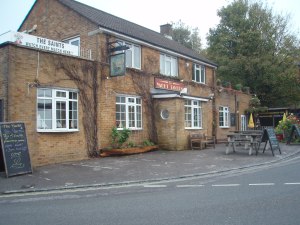
The Yacht Tavern, Itchen Ferry, Woolston

The welcoming landlady Jacqui was really interested in Ancasta, and that we were going to be on Radio Solent in the afternoon. She confirmed that, although the current buildings had probably been there since that area of Woolston was regenerated in the years after WW2, (The Supermarine Works was bombed out during a severe air raid over Southampton) she believed that there was an original public house called the Yacht Inn, on the same site before the war. This confirmed the truth of some of my research and so I was able to say that The Yacht Inn is featured in Ancasta Guide me Swiftly Home. (watch this space)

We had very pleasant,freshly made baguettes before thanking Jacqui and heading over the bridge for Southampton.

Once through the security of the BBC we waited in the foyer, sipping tea and chatting. I was trying not to be too nervous, especially when it was 2.25 and we had not been called, but Colin took it all in his stride and reassured me that it was normal and any minute now we would be collected.

Sure enough, a few seconds later, the friendly face of Rebecca the producer popped her head around the door and lead us up to the studio. I had no time to worry at that point, since Katie greeted us cheerfully before we were positioned in front of two large black microphones and within moments the introductions were made, the questions came and we were on air, with no time to think.

Katie, is a natural. The conversation flowed quite naturally between the three of us, my nerves dissipated and within moments it was all over.

We took photos are were soon ushered out, with Rebecca putting us both on the spot to ask us to share any special memories on Southampton, before we left through the revolving doors.

As I tried to get to sleep last night I was buzzing with all the things I could have said to the people of Southampton.

  • Why Ancasta ~Guide me Swiftly Home is such an appropriate name for the novel and why it is part of Southampton’s important heritage.
  • Yes Ancasta tells the story of the birth of Supermarine through the eyes of the family who lived in Woolston between 1910 and 1920 but it is about far more than that – The change in women’s roles during WW1, life at Gillkicker Foft and The Queen Victoria Hospital-Netley and the role of the Hampshire 9th Cyclist Regiment in the war………… in fact the history of the area during that time, including the Titanic

On reflection though, in the light of this morning, it all went extremely well and I would like to thank Jacqui, Rebecca and Katie for making me feel so welcome.It was not only an enjoyable experience but a truly memorable day out in Southampton.
Leave a comment

Filed under Ancasta, Early Flight, Flying Boats and Sea Planes, Historical Fiction, Marketing your novel, Research, Riduna, Southampton, Supermarine, Woolston

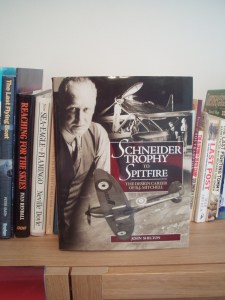
‘Schneider Trophy to Spitfire’ by John Shelton

Schneider Trophy to Spitfire by John Shelton

I bought a copy of John Shelton’s comprehensive reference book ‘Schneider Trophy to Spitfire‘ when visiting the RAF Museum in Hendon. With its chronological factual information, enhanced by original photographs, diagrams, adverts and anecdotes, it a an extremely readable history of early flying boats leading to the development of the Spitfire. Looking at the double page photo of Flt Lt B.D Hobbs in his Supermarine Sea Lion in the sea at Bournemouth is so clear, although black and white, that it looks as if it could have been taken yesterday and not in 1919.

My specific interest in reading background for my novel Ancasta Guide me Swiftly Home was only up until 1920, but with my family connections with Supermarine Woolston, with both my uncle and grandfather working there at the start of WW2, I was compelled to read it to the end.

RJ Mitchell was an amazing man with a vision for the future.  His engineering skills in designing the first flying boats and then sea planes, culminating in the Supermarine Rolls Royce S.6B winning the Schneider Trophy outright in 1931 over the Solent was an inspiration. John Shelton’s knowledge on the subject and his extensively detailed and meticulous research  has produced a volume which would be enjoyed by any person interested in history, especially that of flight.

I was able to refer to ‘Schneider Trophy to Spitfire’ on two occasions recently away from the context of my writing. One was the question posed, ‘When were metal rather than wooden hulls introduced?’

(John Shelton discusses in detail the Napier ‘Lion’  engine which could be supplied with either a metal or wooden hull in the ‘Southampton’ which appeared in March 1925)

The second was, ‘The Schneider Trophy winner was a sea plane, or float plane. When did the design suddenly change from flying boats?’

(Again Shelton describes the Supermarine Napier S4 ‘designed in an inspired moment… the greatest credit is due to RJ Mitchell for his courage in striking out on entirely new lines……..((from ‘Flight’)) and was first flown by Biard in 1925)

Supermarine’s Chief Designer was only 29 years old at the time and it must have been quite revolutionary for its day!

It was not until a recent visit to Solent Sky, the air museum in Southampton, when I looked at an exhibit of small model aircraft in the upper gallery that I could see even more clearly the development from the Schnieder Trophy to the Spitfire. Once the S4 had been established, and the world record in speed had been gained, it was not such a big leap to develop a sleek, fast and enduring landplane, the Type 224 Spitfire which is on display in Hendon today.

As a writer of historical fiction, you need to read around your subject in depth in order to weave the lives of your characters around the facts in certain moments in time so that the story is natural and believable. I would like to thank John for writing such a readable and interesting account, the fact that some of it went way beyond my technical understanding was irrelevant and I can highly recommend his book.

Leave a comment

Filed under Book reviews, Early Flight, Flying Boats and Sea Planes, Historical Fiction, Schneider Trophy, Southampton, Supermarine

I’m leaving, on a Sea Plane, Don’t Know When I’ll be Back Again!

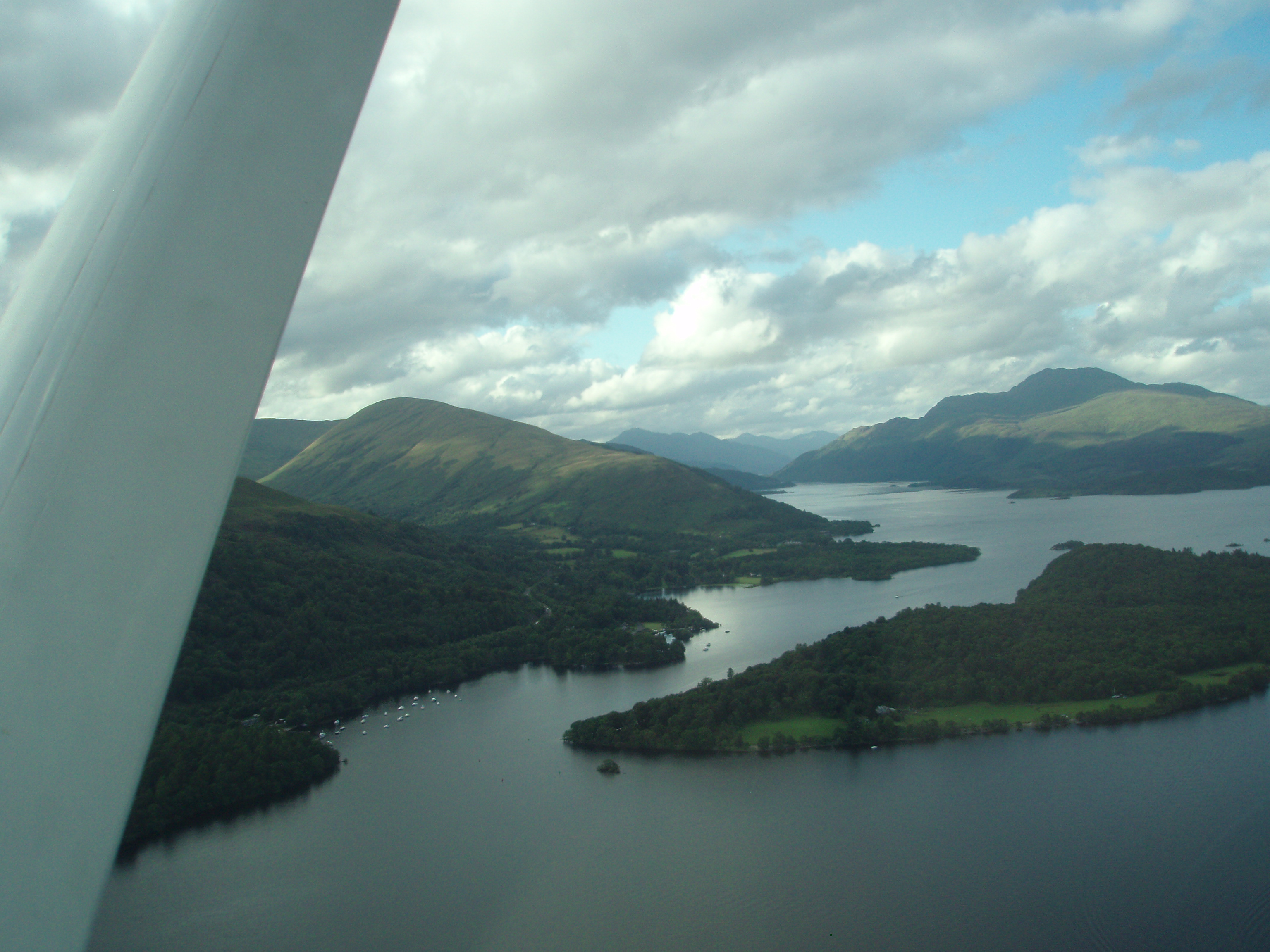
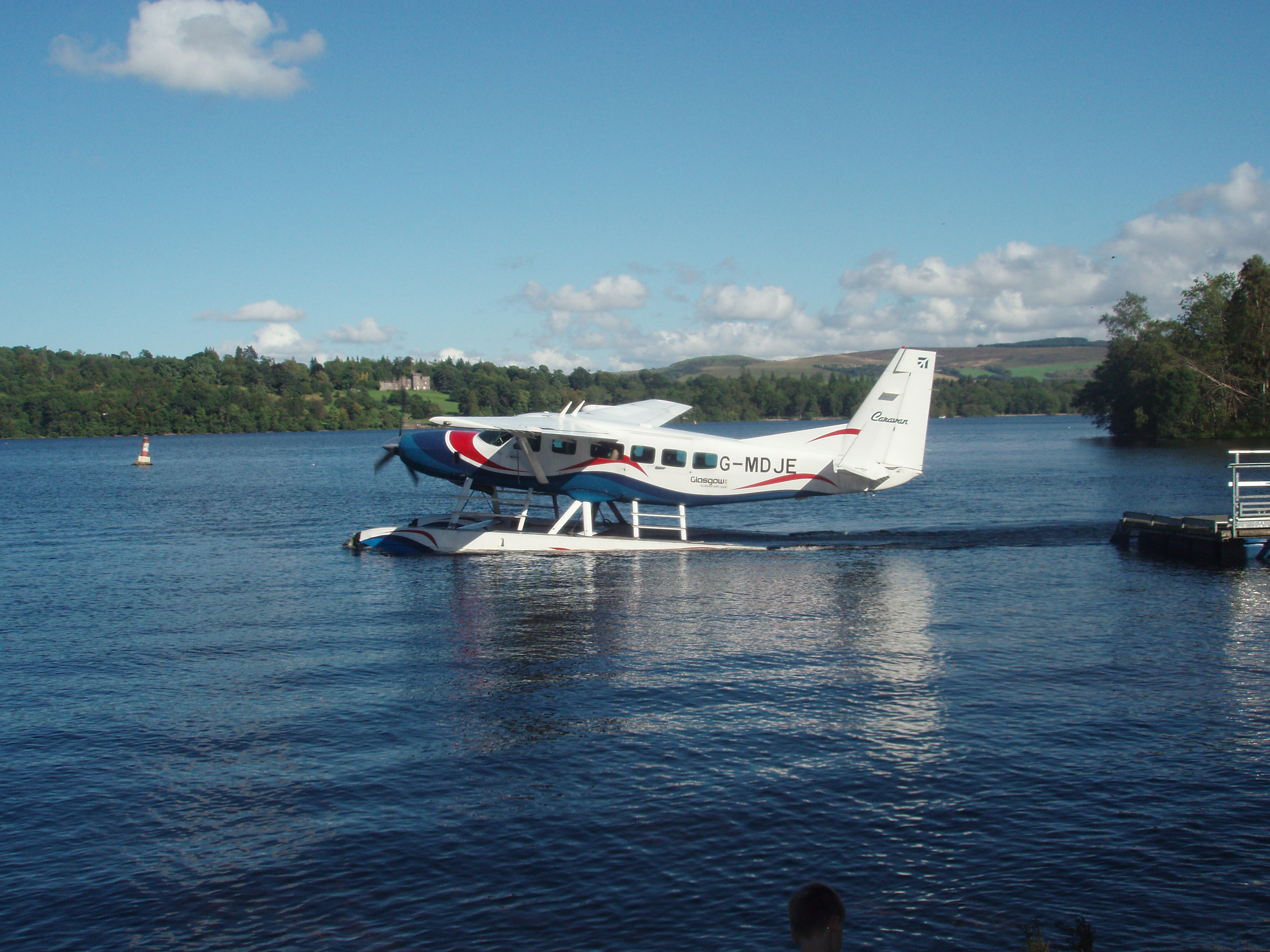
The Loch was calm, the sun was shining through scattered cloud and the air was still and warm as we waited for the arrival of the sea plane which was to take us on one of the most exhilarating experiences of my life. It had been my greatest wish to fly in a sea plane or flying boat, ever since I embarked on research for Ancasta ~ Guide me Swiftly Home three years ago.

Although Ancasta is a family saga, part of its tale is the story of the birth of Supermarine through the eyes of my main characters, Harriet and her sons. This was a Supermarine long before the Spitfire was thought of, when RJ Mitchell was designing innovative flying boats, with ever faster capabilities, in order to compete in the famous Schneider Trophy contest which first began in 1913.

While researching, I discovered Loch Lomond Sea Planes, the only company, as far as I am aware, who offer flights to the public in the whole of the UK. I mentioned it to my husband, which sewed a seed in his memory, and he bought me a pleasure trip for my birthday. What a birthday present!

To say that I was excited is an understatement. We ‘checked in’ in the grounds of the Cameron House Hotel, a stately Victorian Castle on the banks of the Loch, popular for weddings. The pilot gave out safety instructions before we settled in our allotted seats, ten people including the pilot, and he taxied out into the more open waters of Loch Lomond.

‘We’ll gain speed and the nose will dip just before we lift off the surface of the water,’ he explained.

The take off was so smooth as we glided out, and the water’s spray beneath us gathered momentum until we were gracefully sweeping up into the sky above the mountains, the swell below us sending ripples to the  water’s edge. Hills, valleys, mountains, streams, all swathed in sunlight below us. Soon we were in sight of the Western Isles; Mull just visible in the far distance and the sun on its course to set above Islay ahead of us, before we banked and turned back across the highlands.

With the mountains to our left and the lowlands of Scotland in the distance we glided in a gentle descent towards the Loch and landed on the water as smoothly as if we were icing a cake. Magic!

Leave a comment

Filed under Ancasta, Early Flight, Flying Boats and Sea Planes, Research