Tag Archives: researching a novel

Part 1: Forward to Janus ~ Gateway to Heaven on Earth

This summer I am releasing my parents’ novella, originally called ‘Heaven on Earth’ Since it is the prequel to my first novel Riduna, I have returned to the romantic mythological title, calling it Janus, who was the Roman gateway to heaven on Earth.

Here is my parents’ Forward, which explains the original inspiration for their story:

“THE ISLAND OF Alderney, the third largest in the Channel Island group, was our family’s favourite holiday destination.
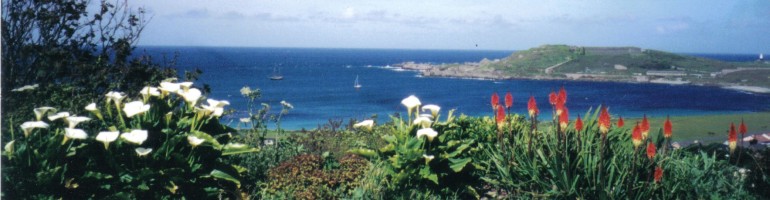
This is a story of life in Alderney, during the latter part of the 19th Century. It is about the members of our family who lived there. Our grandmother Harriet Hopkins was born on the island in 1871 and we now believe her family had lived there since 1600.
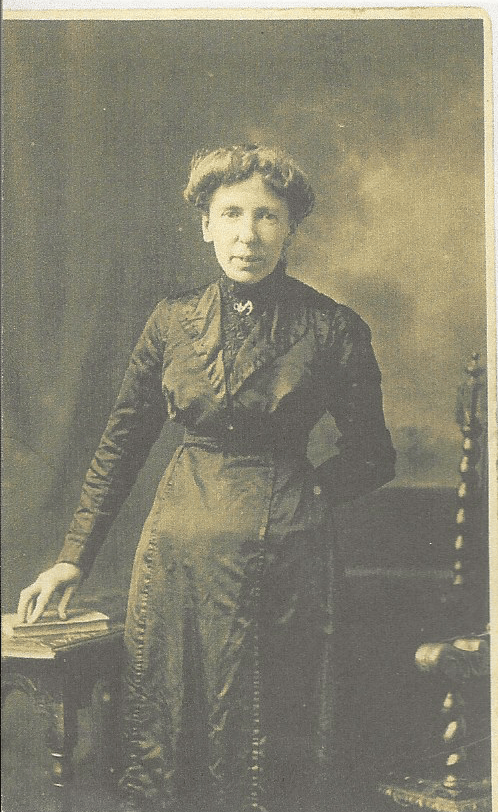
During our research we found a fairly extensive maritime record of Harriet’s father, Captain John Hopkins and that Harriet’s step-grandfather John Taylor, was a Scotsman who had been in the army. We decided to focus our tale on these two characters, although we changed the captain’s name to Harry to save confusion.

During the period covered in this story the island seems to have been a very happy place. Travel to the outside world was not easy and few of the Islanders ventured beyond the island shores. In contrast between that of the poor in London for example.

As for our grandmother’s life on Alderney we had very few facts. We discovered that Harriet’s grandparents were publicans from various census records and that they lived in ‘The Reading Rooms’ in Braye Road. Also, that John Taylor eventually married our great grandmother and farmed four acres.

With so little to go on this story is essentially fiction, constructed around available genealogical information. We have also adapted island customs, practices and folklore contained in island literature.

Part 2: Why have I decided to publish my parents’ novella? to follow next week.
Leave a comment

Filed under Alderney, Channel Islands, Family History, Historical Fiction, History of Alderney

Mid Bedfordshire Murder Mystery Tour ~ No 2 ~ A Walk to look over the vale of Bedford

For the next few posts I will be exploring the places in Bedfordshire I know so well, which feature in my murder mystery ‘Murder, now and then. This time we will leave the bicycle at home and venture on foot.

There are many pleasant walks around Haynes and Clophill ~ one passing the old church and through Pedley Woods returning via great Lane ~ another progressing further through the woods until you emerge overlooking the valley towards Hitchin and the Barton Hills, but today I’m going to take you from Haynes Church, the inspiration for my novel.

There is parking (at your own risk) in the church car park, unless there is a service on, and I’d like you to follow the steps of the video and pause a while at Nelly Rault’s grave. Nelly was the young Jersey lass whose true story and unsolved murder set my writing journey in a direction I had not anticipated, but have thoroughly enjoyed. Once you have found her grave you can also admire the view across to Haynes Park, close to the setting of my murder back in 1919.

We shall walk today because you will be  following in my heroines footsteps, who I have renamed Lucille Vardon.

Back-tracking along the church path, turn left, passing the unspoilt cottages of Haynes Church End on you right. You will pass one of the imposing gateways to Haynes Park, but this is private land. Fortunately for us the farm track immediately to its right is a

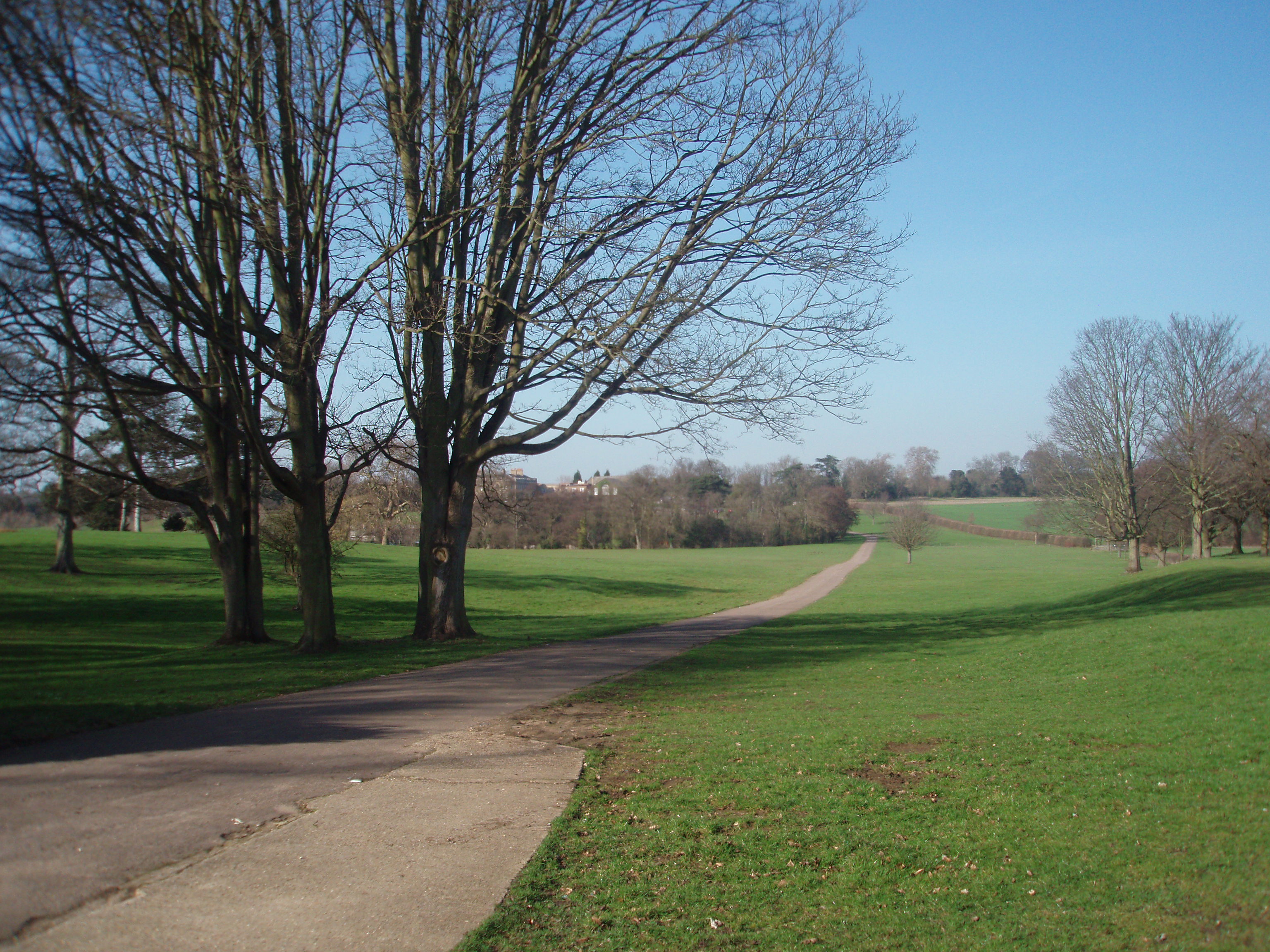
Haynes Park, Bedfordshire

Haynes Park, Bedfordshire

designated footpath and this leads parallel to the drive and winds on the edge of farm fields. Taking a right hand turn, clearly marked, the footpath veers towards the village of Haynes before joining another path from the village. Turning left the other side of the hedge you continue, back towards Haynes Park and their farm buildings until you reach a small pond. You can pause on the bench here if you wish to seek some peace and quiet.

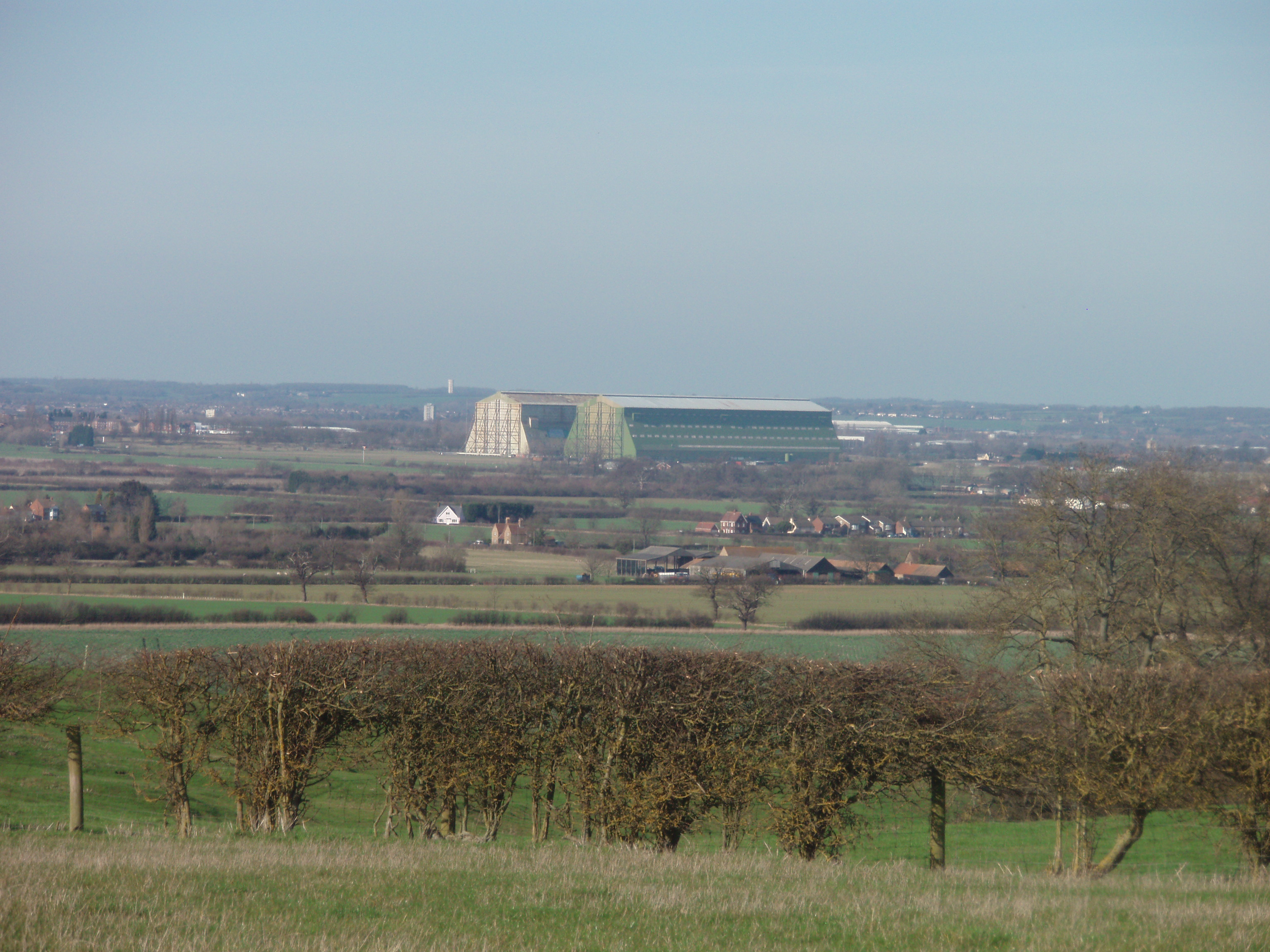
The path continues until you are standing above the valley looking over towards Bedford. The sight of the Shortstown hangers, great cathedrals paying homage to the airships of

Shortstown Hangers

Shortstown Hangers

yesteryear including the R101 in the distance ~a sight which captures you breath in a moment’s reflection. Did ‘Lucille’ stop too and gaze in awe of this remarkable sight whilst walking this way from her work at the army camp to Bedford?

Below there are footpaths towards Wilshamstead and, although there is no legal path through the woods now where the 1919 murder took place, but the trees are clearly visible and whilst I was planning my novel my imagination ran riot here, as ideas flowed to intertwine past and present. It was here that I came up with the title ‘Murder, now and then,’ before the ins and outs of the novel were conceived but not long afterwards the idea of a centenary in 2019 began to take shape and the ‘now’ murder shifted a few years!

You may retread your footsteps to return to the church or, if you have a longer walk in mind you could continue back towards the village of Hayes and return to Church End by road, adding another couple of miles or more to your walk.

Returning along the lane you may glance over towards the farmhouse in my novel and your eyes may do a double – take. It does not actually exist and it superimposed on the video ~ clever hey! (I did not wish to upset a local farmer!!)

‘Murder, now and then’ is Diana Jackson’s third novel and is a murder mystery in Bedfordshire set in 2019, with flashbacks to the original murder in 1919. 

5 Comments

Filed under Bedfordshire, Murder Now and Then, Virtual Tour of Bedfordshire, Writing, Writing a novel, WW1

Amazing Female Aviators in the Early 20th Century ~ Harriet Quimby 1875-1912

Whilst researching for ‘Ancasta Guide me Swiftly Home’ I read a great deal about early aviators and was exciteded to read about Harriet Quimby, even though it had nothing to do with my novel. Anyone writing a novel knows how easy it is to get sidetracked and it led to me finding out about other female pioneers in aviation. After all, everyone has heard of Amy Johnson and Amelia Earhart from the 1930’s, but I was surprised to discover many women whose endeavours matched those male counterparts of their era as far back as 1910! Their daring to venture in what was seen as a man’s world accomplished much more than their achievements in flying alone, although these were certainly remarkable. They also designed clothes, opened factories, begun flying schools and fought prejudice at many levels. They were not, as I had imagined, all rich young ladies with plenty of time on their hands, but women who dared to be different.

I’d like to share this in posts over the next couple of weeks. If you enjoy my posts then please let your friends know and share it on twitter and facebook.

Harriet Quimby 1875 – 1912 ‘The Green Eyed Beauty’

Background and inspiration to fly ~ Harriet Quimby came from a poor American family, but by working herself up from journalism and theatrical writing she became a competent and successful screenwriter for the silent movies of her time. It was after attending the Belmont Park Air Tournament on Long Island that she decided she must learn to fly.

Aviation achievements ~ In 1911 she gained her pilots licence and became the first female American to gain an Aero Club of America Certificate. As many pilots of her day, Harriet gained experience and a way to fund her ambitions by participating in several air shows, but her main achievement was in April 1912 to be the first woman pilot to fly across the English Channel.

Death ~ Unfortunately she met her early death as a passenger in a two-seater Bleriot, only three months later in July 1912.

Notable difference ~ Harriet was also noted for her beauty and her dignified manner, but her other notable legacy was that she designed a suitable style of dress for women pilots of her day. She was known for her purple satin one piece flight suit which converted into pants (trousers) when flying but to a skirt when out of the aeroplane so that she did not offend the dress expectations of her era.

Harriet Quimby certainly moved the women’s movement forward in her own way and her fashion sense would amuse and please a friend of mine I visited recently who still keeps up to date with what is fashionable.

Leave a comment

Filed under Early Flight, Frivolous Flying Facts, Research, Role of Women