Tag Archives: writing a novel. words

Mid Bedfordshire Murder Mystery Tour ~ No 2 ~ A Walk to look over the vale of Bedford

For the next few posts I will be exploring the places in Bedfordshire I know so well, which feature in my murder mystery ‘Murder, now and then. This time we will leave the bicycle at home and venture on foot.

There are many pleasant walks around Haynes and Clophill ~ one passing the old church and through Pedley Woods returning via great Lane ~ another progressing further through the woods until you emerge overlooking the valley towards Hitchin and the Barton Hills, but today I’m going to take you from Haynes Church, the inspiration for my novel.

There is parking (at your own risk) in the church car park, unless there is a service on, and I’d like you to follow the steps of the video and pause a while at Nelly Rault’s grave. Nelly was the young Jersey lass whose true story and unsolved murder set my writing journey in a direction I had not anticipated, but have thoroughly enjoyed. Once you have found her grave you can also admire the view across to Haynes Park, close to the setting of my murder back in 1919.

We shall walk today because you will be  following in my heroines footsteps, who I have renamed Lucille Vardon.

Back-tracking along the church path, turn left, passing the unspoilt cottages of Haynes Church End on you right. You will pass one of the imposing gateways to Haynes Park, but this is private land. Fortunately for us the farm track immediately to its right is a
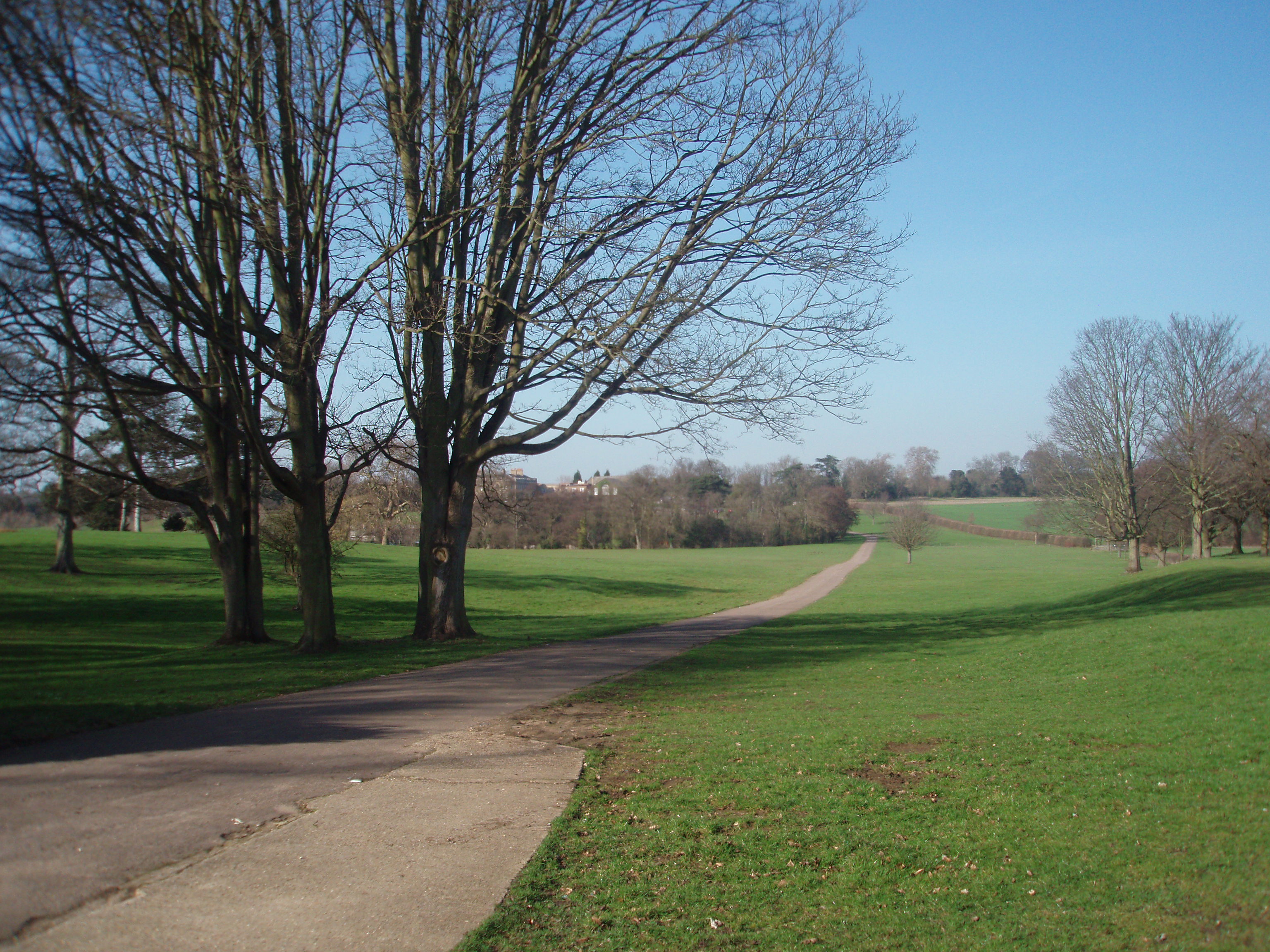
Haynes Park, Bedfordshire

Haynes Park, Bedfordshire

designated footpath and this leads parallel to the drive and winds on the edge of farm fields. Taking a right hand turn, clearly marked, the footpath veers towards the village of Haynes before joining another path from the village. Turning left the other side of the hedge you continue, back towards Haynes Park and their farm buildings until you reach a small pond. You can pause on the bench here if you wish to seek some peace and quiet.

The path continues until you are standing above the valley looking over towards Bedford. The sight of the Shortstown hangers, great cathedrals paying homage to the airships of
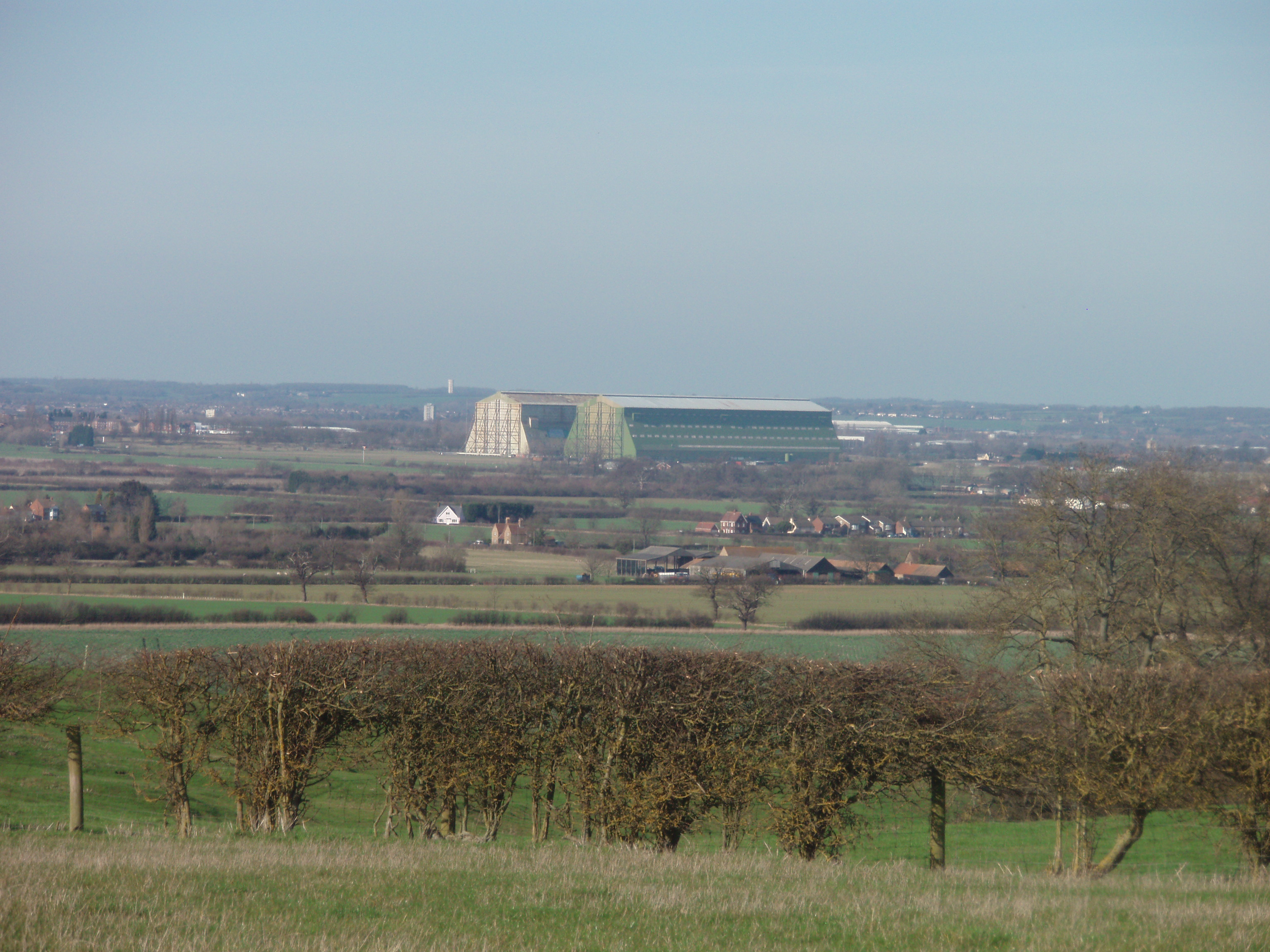
Shortstown Hangers

Shortstown Hangers

yesteryear including the R101 in the distance ~a sight which captures you breath in a moment’s reflection. Did ‘Lucille’ stop too and gaze in awe of this remarkable sight whilst walking this way from her work at the army camp to Bedford?

Below there are footpaths towards Wilshamstead and, although there is no legal path through the woods now where the 1919 murder took place, but the trees are clearly visible and whilst I was planning my novel my imagination ran riot here, as ideas flowed to intertwine past and present. It was here that I came up with the title ‘Murder, now and then,’ before the ins and outs of the novel were conceived but not long afterwards the idea of a centenary in 2019 began to take shape and the ‘now’ murder shifted a few years!

You may retread your footsteps to return to the church or, if you have a longer walk in mind you could continue back towards the village of Hayes and return to Church End by road, adding another couple of miles or more to your walk.

Returning along the lane you may glance over towards the farmhouse in my novel and your eyes may do a double – take. It does not actually exist and it superimposed on the video ~ clever hey! (I did not wish to upset a local farmer!!)

‘Murder, now and then’ is Diana Jackson’s third novel and is a murder mystery in Bedfordshire set in 2019, with flashbacks to the original murder in 1919. 
5 Comments

Filed under Bedfordshire, Murder Now and Then, Virtual Tour of Bedfordshire, Writing, Writing a novel, WW1

‘The Last Word’ or ‘Oh dear, which word?’

As an English teacher I’m intrigued by the power of words and why, when proof reading, I change one for another or delete it altogether. Looking carefully at the words we use is only one small part of the proof reading process, but nevertheless it is a vital one if we want our writing to flow with ingenuity and succinctness and, more importantly, we hope that the story will read seamlessly.

Here are some of my word sins. Are they the same as yours?

1.       Repetition of a word

Repetition is the most obvious culprit. It creeps up on me unawares when I am writing, so much so that when proof reading I feel a painful ouch of embarrassment. How could I do that? I’ll give you an example from my recent reading.

Within a small stretch of conversation I had written the word ‘island’ four times. Oh dear! What to do? Changing three of these to ‘place’, ‘Riduna’ and ‘there’ suddenly and simply had the conversation flowing happily again.

2.       Repetition of a concept

I often find that I have repeated myself but with different vocabulary. Why, I do not know?

(Ha. I’ve even noticed it my sentence above – suddenly, simply and happily all in one breathe – back to the drawing board!)

Anyway, here is another example:

‘welcoming them home cheerily, with good humour’ I changed to ‘welcoming them cheerily’

3.        Adverbs

If in doubt leave it out!

I remembered being most indignant on the first writing course when I heard that I should to be selective with my use of adverbs and to try to leave them out altogether if I could. As a teacher I was dismayed by the quality of my student’s writing and had always encouraged them to use more adverbs and adjectives but I gradually realised that the majority were superfluous. Nevertheless old habits are hard to break and an example I reread this morning was:

‘He nodded his head silently.’ which became ‘He nodded.’ Why? Of course he was nodding his head and of course he was silent! I am stating the obvious twofold, but I still catch myself doing it.

4.     ‘To boldly go’

The age worn joke still sets me questioning. When I do decide to use the occasional adverb, especially in relation to time, where should I place it in a sentence. For example:

‘When he did finally wake up,’ becomes the more succinct, ‘Finally, when he woke up,’ …..

5.    Word fillers

I have to watch out for unnecessary words, big time. They slip in, leaving me unawares and, even when I think I’m proof reading for the final time, I find them lurking. Your list may be quite different to mine but these are a few I’ve noticed recently:

at all, just, then, specifically, actually, still, now, somewhat, really

‘he just glanced over his shoulder’           becomes             ‘he glanced over his shoulder’

6.       A ‘better word’ or choosing ‘apt vocabulary’

We’ve all reread sentences and puzzled long and hard over particular words and even turned to a Thesaurus in our despair. Occasionally we arrive at a solution which makes us buzz with excitement and at others we are just pleased with the improvement.

‘He was a little embarrassed at first,’   became ‘He reddened.’

7.       Finally – avoiding time worn phrases

It’s hard not to fall into the trap of using these, but it is whilst proof reading, when the story is already comfortingly recorded, that you can indulge in optimizing your creativity.

‘Come on Diana,’ a kindly friend rebuked on reading a chapter. ‘I like the story and look forward to reading the rest,’ (note the encouragement before the bombshell here, the method of a diplomatic and a successful critique) ‘Everyone’s boat’s bob. Can’t you think of anything more imaginative?’ I did of course.

 ‘Small boats mingled, chattering messages as they fidgeted against the glittering water.’

These are a few of my sins with words. What are yours?

© Diana Jackson April 9th 2011

6 Comments

Filed under Proof Reading, Writing, Writing a novel