Tag Archives: Alderney

Women and Island Life over 100 years ago

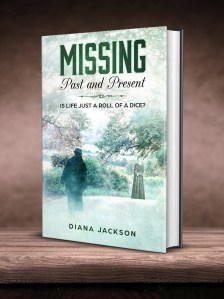
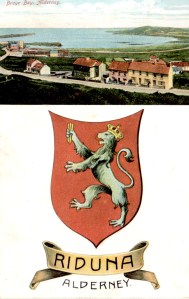
aysta66In the next few posts, during August I am going to address issues regarding women in the late 19th and early 20th Centuries. It was a period of great change, a contrast you will see if you read my two novels ‘Riduna‘ and ‘Ancasta Guide me Swiftly Home.’

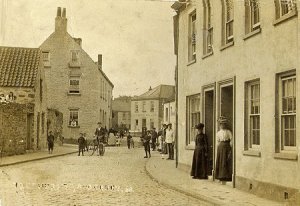
Riduna is set in the mid to late 19th Century and on the island of Riduna (Alderney) the role of single women was certainly to work in service or in the important tourist industry. They would be maids in the various larger homes or boarding houses or waitresses or cleaning staff in the few hotels. Travelling was important to the Victorians of means and destinations like Alderney provided a desired break from everyday life at home. (Nothing changes)

On Alderney the majority of children went to school, although the girls would have focussed on reading, writing and needlework. Only a few would have enjoyed a wider curriculum. It is interesting to me that my Great Grandmother, living on Alderney at the time, was literate, whereas her husband, a Guernseyman could barely sign his own name at the time of their marriage. By 16 year, all the girls would be employed to provide a meagre income to contribute to household expenses until they were married. Then they would have to give up work, unless they continued in the family business, whether in a shop such as a bakers or an inn or boarding house.

Added to the life of the islanders the population was swelled by various migrating groups which had an impact on the social dynamics of late 19th Century Alderney. Firstly there were professionals from mainland Britain….for example doctors and teachers who would bring their families with them and to a certain extent a different set of values. Aspirations of the daughter of an island doctor would differ from that of an island girl. A female teacher would have been a spinster with a vocation. What happened if she  was tempted to marry? How would the islanders react. Her attitude to the dilemma would be more considered and rational than that of a young island girl, but it would none the less give a conflict of emotion.

The other unsettling dimension to life on Alderney at that time was caused by the workers on the various Forts and defences on the islands. These included migrants from the UK, Ireland and even Italy; those moving to wherever there was work to make a living for their family, who would travel with them. Thus communities around the Crabby Bay area swelled and to a certain extent kept to themselves. Often they would educate their children at home and have their own churches. Mix between these groups and islanders was not always encouraged.

The other migrant workers of influence were the military. Wouldn’t the dashing red-coated soldiers turn the heads of many simple island girls? Wouldn’t their presence cause a stiffening of attitude from the island elders as they wished to protect the virtue of their young people?

The other major factor was the island itself. In a big city there is a certain amount of anonymity but on an island gossip abounds. One persons private business is known by the whole island within a very short time. Life on an island can be idyllic but it also can be claustrophobic, so much so that some dreamt of the wider world. Yet again there is a divide of the sexes here, because opportunities to leave the island were far more available for young men than girls, unless they married a visitor.

If you’d like to read more about these conflicts, my first novel ‘Riduna’ gives you a flavour of island life at that time. All these issues gave colour to the underlying storyline, adding a community dimension to the lives of the main characters Harriet and Edward.


Leave a comment

Filed under Alderney, Channel Islands, Historical Fiction, History of Alderney, Riduna

A Bank Holiday Moment on Alderney before I Resume my Virtual Tour

Many people I’ve been in touch with didn’t feel up to writing a piece for my competition but instead they shared with me their favourite spots on Alderney. Here are their interesting and varied answers:

Em’ said that he loves walking his dog along the path from Platte Saline to Clonque because the sea is wild, scenery rugged and you often never see a soul.

M’ said that his favourite spot was Cachaliere Pier.  ‘It was a bit of a scramble but it was there I saw Granville Fritilliaries whilst soaking up the sun. Mind you the cliff top walk along from Longy was lovely too.’

B’ said that she loved coming back to the hotel in the evening and popping up to the terrace at The Harbour Lights and just enjoying the end of the day looking over Braye Beach.

V’ said that the Black Rocks at Saye Bay was one of his best fishing spots and he held wonderful memories of many happy hours there.

J’ described the views from the clifftops over Telegraph Bay, especially when you can look over to the other islands of Guernsey and Sark.

P’ said his place is locally known as the Frying Pan Battery at Longy Bay, part of the Victorian defenses.  With views over the long sweeping bay over to Fort Raz and France in the distance, it’s a wonderful place for a walk, take the dogs for a run or just to sit.

S’ said ‘6 of us went to Alderney from Torquay on a boat called the Devonian ALDERNEY was sweltering and the Steam Train was kind of cute.’

J’ said ‘My wife goes to Spain but why should I want to go away for a holiday? I have all I want right here.’

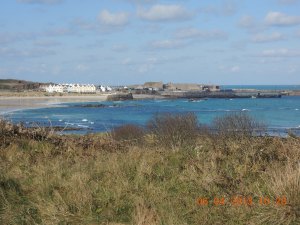
And my favourite spot? That’s difficult because there are so many, but the top one must be standing on Douglas Quay at Braye looking out across the beach towards Fort Albert and out to sea, imagining all those travellers arriving at this idyllic spot over the centuries. And my favourite bay has to be Corblets and Arch. On a sunny day you can’t beat them anywhere in the world. Magic!

Looking out over  Braye Beach

Looking out over
Braye Beach

I asked another islander E’ and she wrote, ‘everywhere on Alderney, but my most favourite must be sitting in my garden weeds and all!

I’d like to thank everyone for sharing.

And what is your favourite spot on Alderney or memory of a special visit?I’d love to hear from you either as a comment on this blog or an email diana@dianamaryjackson.co.uk.

7 Comments

Filed under Alderney, Channel Islands

Alderney Writing Competition ~ A Clear Winner!

Keith Webster is the clear winner of my writing competition. He sent me not just one, but four pieces and I have chosen my favourite to share with you now. He describes vividly the years following the war!

“By the time you read this, I will be into my seventh decade on this particular planet.  A scary enough prospect to be sure but the alternatives are, currently at least, not worth considering. So I thought I would journey back some fifty years in order to remind myself just how Alderney worked in the early nineteen sixties.

Our population was much the same as was our road network, island gateways, financial institutions and churches but that was really about it. Take milk, for instance. Firstly it was produced on some fifteen tiny farms and then, after the bits of straw and stuff had been (mostly) removed, it was dispensed to individual households, the matriarch of which would leave a suitable jug outside her front door. Underneath this receptacle would be a handful of coins to pay the milkman, mainly my father, in case you were interested.

Schooling was haphazard at best and rudimentary at worst. If you didn’t pass the eleven plus you left at fourteen to try and carve out a life where the steel works or meat factory were your best options.  Shopping too was very different. No supermarkets, of course, but Victoria Street was full of small retail outlets selling everything from mouldy sweets (Mr Parmentier, you had much to answer for) to bathroom fittings and everything in between.

Car ownership was still in its infancy with about 200 or so vehicles on our roads. Telephones were black , shiney and rare. If you had one it was placed reverently in the hall for all visitors to see and wonder at. Most calls were still routed through an operator and public telephones required considerable manual dexterity to make them work. Television was equally rare and difficult to use with reception from transmitters in the UK largely dependent on weather conditions and the whim of immature technology. Getting any electronic device fixed (or mended as it was quaintly known) depended totally on the skills of Mr Bichard whose record of success could be described as patchy but only if you were of a charitable disposition.

Electricity supplies were intermittent and unpredictable and many houses still used wiring installed by unwanted visitors some fifteen years previously. Which, of  course, is the strangest thing. Just one and a half decades or so prior to my tenth birthday, the island was a semi-derelict mess and according to the then UK government , unfit for human habitation both at the time and for the foreseeable future.

I sometimes think we forget the efforts of those who returned after the war, the sacrifices they made and the hardships they endured in order to get Alderney up and running again. We wouldn’t be here without them and it makes an old chap very humble. Still no excuse for mouldy sweets though.”

I love the way Keith draws us back to a time when life was really tough for the islanders and maybe helps us to appreciate what we have today! Thanks Keith!

aygen09f

Leave a comment

Filed under Alderney, History of Alderney