Category Archives: Riduna

Another 5* Review ~ A Balance of Perspectives

I would like to celebrate with you two new 5* reviews on Amazon this week, the first for Riduna (the island of Alderney, Channel Islands):
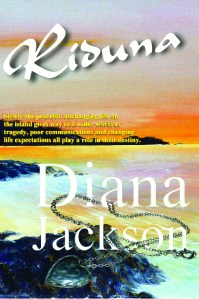
Riduna

Riduna

“I read this book as the precursor to Ancasta to ensure I understood the characters and settings, and I’m pleased that I did. The author paints an engaging picture of life on the island of 150 years ago, aspects of which I could relate to my own early years. The story tells the timeless dramas of life’s progress spanning many years against this fascinating background, and is very readable – you really feel you get to know the characters and the island.”


The reader continues in his praise of Ancasta:
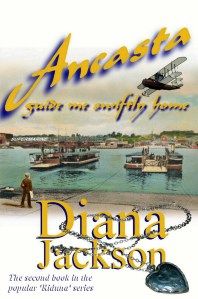
Ancasta Guide me Swiftly Home

Ancasta Guide me Swiftly Home


“The Riduna story develops dramatically as it shifts its location to Itchen Ferry Village, Southampton, straddling the years of WWI. We move from small island life to the world stage. I know this area well, and have stepped in the footprints of the characters. There is a rich wealth of detail encompassing the incredible events of this period, and the author has researched well, but kept the historical aspects in context with the central characters. Most enjoyable, and I very much look forward to the next in the series!”

Do I know this kind and thoughtful reader you may ask? Is he a friend or long lost relation? No, he first emailed me saying he’d bought the books when searching for the telephone number of The Yacht Tavern in Itchen Ferry village (most say Woolston unless you live there, where the people are very particular to differentiate and always have done, rightly so) I have met him subsequently. Following a successful book signing session at West Quay Waterstones Southampton I took my parents to the Yacht for lunch and I signed the gentleman’s books and had a lovely chat.

I particularly liked the way he talked of walking in the footsteps of the characters and several people, who have written emails to me after borrowed the books from local libraries down in Hampshire, said much the same thing.

Other positive reviews recently received recently were from a reading group in Luton, Bedfordshire and yet again I knew none of them (I am writing this for the writers among you) The feedback was that all enjoyed the book although it was not a genre they would normally pick up to read, preferring thrillers and murder mysteries. I was so grateful for their feedback because firstly they had not read the first in the series Riduna and secondly they lived no where near the settings of the novel and so I was assured that their unfamiliarity did not diminish their enjoyment of Ancasta.

Having said all of this I do appreciate any feedback, especially from writers who will point out the finer details. I can learn much from their feedback which will enable me to refine my craft for future writing. I always ask readers and writers for their honest opinions, as I hope I would give myself.

If you have read either of my books and would like to let me know what you think, but would rather email me  here’s the address: 

diana@dianamaryjackson.co.uk

I look forward to hearing from you.
3 Comments

Filed under Ancasta, Book reading, Book reviews, Riduna, Woolston

Two contrasting heroines ~ Harriet and Sarah

Last week I received a lovely review from a reader of Ancasta via Facebook:

Yes I really loved it, I read the start and then took a break and read the bulk of the book quickly, but I need to reread the start I think. I thought it was great, so many characters so complex, must have been hard to choose which characters to not really delve into, like Anthony and Ernest’s wife.

Left me feeling I wanted more, it would make a great TV drama. It was a great read. Have you started work on the third book.”

….and it set me thinking about my characters. I was told by an earlier reader that I could write at a tangent with many of my characters because they are so strong….what about Jane for those of you who’ve read Riduna and Ancasta?…..her struggle to choose love or her vocation, nursing; her training; her service abroad and finally sharing her experience training other auxiliary nurses at The Royal Victoria Hospital, Netley…then a rekindling of love maybe….forever choices on her life…..yes she’d make a novel in herself.

But what of my two main heroines Harriet, the matriarch of the story and Sarah her headstrong daughter. Both were women of their times.

Harriet was a child of the Victorian Age, an age when her elders were respected and their rule was law on the island of Riduna. (Alderney) A bright young girl, (in Riduna) she showed potential at school and was given a wider education than many of her peers as she became a ‘teacher helper,’ but although a sensible lass, loyal to her family and Edward her childhood sweetheart, she chose marriage over vocation, although given two opportunities to do otherwise. She was meant to be a mother, unlike her best friend Jane above. By the time we see her in ‘Ancasta Guide me Swiftly Home,’ the second in the series, her family are grown up and flying the nest and although she never married Edward, he is still in the background of her life.

Sarah, her only daughter is a child of the early 20th century, influenced by the desire for more in life for women than bringing up a family and caring for the home. Marrying an officer in the army, she felt trapped by life in the barracks and, however complete she felt for a time at the birth of her son, she still deep down dreamed of more. It was not that she was fully aware of the suffragette movement until she moved back with her mother during The Great War, but that she had a strong-willed character from the start and was quite a handful for her husband Anthony. Sarah relished new opportunities, firstly working at Supermarine and then sharing her mother’s business.

You see, it was by now respectable for Harriet, a widow by this time, to own her own business. Both she and Sarah became ladies of independent means as they ran a boarding house together, utilizing their skills to the full. Harriet’s nurturing, caring nature and yet her education made her perfectly capable of dealing with financial matters. Sarah on the other hand was businesslike and professional and yet willing to turn her hand to the sewing her mother so detested.

My next post will be true stories of other women of their time which I discovered whilst researching, with some surprising findings.


Leave a comment

Filed under Ancasta, Riduna, Role of Women, The Great War, WW1

Women and Island Life over 100 years ago

aysta66In the next few posts, during August I am going to address issues regarding women in the late 19th and early 20th Centuries. It was a period of great change, a contrast you will see if you read my two novels ‘Riduna‘ and ‘Ancasta Guide me Swiftly Home.’

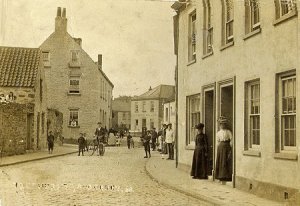
Riduna is set in the mid to late 19th Century and on the island of Riduna (Alderney) the role of single women was certainly to work in service or in the important tourist industry. They would be maids in the various larger homes or boarding houses or waitresses or cleaning staff in the few hotels. Travelling was important to the Victorians of means and destinations like Alderney provided a desired break from everyday life at home. (Nothing changes)

On Alderney the majority of children went to school, although the girls would have focussed on reading, writing and needlework. Only a few would have enjoyed a wider curriculum. It is interesting to me that my Great Grandmother, living on Alderney at the time, was literate, whereas her husband, a Guernseyman could barely sign his own name at the time of their marriage. By 16 year, all the girls would be employed to provide a meagre income to contribute to household expenses until they were married. Then they would have to give up work, unless they continued in the family business, whether in a shop such as a bakers or an inn or boarding house.

Added to the life of the islanders the population was swelled by various migrating groups which had an impact on the social dynamics of late 19th Century Alderney. Firstly there were professionals from mainland Britain….for example doctors and teachers who would bring their families with them and to a certain extent a different set of values. Aspirations of the daughter of an island doctor would differ from that of an island girl. A female teacher would have been a spinster with a vocation. What happened if she  was tempted to marry? How would the islanders react. Her attitude to the dilemma would be more considered and rational than that of a young island girl, but it would none the less give a conflict of emotion.

The other unsettling dimension to life on Alderney at that time was caused by the workers on the various Forts and defences on the islands. These included migrants from the UK, Ireland and even Italy; those moving to wherever there was work to make a living for their family, who would travel with them. Thus communities around the Crabby Bay area swelled and to a certain extent kept to themselves. Often they would educate their children at home and have their own churches. Mix between these groups and islanders was not always encouraged.

The other migrant workers of influence were the military. Wouldn’t the dashing red-coated soldiers turn the heads of many simple island girls? Wouldn’t their presence cause a stiffening of attitude from the island elders as they wished to protect the virtue of their young people?

The other major factor was the island itself. In a big city there is a certain amount of anonymity but on an island gossip abounds. One persons private business is known by the whole island within a very short time. Life on an island can be idyllic but it also can be claustrophobic, so much so that some dreamt of the wider world. Yet again there is a divide of the sexes here, because opportunities to leave the island were far more available for young men than girls, unless they married a visitor.

If you’d like to read more about these conflicts, my first novel ‘Riduna’ gives you a flavour of island life at that time. All these issues gave colour to the underlying storyline, adding a community dimension to the lives of the main characters Harriet and Edward.


Leave a comment

Filed under Alderney, Channel Islands, Historical Fiction, History of Alderney, Riduna