Category Archives: Research

Thanks to the Palmerstone Fort Society

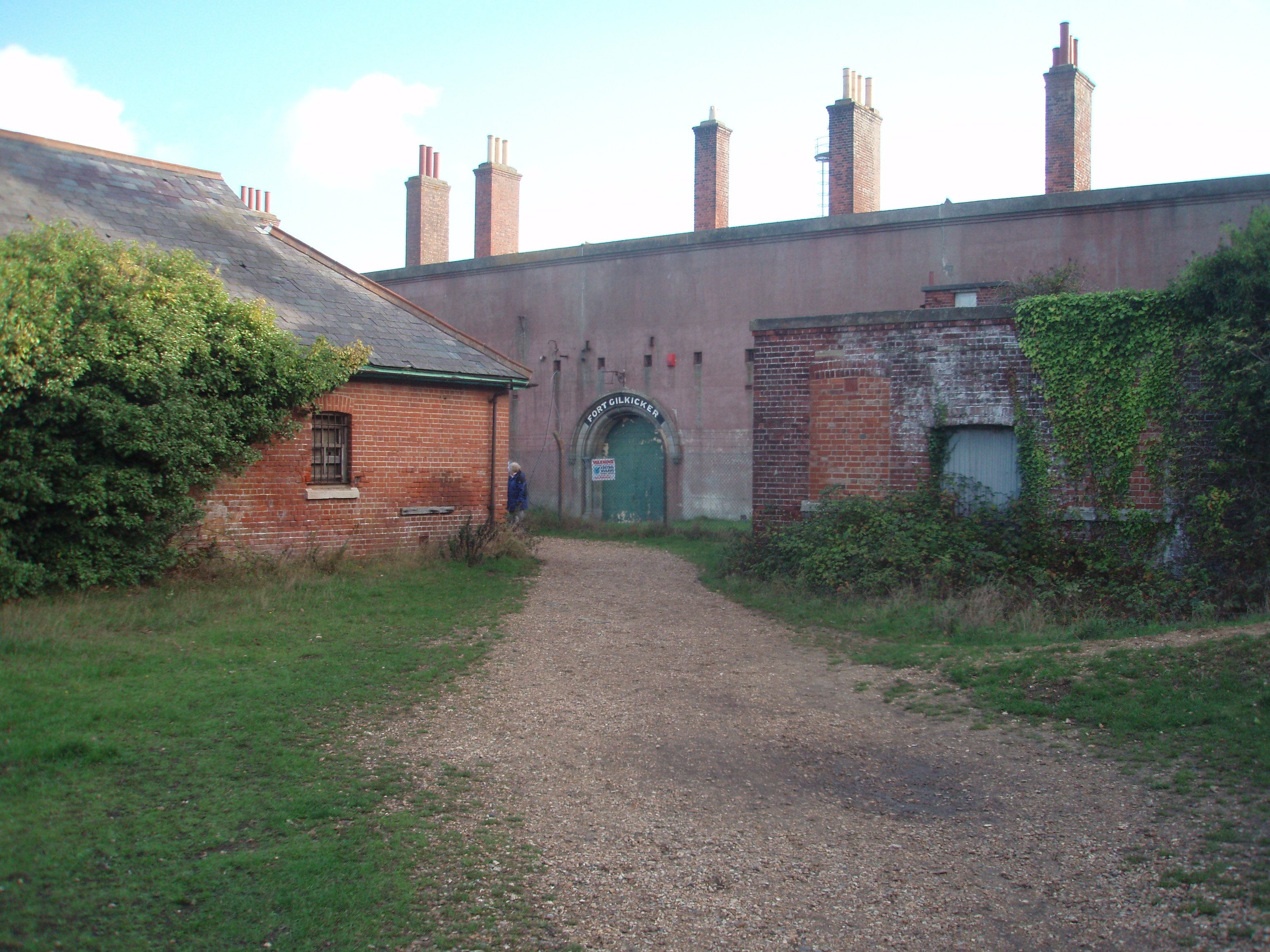
Gilkicker Fort, Stokes Bay taken in 2009

Continuing my series of thanks to all the people who helped me with my research for ‘Ancasta ~ Guide me Swiftly Home‘ I would like to thank The Palmersone Fort Society, in particular  Stephen Fisher who was extremely helpful in sending information about life at a fort at the turn of 20th Century and also checked relevant chapters for me.

One of my characters, an army corporal who had recently undertaken officer training back in 1910 needed to live in married quarters, since at the end of Riduna he had married Harriet’s only daughter Sarah. Harriet is the key figure in Riduna, and the matriarch who keeps the whole family together in Ancasta. The area around Portmouth is surrounded and defended by a multitude of Victorian Fortresses, both along the coast, out at sea and a couple of miles inland.

When searching for somewhere appropriate for my Corporal Parker to live with his new wife Sarah following officer training, I stumbled upon Gilkicker Fort, when doing an internet search. With married quarters completed in 1910 this was the perfect place for them to settle, within a day’s reach of Woolston by buggy. Once decided, I needed to go down to  spend time researching locally.

Back in the summer of 2010 I spent a morning in Gosport local history centre and then drove past the impressive Fort Brockhust and along to Stokes Bay. There I had a coffee in the cafe before taking a stroll between the smaller No 2 Battery Stokes Bay towards Fort Gilkicker. It was quite a cool and windy August day, unlike the fantastic weather we’ve enjoyed this year, adding colour and happiness to Olympic 2012 in London this year. (alongside the volunteers who made everyone smile!)   I digress!

I must admit thinking that it must have been pretty bleak living there in the winter, although the railway line and small pier still existed in those days, and the picture and atmosphere conjured up ideas as to how it might have been living in such an exposed spot. The place was derelict, overgrown in parts with brambles, but it was still possible to see that the structure of the outer and inner defences were relatively intact and the name was still proudly showing on the gate.

With the help of my visit and the article I was sent called ‘Tommy Atkins Married,’ I was able to picture what life might have been like before WW1 for Anthony and Sarah. I could sense her restlessness of spirit and Anthony’s excitement at witnessing the earliest planes flying overhead from Fort Grange at the newly formed RNAS station in 1914.

As ever, the characters told their own story in my mind’s eye, linking with Harriet in Woolston by letter and a visit to mark the occasion of the birth of Timothy, Sarah and Anthony’s only son.

Thus the story Ancasta, although based in Woolston Southampton, spans from Gilkicker along the Solent, up Southampton Water and over to Calshot. Until, that is, some of my characters venture further afield to the Channel Islands and the world beyond.

There are now plans to restore Fort Gilkicker to nearer its former glory, but not for visiting but to turn it into homes. From the plans they appear to be keeping to the original layout, with the semi circular sweep of granite with windows looking out over the Solent, forever guarding the entrance to Portsmouth Docks, as it was originally intended. In fact the open day has been announced for 22nd September 2012. It will be interesting to visit one day and see the difference and I only hope that the spirit of Fort Gilkicker and its historical significance has been preserved.
Leave a comment

Filed under Ancasta, Research, Riduna, Woolston

Gone Fishing on Alderney!

This blog will talk about my

first fishing lesson on Alderney

Fishing in the name of research

WW1 on the island of Alderney

The Alderney Fishing Festival


Continuing my series of blogs to thank various places and people who not only helped me with my research but made the experience so pleasurable, I return to the beautiful island of Alderney. You see, I wanted my chapters ion Alderney in my novel Ancasta, about life on the island during WW1 to be as authentic as possible.

Alongside reading about the effect on the island of a whole generation of young men going to war and being in such close proximity to the French coast I soon realised that an important aspect of the islanders’ bid for survival would have been fishing. The everyday islanders would have thought twice before venturing off the coast of France in fishing boats because of possible submarines, but would certainly have fished off the rocks and the breakwater, in fact there is fishing tackle from that era in the Alderney museum and photos of men standing in line on the breakwater fishing for mackerel. One of them had this massive rod and as they caught a fish they’d flip it up to their brother or son who was standing waiting on the next level platform.

I knew nothing about fishing myself, but I was pleased to be in touch with a man on twitter whose family has lived on Alderney since the nineteenth century. First tweets about fishing shot backwards and forwards between us and then DM’s (direct messages to those who are not familiar with Twitter!) In the end the maximum 40 characters defeated us and we exchanged emails and have since become good friends. Vic certainly gave me a flavour of the favourite places his grandfather and father took him fishing, what they caught and the different methods they used. He explained spring tides and neaps until I think I understood, and gave colourful accounts of his fishing exploits and fond memories of his childhood on Alderney.

How do you describe someone fishing when you know nothing about it?

What were the sights, smells and sounds associated?

How did it feel to scramble out to and stand precarious on a rock for a couple of hours, while the sea swirled below?

Many questions filled my mind and needed to be resolved before I attempted the chapter.

I was planning my next trip to the island that October and so I got in touch with Mark who owns the fishing tackle, outdoor sports shop at the top of Victoria Street and and gives fishing lessons. I explained my quest to him and asked whether he would mind taking out a novice such a myself. He was delighted to do so!

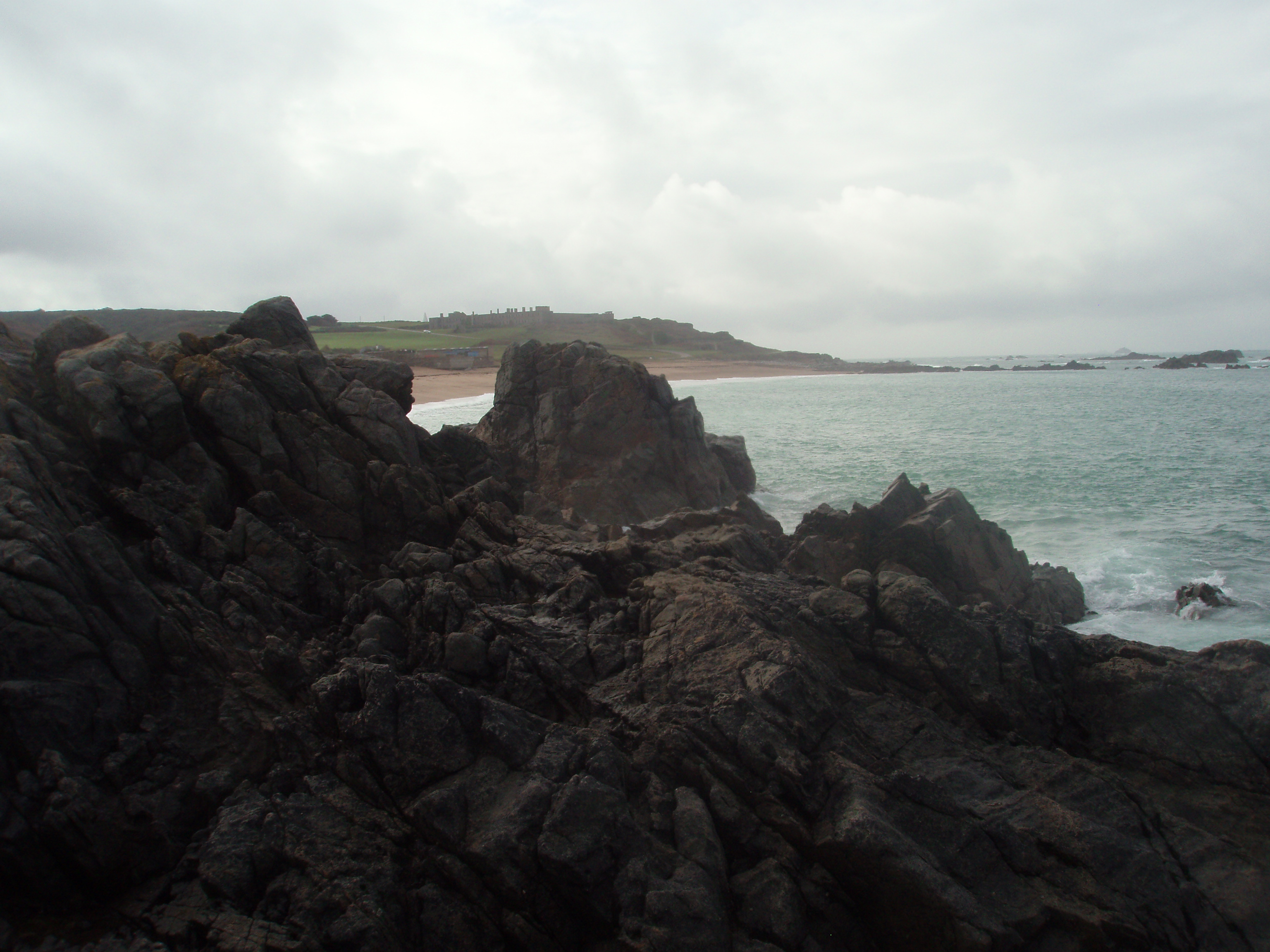
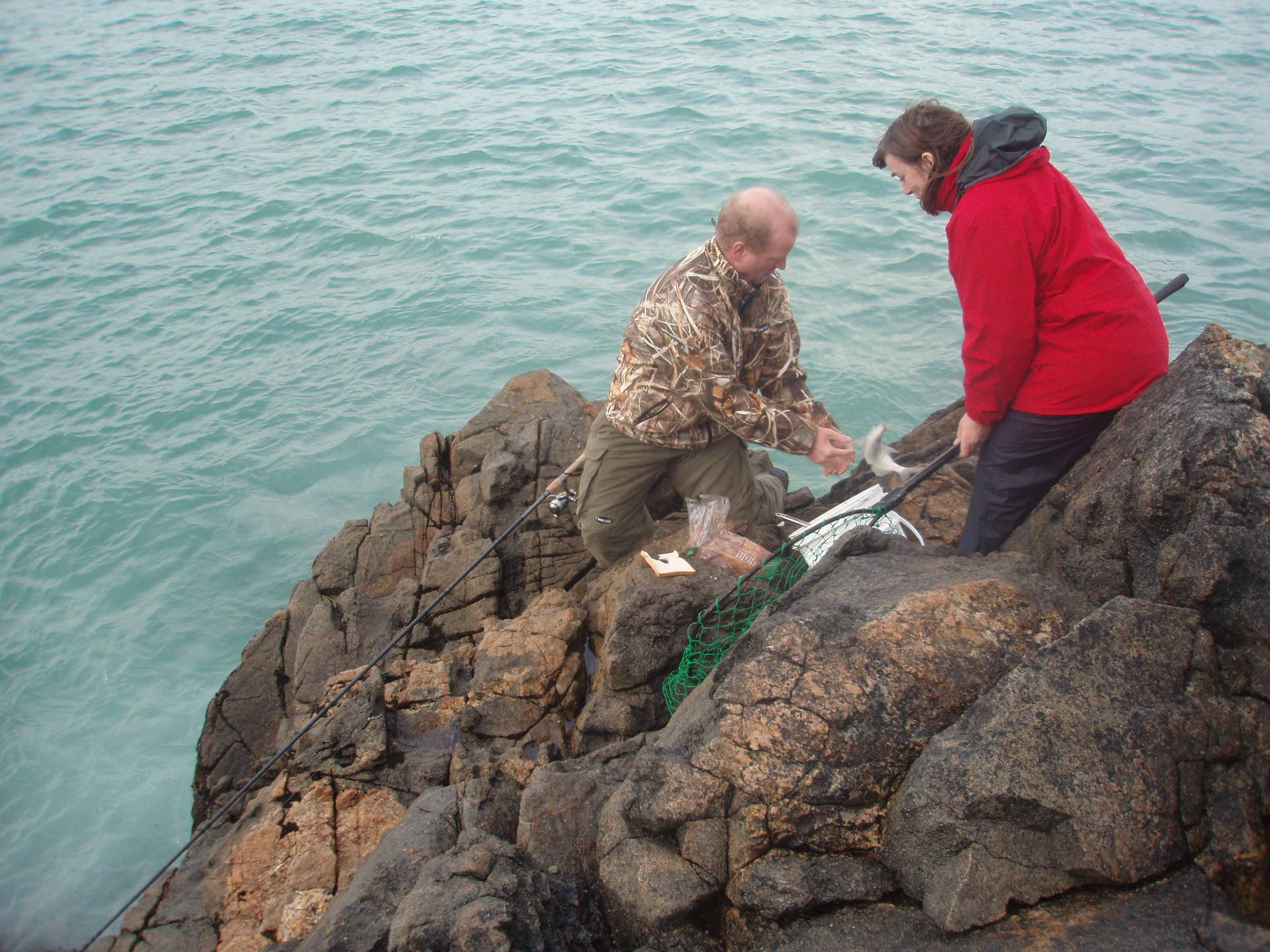
On the day of the lesson we met Mark down by Crabby Bay, shared the tackle between us before scrambling out to the rocks beside Fort Doyle. With the Swinge restlessly swirling around the island of Burou to our left and Fort  Doyle to our right I watched Mark as he prepared the rod, line and bait. We discussed the sort of bait my character might use and that they would probably have used feathers in those days, all the time I was alert to vocabulary which described the action, scene and senses. I jotted down notes, but most of all I captured the ambiance of the experience to aid my memory.

As we waited patiently for a bite I noted my thoughts, the panoramic scene around us, the changing nature of the sea and sky, Mark’s actions, his stance, the feelings of anticipation and yet timelessness. It was quite an experience. I asked the occasional question as they came to mind and gradually I was lulled into a sense of peace in the moment.

The excitement of our first bite brought me out of my reverie and I was thrilled when mark landed our first mullet, handling it with almost reverence as he explained how quickly the glistening colours fade when the fish dies. I was quite in awe of the experience. More in tune with the cycle of life and enjoying the opportunity to paint the sea scape in words I settled back on my rock but did not have long to wait before we landed our second mullet of the day, then nearly lost it. Slippery things fish!

On our next visit to the island it happened to coincide with Alderney’s annual fishing festival, a time when men compete to find the best outcrop of rocks, the vantage point where they might catch the biggest fish of the week. Trophies are fought over (metaphorically) and in the evenings groups of men sit in the various cosy and welcoming hostelries, including The Divers Arms, discussing their successes and the giants who got away.

This year it is the week commencing 13th October, so if you love to fish, I cannot think of a better place to do it than the beautiful island of Alderney. If you do, say hello to Mark. I’m sure you’ll meet him as the week progresses.

The Alderney Fishing Festival 2012


4 Comments

Filed under Alderney, Ancasta, History of Alderney, Research

I’m leaving, on a Sea Plane, Don’t Know When I’ll be Back Again!

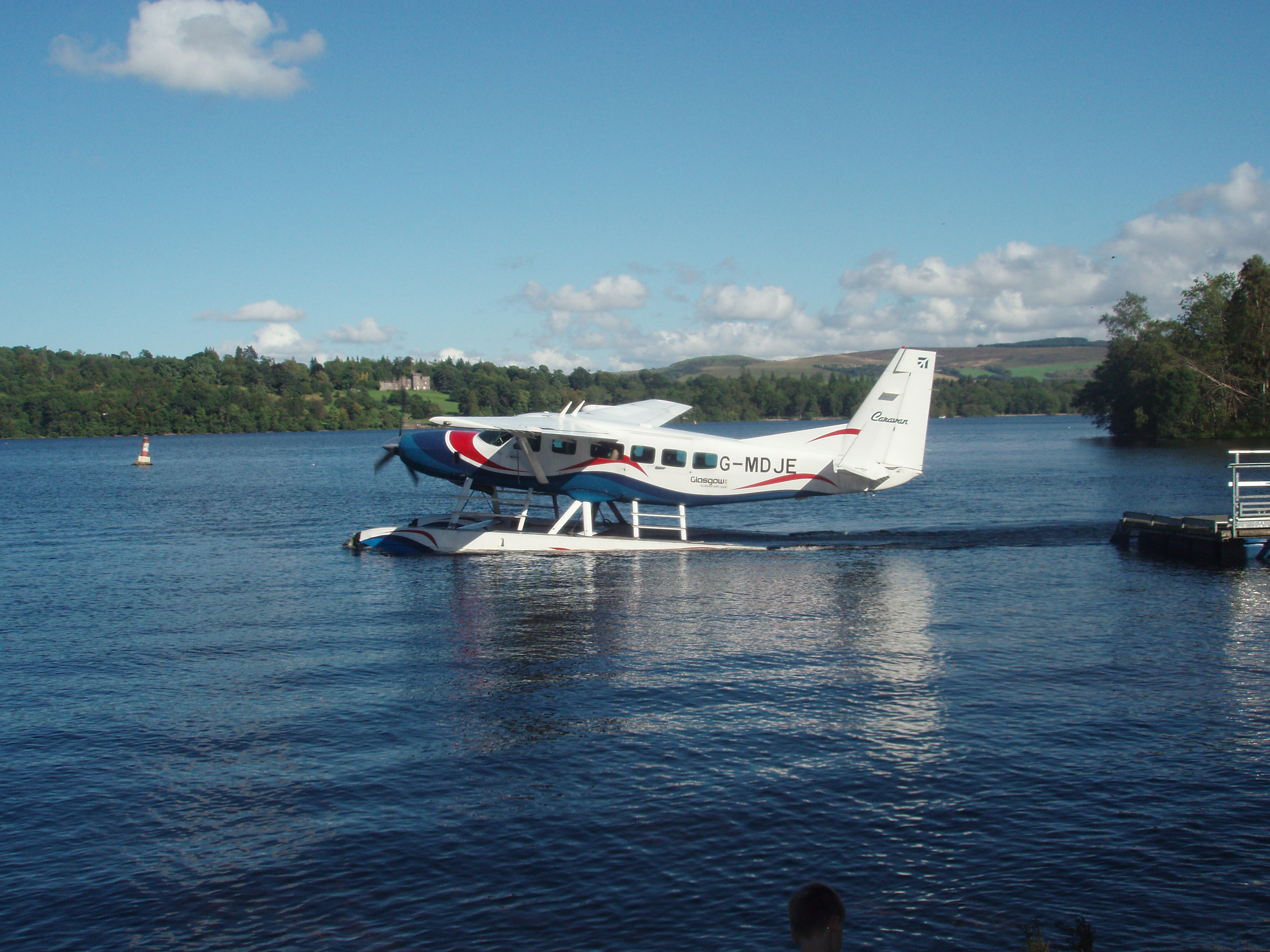
The Loch was calm, the sun was shining through scattered cloud and the air was still and warm as we waited for the arrival of the sea plane which was to take us on one of the most exhilarating experiences of my life. It had been my greatest wish to fly in a sea plane or flying boat, ever since I embarked on research for Ancasta ~ Guide me Swiftly Home three years ago.

Although Ancasta is a family saga, part of its tale is the story of the birth of Supermarine through the eyes of my main characters, Harriet and her sons. This was a Supermarine long before the Spitfire was thought of, when RJ Mitchell was designing innovative flying boats, with ever faster capabilities, in order to compete in the famous Schneider Trophy contest which first began in 1913.

While researching, I discovered Loch Lomond Sea Planes, the only company, as far as I am aware, who offer flights to the public in the whole of the UK. I mentioned it to my husband, which sewed a seed in his memory, and he bought me a pleasure trip for my birthday. What a birthday present!

To say that I was excited is an understatement. We ‘checked in’ in the grounds of the Cameron House Hotel, a stately Victorian Castle on the banks of the Loch, popular for weddings. The pilot gave out safety instructions before we settled in our allotted seats, ten people including the pilot, and he taxied out into the more open waters of Loch Lomond.

‘We’ll gain speed and the nose will dip just before we lift off the surface of the water,’ he explained.

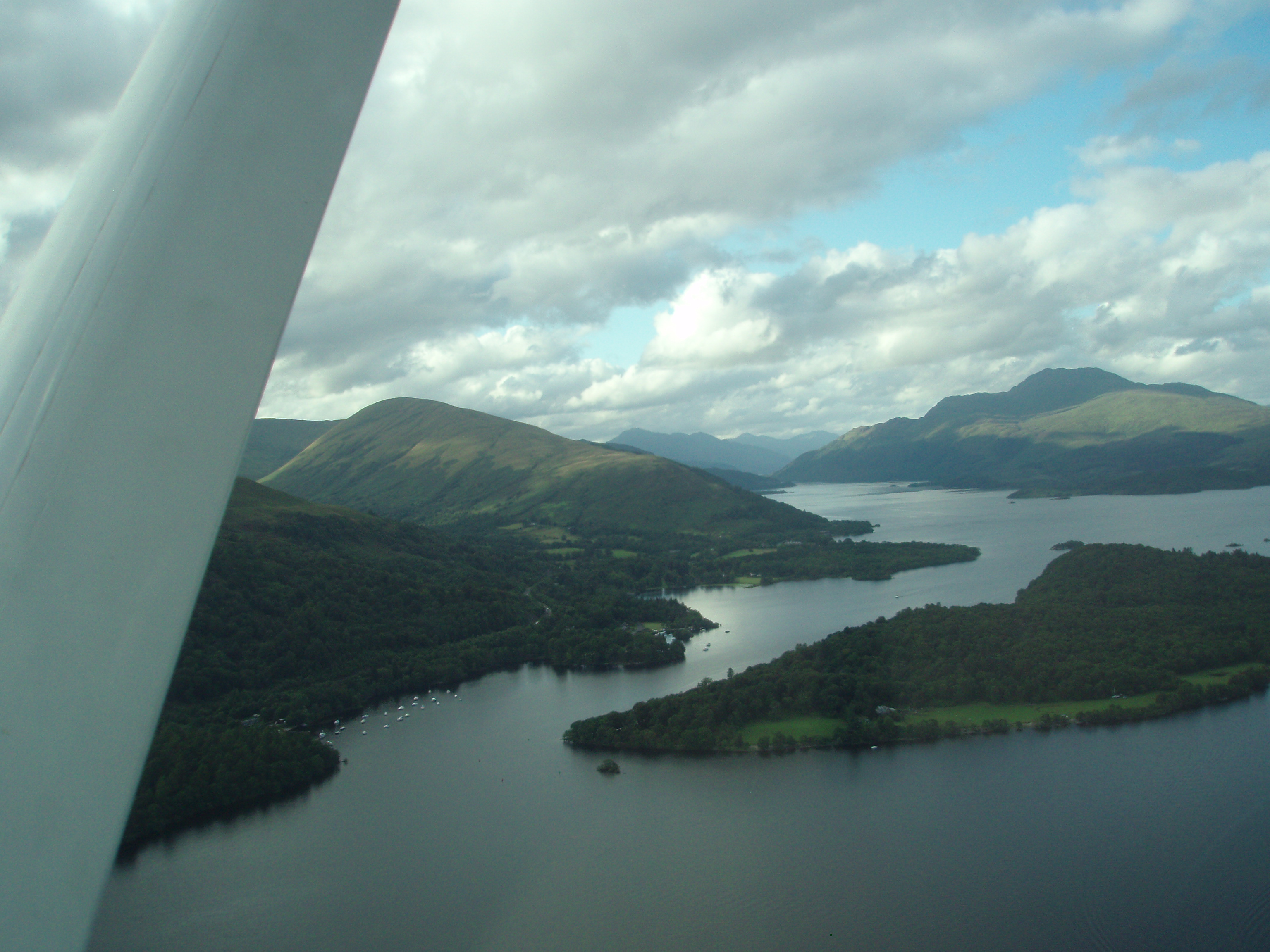
The take off was so smooth as we glided out, and the water’s spray beneath us gathered momentum until we were gracefully sweeping up into the sky above the mountains, the swell below us sending ripples to the  water’s edge. Hills, valleys, mountains, streams, all swathed in sunlight below us. Soon we were in sight of the Western Isles; Mull just visible in the far distance and the sun on its course to set above Islay ahead of us, before we banked and turned back across the highlands.

With the mountains to our left and the lowlands of Scotland in the distance we glided in a gentle descent towards the Loch and landed on the water as smoothly as if we were icing a cake. Magic!

Leave a comment

Filed under Ancasta, Early Flight, Flying Boats and Sea Planes, Research