Tag Archives: planning a novel

Which characters – Who gave you inspiration?

Choosing the right characters for your novel is vital but how do we do it? I have already written about the joys and pitfalls of choosing a name on another blog but where do we begin choosing characters?

I must admit that my characters seem to creep up on me like new aquaintances many of whom, over subsequent months, become well loved friends.

Real or Imaginary

If real people inspire us, and I’m sure most of our heroes and heroines are based on a rainbow of many people we know all rolled into one, then like with familiar settings it makes it easier to:

  • Describe their personalities and looks
  • Imagine realistic conversations
  • Make the thread of our story believable
  • Fix the period and events, giving a web on which to base our tale if we include some real characters in historical fiction

Harriet in Riduna was inspired by my Great Grandmother. I had only met her twice; once when I was about three and I remember seeing an old lady in a rocking chair as I stepped down into a dark old New Forest farmhouse kitchen. On the second occasion she was in a nursing home. I have been told that she was quite a formidable woman and it was not these encounters which inspired me most, but my inquisitive mind as to what she had been like as a girl and how her nature had been moulded by her experience of being banished from the island of her birth.

If we choose real characters there can be disadvantages too:

  • Even if your novel or story is set in the past you are still in danger of upsetting someone, even if you claim that you are writing fiction -‘that didn’t happen.’ ‘He didn’t do that.’
  • In trying to weave real and imaginary characters within a story then ‘pure historians’ may be offended, claiming that we are trying to rewrite history
  • Obviously if your novel is set today or in recent years then even more care needs to be taken in including real people for obvious reasons. The law will be quick to step in if anything you have written is defamatory.

If you choose purely imaginary characters then:

  • You can let your imagination truly take over
  • You can bend their looks, trait and behavioural tendancies to suite the occasion, so long as you describe them well

The most important points to remember about the characters you choose is:

  • To be consistent
  • To keep a careful record of the description of each
  • To have a clear idea of relationships and how they connect with each other
  • To have a clear record of the order of events where each character appears
  • If your novel is many facetted it helps if there is a link through the threads, or that the connection with your main character is clear throughout the novel

The sequel to Riduna, which I hope to have in print shortly, has a mixture of real and imaginary characters, setting my novel in a particular place and time, though the real characters only appear fleetingly to add flavour and realism to historic events.

How do you choose your characters?
Leave a comment

Filed under Historical Fiction, Planning a novel, Research, Writing, Writing a novel

Which Setting? An Inspiration to Write

Choosing the right setting for your novel is vital but how do we do it?

Familiar or Imaginary

If we choose a familar location it has loads of advantages:

  • You can imagine each scene and the descriptions flow effortlessly as you write
  • Your audience loves to read about places they know
  • Promotion is more straight forward because  your initial drive can focus on reaching out to people with links with that location

If we choose a local setting there are added advantages:

  • You are more likely to have success with local papers if it is local interest
  • You are more likely to be interviewed on local radio
  • Local bookshops will feel more parochial and will be happy to promote your work in their ever popular local interest section
  • Talks in libraries and to various local groups will be popular
  • It is easier for a new author to begin making a name locally

If you choose a holiday location:

  • You may have a fresh audience for some years to come
  • People often buy books to read on holiday
  • People often buy books to remind themselves of a memorable holiday
  • The setting is usually beautiful, inspiring, exciting……
  • It is a setting which lifts readers beyond their everyday lives

If you choose an imaginary setting then:

  • You can let your imagination truly take over
  • You are not restricted to accurate detail as long as it is plausible
  • You are aiming for a wide audience
  • The scenes you evoke stand for themselves and do not need association to be successful

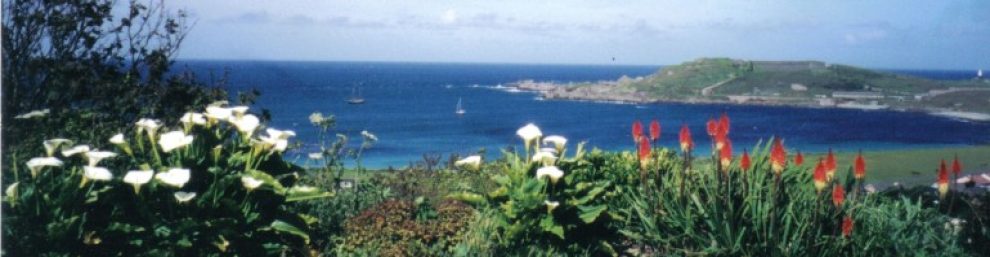
Your setting may have been your original inspiration, as Alderney was mine. As I stood on the Butes wondering what life might have been like in Victorian times I knew I just had to carry out some research. Alderney is unique as a setting for a novel. Many have been written on Guernsey and Jersey but, as far as I know, ‘Riduna’ is the first novel inspired by the beautiful island of Alderney.

My current writing was inspired looking out over a field one day. Very different!

Was it a location which inspired you to write?

Leave a comment

Filed under Marketing your novel, Planning a novel, Riduna, Writing, Writing a novel

The Tapestry of Writing

I was talking to a friend the other day and he likened writing a story to weaving. This is a quote from Wikipedia about weaving a tapestry:

Tapestry is a form of textile art, woven on a vertical loom. It is composed of two sets of interlaced threads, those running parallel to the length (called the warp) and those parallel to the width (called the weft); the warp threads are set up under tension on a loom, and the weft thread is passed back and forth across part or all of the warps. Tapestry is weft-faced weaving, in which all the warpthreads are hidden in the completed work, unlike cloth weaving where both the warp and the weft threads may be visible. In tapestry weaving, weft yarns are typically discontinuous; the artisan interlaces each colored weft back and forth in its own small pattern area. It is a plain weft-faced weave having weft threads of different colours worked over portions of the warp to form the design.” 

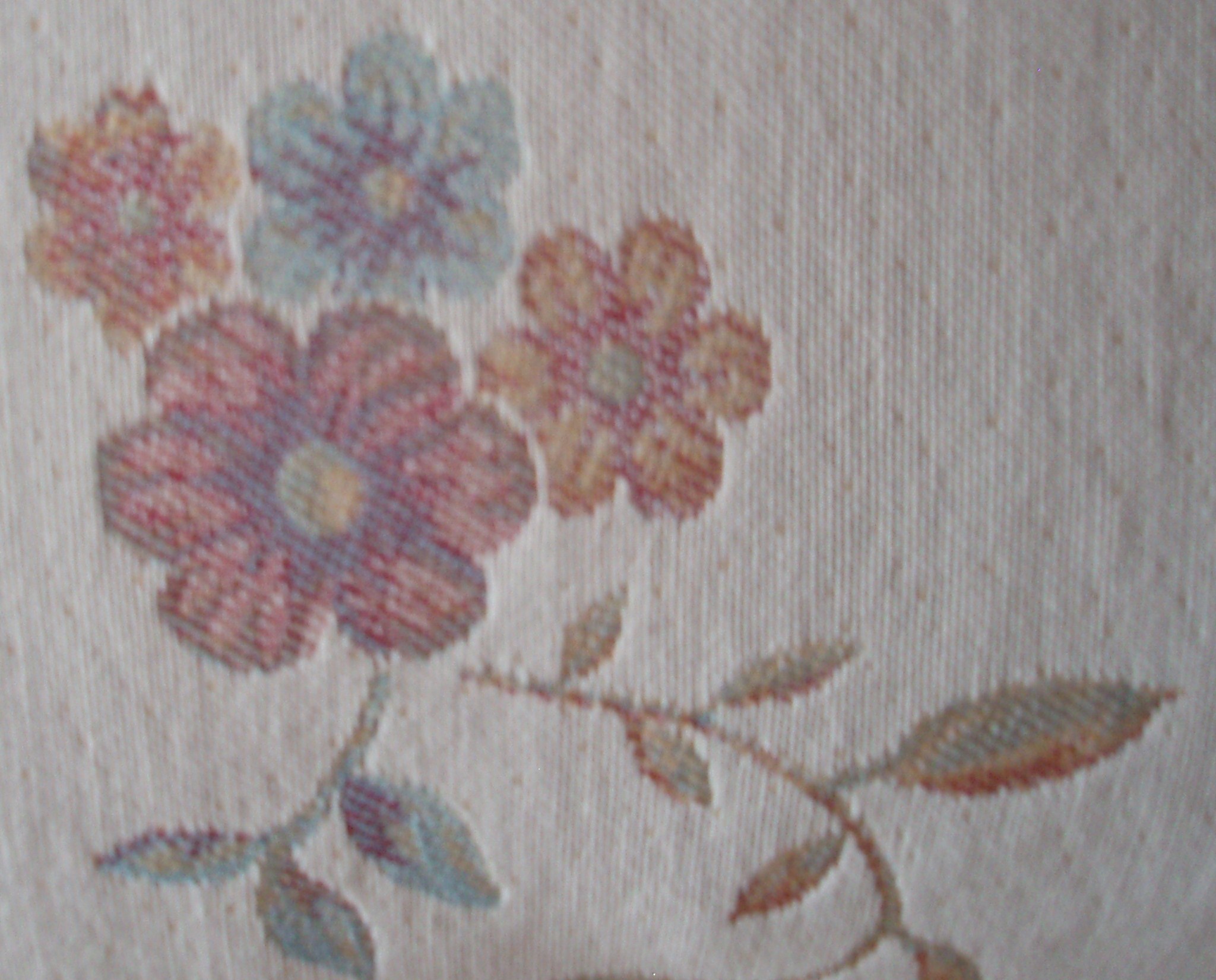
When writing a story or novel first we set up a framework or story plan, the warp of the story, with an outline of where the story is going to, research to base the novel on and a description of our main characters. In my friend’s analogy this is the warp; those threads which will be almost hidden when the story is completed.

After this careful preparation it is time to add the colourful storyline and allow our imagination to take over. Our story weaves through our plan and the bare bones of our characters and research, bringing them to life. Each section is painstakingly crafted, including detailed accounts of each scene, which is the weft of the story. 

Mind you, I would like to add another step to this analogy because the weaver always works from the back, tying up any loose threads and beginning new colours so that the joins are invisible. The weaver always makes sure that there is just the correct amount of tension. Too little and the tapestry will be disjointed and may show holes but too much and the final picture will be buckled and spoilt. 

When the weaver has completed the final thread of his work, he or she makes sure that all loose ends are secure and as neatly trimmed as possible.

 It is only at that point when the author believes that he or she has reached perfection that the work is turned over to reveal the whole picture for the very first time. 

Interestingly my mind leapt at this point to the idiom:

To spin a yarn

Tell a story, especially a long drawn-out or totally fanciful one, as in This author really knows how to spin a yarn , or Whenever he’s late he spins some yarn about a crisis. Originally a nautical term dating from about 1800, this expression probably owes its life to the fact that it embodies a double meaning, yarn  signifying both “spun fiber” and “a tale.”

Quote from: http://dictionary.reference.com/browse/spin+a+yarn

So there you have it. From the initial planning stages through to writing the novel, proof reading, editing and finally revealing the published novel to an appreciative audience; I wish you good fortune in weaving your masterpiece.

Does anyone know any more interesting analogies?

©Diana Jackson 03/08/2011

4 Comments

Filed under Planning a novel, Writing, Writing a novel