
Tag Archives: planning a novel

Themes in Novel Writing ~ Theme 3 ~ Racism

(Link to photo source)

RACISM IN NOVEL WRITING

If you glance no further than the first few lines of this blog, then I can recommend reading Jodie Picoult’s Small Great ThingsNever to be shy of controversy in her writing, Jodie hits racism head on (all types described below). I’ve only read about a quarter of the book so far and in it are subtle forms of racism right to what I perceive as downright ignorant, depressing and dangerous behaviour. The most distressing of all is that some of the characters believe implicitly that they are in the right! See challenge your own perceptions below.

How do you write a novel, highlighting racist attitudes without glorifying or trivialising them?

In my novel I didn’t set out to highlight racist attitudes, I wrote from experience, the personality of each character led to conversations which hopefully raised awareness or set alarm bells ringing with the reader, or maybe not, dependent on the reader’s own path of life, their upbringing and their values.

To challenge these values, sometimes so built into a person that it is almost inherent, you need to understand that there are different types of racism.

What are the different types of racism?

I’m no expert but I have been a teacher for most of my adult life, in schools with pupils of many cultural, religious, ethnic and economic backgrounds?  (and yes, the latter induces prejudice too of a different sort, albeit not directly racism ~ see posts on homelessness for the extreme cases) I taught from reception up, but after a change in direction I have even taught 16 to 19 year olds at a college of further education, where each class represented up to ten different racial backgrounds. Challenging but rewarding. I’ve witnessed, or even seen first hand, racism in many different forms. I’ve tried to handle each situation sensitively, firmly if necessary, and with the older students as a learning experience in their development as young adults.

There’s overt racism

~ the kind that makes most people squirm, extremely angry or very sad when you hear about it. This type is usually driven by prejudiced attitudes learnt from birth to the grave, unless that is we can break the pattern. Hopefully, seeing the police treatment of George Floyd on video which galvanised the world into condemnation has been an example of doing just that.

There’s institutional racism

~ where people from varied backgrounds have different opportunities in life, at school, college, in the work place and in their daily lives.

There’s subtle forms of racism

~ these are the moments that can pass unnoticed; a comment given without malice, a joke, a generalisation made or even a throw-away remark. The perpetrator, and it could be you and I, is not even aware of it. In a way this goes even deeper than overt racism because each ‘hit’ (virtual) on an individual undermines their confidence and sense of worth. That’s not to say that all of us shouldn’t be able to laugh at ourselves from time to time, along with others or on our own. It takes a really good teacher to pick up on these remarks and to turn them into a positive, highlighting their danger without undermining either the speaker or the person being spoken to or talked about.

And racism between races

It is not just a case of Black and White.

One area hardly touched on is racism between different African backgrounds, different Asian backgrounds, black against white or even white against white.

A black American lady, with whom I am connected on Twitter, gave a thoughtful tweet, ‘Is racism something we are taught about from birth. My parents would go ballistic if I took home a white boyfriend.’

A lovely Scottish friend once remarked, ‘I don’t think of you both as English. You are just Roger and Diana.’ I laughed. She is a dear friend and had no idea what she had said.

Back to Novel Writing

What type of racism?

I chose to go for a more subtle approach in my novel. The story was not about racism, but it happened to be a theme where issues of racism popped up quite naturally. It is something I feel strongly about but I’m not into writing about overt racism. (See Jodie Picoult)

Asking questions ~ cause and effect

Once I had decided on my characters I began by asking questions.

  • Dot and Gerald were about to foster children. What would happen if they were Syrian, Muslim refugees?
  • Orla and her sister were Irish Roman Catholics. What would happen if Orla fell in love with Jamal, Dot’s foster son?
  • The farmers wife is eastern European. How would such a conservative farmer cope with their different backgrounds?
  • And then finally, (see last post on mixed marriage) what effect would Dot’s view of the world be if she, of Jewish background had married Gerald a Church of England attender?

Letting the characters speak for themselves

Now,  let the words flow from your experience and knowledge. The characters, in my experience of writing, tend to speak for themselves and they certainly challenge my own misconceptions at times.

Challenge your own perceptions

It is probably best not to write about it if you can think of nothing relevant here, but if your upbringing has been of a monoculture for most of your life, then I challenge you to widen your experiences; not by a sanitised holiday abroad (if you could have one at this moment in time) but even by research on the internet or getting to know people on Twitter etc, however superficial that may be. Widen your scope for reading material.

I’m just beginning to read Small Great Things by Jodie Picoult, an author adept at challenging our prejudices and preconceptions. A must read in my opinion!
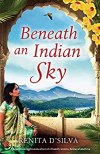
 

I’ve just finished Beneath an Indian Sky by RenitaD’Silva. An Excellent book! A period in history, not highlighting racism, but seeped in a cultural background with which I was unfamiliar, with its own tensions, prejudices and values.

This will be my June book review.



1 Comment

Filed under MISSING Past and Present, Planning a novel, Research, Writing, Writing a novel

Themes in Novel Writing ~ Theme 2 ~ Mixed Marriage

If you look back at my introductory post, ‘Themes in Novel Writing’ just over  week ago, I looked at why we need to be aware of themes running through our writing. These are usually premeditated, but some creep into our plot unawares.

THE THEME WHICH INSPIRED MY NOVEL

HOMELESSNESS AND POVERTY

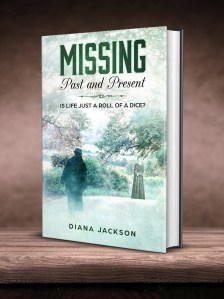
As I have described my initial inspiration for my new novel ‘MISSING, Past and Present’ was from my voluntary work at a  centre for the homeless in Luton, and more recently for local folks in need at Kirkcaldy Foodbank. Recently I have written several posts on this theme.

A THEME WHICH I DEVELOPED AS I WROTE

Our very own Harry and Megan

MIXED MARRIAGE

~ as a theme crept up on me as I was writing, and I even back tracked to ensure that it flowed and challenged the reader throughout the novel. How did this happen?

I had planned for two of my characters, Orla and Jamal to fall in love. Orla is an Irish Roman Catholic who runs The Ark, a centre for the homeless, with her sister Laura. Jamal, my protagonist Dorothy’s foster son, is a Muslim refugee from Syria.  It was a potential union of two beautiful people, in both appearance and personality. They were such lovely young people that I needed tension and intrigue between them in some way to give the plot a jagged edge of uncertainty.

Dorothy also lived in  refuge for a while and got to know some of the young ladies living there. It was quite natural that some of the shared their stories with her; Dot being quite motherly and the oldest resident.

After I had written this chapter, the theme MIXED MARRIAGE popped out at me and I slept on that thought. I often solve plot issues in my sleep. The next morning I back tracked and revised Dorothy’s memories of her married life with Gerald, up until he disappeared. Before they were married Dorothy had been a non practicing Jew, although her roots were deep within her psyche, but Gerald was a practicing Church of England. Dorothy agreed to attend Gerald’s church as her compromise and when homeless it was a subject she reflected on when wondering where their marriage had gone awry and in the moments when she was trying to make up her own mind as to what she now believed.

I now had two types of mixed marriages represented in my novel:

  1. Interracial marriage
  2. Interfaith marriage

and both had similar and yet very different challenges and issues.

With Megan and Harry’s interracial marriage I had high hopes that some of the problems related to the first might evaporate, given such a well known role model. If their marriage was accepted by the Royal Family, no less, surely that would benefit the race relations of the whole nation. We shall see now won’t we?

ISSUES ARISING

Thus MIXED MARRIAGE as a theme in my novel added:

  • tension
  • intrigue
  • a way in which the reader’s own thoughts and ideas could be challenged
  • an issue pertinent to today’s world
  • a confrontation of  inherent racism, which I will develop further in my next post
  • a way to encourage readers to empathise with the characters as they became familiar to them

I did not try to give answers and I certainly didn’t preach, just highlighted the issues arising in a natural way as they would appear in real life situations. After all, we have to go through our own journey of awareness, some steps quicker than others.

3 Comments

Filed under MISSING Past and Present, Planning a novel, Reading a novel, Writing a novel

Location, location, location ~ How important is a sense of place in a novel?

Is a strong sense of place important for a novel’s success?

Good characterisation is vital for a successful novel, as is a sense of the time period. In fact the era, whether a modern setting or in the past,  needs to seep into every nook and cranny of the plot, dialogue, setting and language too, but I also believe that the best novels are rooted firmly in a clear sense of place. A good novel transports you to somewhere else, allowing you to travel without leaving your favourite  armchair. The reader should be able to picture the location in their mind and live with the characters as their lives weave through the plot.

Which places are associated with authors and which authors use a sense of place as part of their identity?

Crime and mystery novels use the setting to give atmosphere, tension and contrast; the latter being the key…. danger and safety……. dark and light……the sandy, sunlight beach and the gloomy alleyway for example, but to make a series there also needs to be consistency to draw the reader back. You associate Peter James with Brighton, Ian Rankin with Edinbugh, (whose latest novel is ranked number 12 in the Amazon top 100 today) Colin Dexter with Oxford (Inspector Morse!), Stieg Larsson with Sweden……the list goes on.

Then there’s the popular fiction of the late Maeve Binchy, rooted firmly in Ireland and more recent successful authors like Victoria Hislop, who I will always associate with the deep-blue seascapes of Greece, although her latest novel is set in Spain, I believe.

Jodi Picoult’s successful books are challenging and thought provoking. She chooses topics to be controversial and stretch the reader’s understanding of their own values and sometimes highlight their misconceptions, but ‘place’ is important in each of her novels, whether it be a prison, hospital or courtroom. I loved ‘The Tenth Circle’ as much because its descriptions of Alaska and the way of life of modern Eskimos was describes so vividly, that it took me out of my comfort zone and transported me to a world I know nothing about.

Certainly the classics, which influence many writers, reflect this view of an identity with ‘place’…. Daphne De Maurier’s Cornwall, Thomas Hardy’s Wessex and  The Bronte sisters’ Yorkshire. Mind you, although Jane Austen is associated with many places including Bath, her characters went all over England and I can’t count the number of towns where I’ve seen claims of connections with Dickens.

Should you only write about a location you know well?

The advice is to write only about a place you are truly familiar with but, if you don’t live there, certainly you need to spend a considerable amount of time on location, researching, walking and observing, noting down characteristics, descriptions of places, atmosphere and associated events. It is helpful to keep a map to hand and check details as meticulously as you can.

In the first edition of my novel Riduna, I was coloured by childhood visits to the island of Alderney. We called the town ‘St Anne’s’ and not ‘St Anne’ and pronounced Saye Bay, ‘Say’ Bay and not ‘Soy’ Bay, as the locals do, and they have since been quick to put me right. As I’ve visited regularly as an adult, the island has seeped deeper into my psyche and I am influenced more by experience than memories.

Does it matter if you don’t get the facts right? After all it’s fiction.

Yes it does actually. Having said that, it doesn’t pay to be defensive if someone tells you that you have made a minor error. Embrace it and be pleased to receive feedback. It means that the person has read your novel and has cared enough about it to contact you. Local people are understandably defensive about their own patch and you need to reach out to them and gain their trust. I’ve met some wonderful people when I’ve been out and about, who have shared all sorts of memories and personal stories over the last few years. Build bridges and not fences. When I was researching for Riduna a local historian remarked, ‘There’s so little actually written down about Alderney in Victorian times, and much that was written was destroyed during the occupation of WW2. Mind you,’ he said with a sudden thought, ‘why don’t you write about the previous century. You could virtually make the story up since records are virtually non-existent!’

If you don’t know a place well, then why not create one?

An alternative is to dream up a totally imaginative world, the most famous being Tolkein’s Middle Earth, but more recently Bernard Cornwell’s series, although set in Viking and Saxon England, contains a world so far in the past that it has a huge scope for pure imagination and creativity. This requires as much planning, and time consuming cross referencing, as visiting a real place, if the finished result is to be authentic and believable, but it does have the advantage that you have no need to travel away from your front room.

Can a place be as powerful as a character?

Yes, it certainly can. A place can be compelling, drawing the characters and the reader forward to their goal, or repelling and driving them away. It can live deep within the heart of a hero or heroine, as moving as any love affair, ever pulling them back. The word ‘home’ is an extremely emotive word. Where is home? This is an important question to ask. The character may be a  lost soul, with no true roots, but even then they may have a desire to be rooted, which moves the story forward, or a desire to cover their tracks at all costs and start a new life anew, reinventing themselves.

Does your narrative paint a picture in the eyes of the reader?

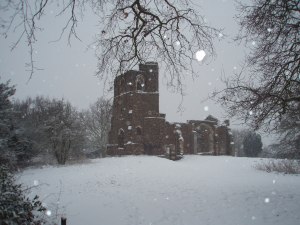
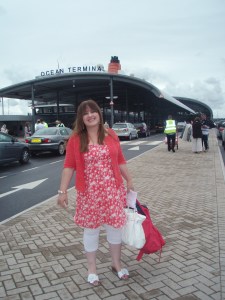
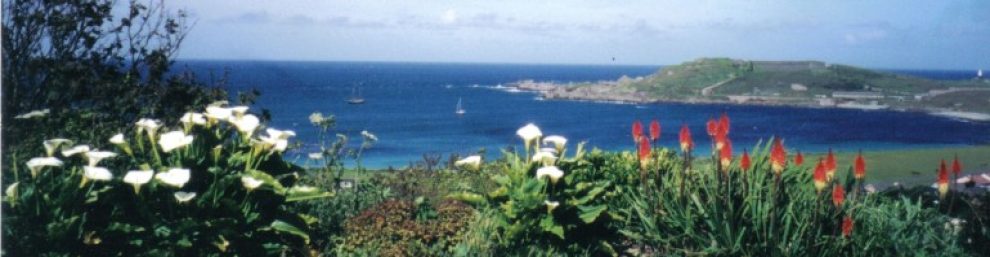
If you see a photograph, what captions or stories do they evoke?

 A church ruin on an icy evening

A single traveller on a cruise of a lifetime

An exotic location; an island of mystery?

With each photograph my mind races with ideas for a novel or story, but does your novel transport the reader to an exciting destination as powerfully as a photo. I believe it should do, but does it have to?

Does there need to be a sense of place in a novel? A personal view.

I have enjoyed books where ‘place’ is not so important and the plot shines, weaving it’s way through the lives of the characters, but I don’t find them nearly as memorable, however well written, exciting, funny or compelling they seem to be at the time of reading. It doesn’t matter whether it is a place I know well, or have visited on holiday, or dream of going to one day. For me, it is the setting of the novel which tends to be the deciding factor in whether the book remains on my shelves or be taken to the nearest charity shop. If it is given a home then the book reminds me to look out for the author’s next release, otherwise it just joins the thousands of stories in the ‘library of forgotten book.’ Now that was in a great novel wasn’t it….. what was it called?

2 Comments

Filed under Book reading, Planning a novel, Reading a novel, Research, Writing, Writing a novel