Today I’m thrilled to have been in contact with John Shelton, the author of’Schneider Trophy to Spitfire,’ an excellent book I reviewed on an earlier post last year. In fact John got in touch with me following that post and has agreed to share with us some background information about his life and how he became interested in Supermarine. John writes:
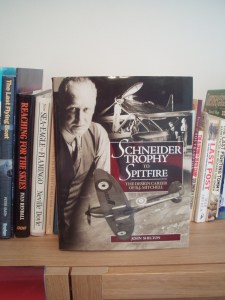
Schneider Trophy to Spitfire by John Shelton
‘I got as far as a Ph.D in Literature but began to tire of writing or talking about fiction. Renovating an Elizabethan manor house began to consume most of my time and energy and the solving of practical problems became more interesting – real things rather than imagined people. Like R.J., I had a
schoolboy interest in flying model aeroplanes and was soon drawing my own constructional plans (hence my 3-view drawings of Mitchell’s aircraft in my book).
On a chance visit to the Stoke Museum, I discovered that their Spitfire was to be re-housed, accompanied by a display. I volunteered to write the text for this display and was surprised to discover that Mitchell had begun designing aeroplanes for Supermarine as early as the 1920’s.
So, on retirement, I decided to write a full account of his aircraft as, again to my surprise, I found that there was only one book which related directly to his work and this was a sketchy and a rather amateur affair.
The above display activity had been given considerable help by the Solent-Sky Museum at Southampton and I was also encouraged in my later efforts by its Director, Sqn. Ldr. Alan Jones: “the book we’ve all been waiting for”.
I too felt that Mitchell deserved a dedicated account of his work, if only to show how the Spitfire came about – there are countless books about his famous fighter but no apparent interest in the man and how he had reached this design peak. There was also the surprising fact (to me as to most everyone else) that a man from the landlocked Midlands should design almost exclusively flying-boats, was virtually self-taught, and achieved success in his field at a very early age.
Being no stranger to writing extended studies, I felt I could do a reasonable job of collecting material (see my Bibliography) and of putting it together; and as I had also taught Communication as well as Industrial Archaeology, I hoped that I would be able to make a relatively technical story readable. Also, by this time, I had soloed in gliders and powered aircraft and so felt that I might have an insight into what the pioneers of flying had learned and were still learning about exploiting their new element.
Fortunately there were quite a number of books which had things to say about Mitchell’s aircraft and not a few by pilots who had flown them. These, and items scattered throughout other aviation literature, also provided many anecdotes about Mitchell which deserved collecting together as they became out of print or forgotten on dusty shelves. It was therefore very good news when Haynes Publishers accepted my MS, which – it has to be said – concentrated more on the machines than on the man: after all, they were the primary reason for an interest in the man and, as his reputation was only widely known after his death, no-one had thought beforehand to leave detailed information about his life-story for future biographers.
Given the lack of any full accounts of Mitchell’s life, but also needing to correct his portrayal in the First of the Few film, I tried to steer a course between the known facts about his life and his designs; and, true to my early career, my book had a thesis – which was to trace the vital influence of the Schneider Trophy competitions upon the eventual production of the Spitfire.
Since the publication of Schneider Trophy to Spitfire, I have continued my interest in most things Mitchell and hope therefore that an extended second edition might be eventually published. Meanwhile, my Blogs are a useful outlet for mature thoughts about the man and his designs as well as a device to keep his name before the general public.’
I would like to thank John for sharing the background to his writing. It’s fascinating looking back at the course of our lives and where it has taken us. John continues to write detailed and interesting posts about R.J.Mitchell and his designs on his own blog:
johnshelton.blogspot.co.uk
I wish him the best of luck with future projects. John’s book helped me enormously when researching for Ancasta and I still use it as a reference to check facts whilst researching for the next in my series.
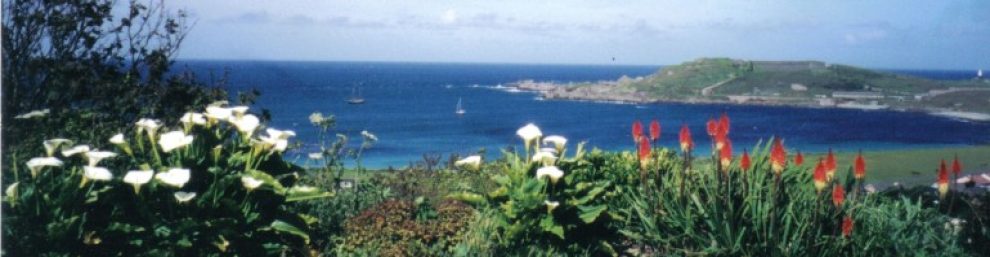
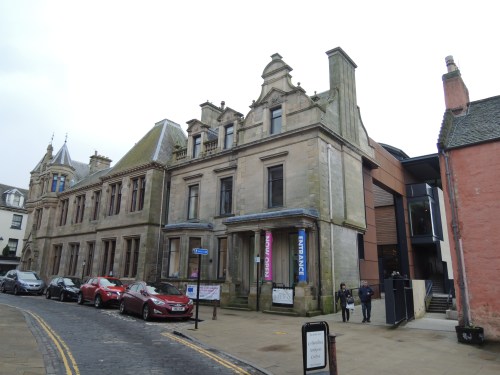
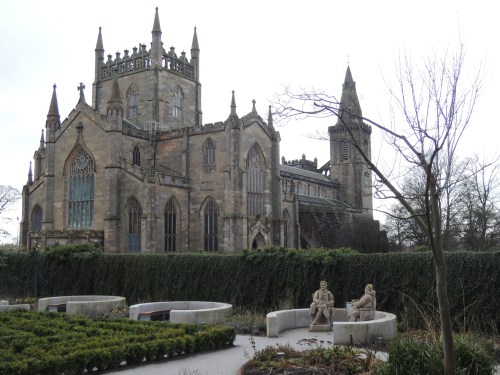
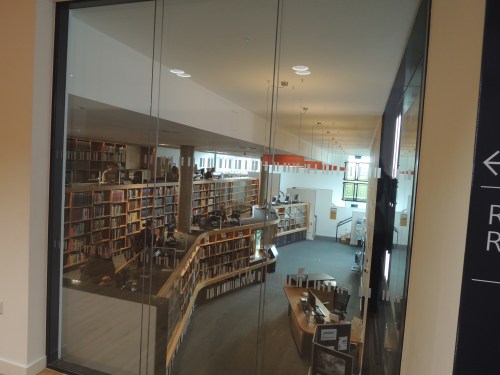
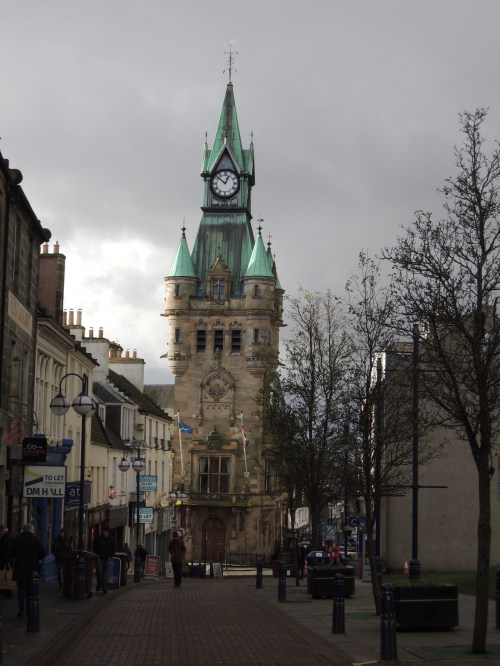 Dunfermline has a fascinating history, style and an air of timeless tradition; a small but pleasant town centre where you can amble from shop to amenity without feet ache. Yes, there are signs of decline, but many new shops are taking over the empty ones and the place is beginning to buzz again. Dunfermline was, in fact, the first town we ‘lived’ in in Fife. Initially the area was a temporary home for my husband when he was commuting from Bedfordshire to Edinburgh each week. I know, people usually do that the other way around but we like to be different 🙂 We came to know the Premier Inn on Duloch Park pretty well!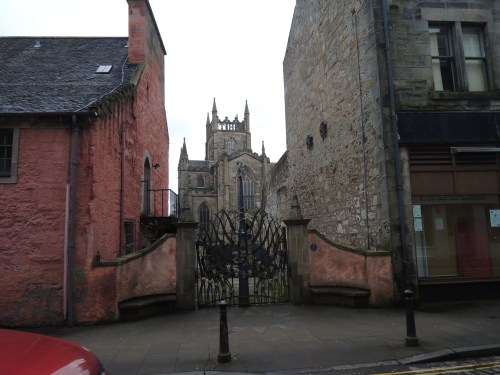



 Diana Jackson