Category Archives: WW1

Diana Jackson’s World War One @Home Series ~ Industry of Woolston in WW1

In recognition of the BBC World War One at Home Series and in parallel to it, I aim to write posts of significant places and themes related to my writing and their impact on local people. These will include:

Industry of Woolston Southampton in WW1

Flying Boat Stations of the UK in WW1

The Hampshire Regiment

The Channel Islands and WW1

INDUSTRY OF WOOLSTON, SOUTHAMPTON DURING WORLD WAR ONE

There were two main employers in Woolston during both world wars, Thornycroft and Company, later to become Thosper Thornycroft and also Supermarine.

The Thornycroft shipbuilders occupied a large site on the banks of the River Itchen for 100 years from 1904 to 2004, when Thosper Thornycroft relocated to Portsmouth. This left a gaping hole in the heart of the area both in terms of employment but also in the scar on the landscape, which has only recently been reclaimed and redeveloped.

The first ship to be built and launched from the Woolston site was HMS Tartar in 1907 which served in the English Channel and the North Sea during World War One. For one hundred years generations of Southampton families worked there, called by the siren to herald the start of the day. I still remember hearing this during my visits to grandparents as a child.

I cannot better the tribute written by Keith Hamilton on February 2009 to Vosper Thornycroft telling of the importance of company for the well being and lives of Southampton’s and especially Woolston’s people, stressing the pride in their work to  serve the nation:

The End of an Era for Thornycroft by Keith Hamilton

The second major industry in Woolston since before World War One was Supermarine, of which I have written numerous posts, since it features in my novel

‘Ancasta ~ Guide me Swiftly Home.’

Just a little up the River Itchen, the other side of The Floating Bridge on Hazel Road, White’s boat builders was taken over by Pemberton Billing and began to develop flying boats in 1913. Although registered with the telegraphic name of Supermarine from its conception, Supermarine was the official name of the company in 1916, during the war.

Initially the skills of the boat builders would have been put to good use as the company diversified into developing flying boats, until the latter became their major focus. These must have been exciting times for local people in the early days of flight, not only to be involved in working at Supermarine but for families and friends to witness the unusual craft being launched on to the River Itchen and taking off and landing on Southampton Water. Like Vosper Thornycroft, Supermarine was a business of families, where many generations worked there, including the women during both WW1 and WW2. Both companies contributed to the prosperity of the local area of Woolston and its businesses and would have provided reserved occupations for workers in their contribution to the war effort.

Although better known later for The Schneider Trophy wins in the 1920’s and 1930’s and then the development of the Spitfire in the mid 1930’s I believe the seed for success was sown during World War One when a young, nineteen year old designer, RJ Mitchell joined the firm. My opinion is that it was Mitchell’s vision which turned the company into an international success story of which Southampton is understandably very proud.
Leave a comment

Filed under Ancasta, Early Flight, Flying Boats and Sea Planes, Southampton, Supermarine, The Great War, Woolston, WW1

Lady Mary Heath ~ Extraordinary Female Aviator in the Roaring Twenties

Background and Inspiration to Fly

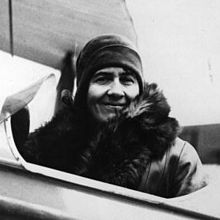
Mary Heath’s unfortunate start to life, when her father was found guilty of murdering her 220px-Mary,_Lady_Heathmother, did not seem to hamper her development and ambition. Brought up by her grandfather and two elderly aunts, she took an active part in sport and passed a degree in science in Ireland. In WW1 she became a dispatch rider, initially in England but then in France. In her early years her achievements were in sport rather than aviation. In 1925 she was part of a delegation to an Olympic Congress in Prague and her journey by aeroplane changed her life. (photo from Wikipedia)

Her achievements

In 1926 she became the first female aviator to be a commercial pilot by gaining an A licence and she also flew Shorts seaplanes. (Diana’s eyes light up here!) In January 1928 Mary Heath made her name known worldwide, by her solo flight in her Avian from Cape Town to the UK. (Celebrate by Tracey Curtis Taylor this winter – see my last post) In the same year she went to the USA where she hoped to gain a position with KLM, but her gender was against her. Undeterred she continued to work in aviation.

Notable difference

Lady Heath married her third husband Reggie Williams in Lexington Kentucky in 1930, with each marriage securing enough income to continue to fly. The pair returned to Ireland for a further wedding ceremony causing more notoriety, since Reggie was from Trinidad and inter-racial marriages were extremely rare. They both worked as aviation instructors for Iona National Airways.

Death

Mary had a most unfortunate end after such a glamorous life. She developed a serious drinking problem and died in London in 1939 at the age of 43 years – a sad end for a person who fought for equal opportunities in the public eye for so many years, whether it be gender, racial or social standing. She certainly had a story to inspire, although her demise was so very tragic.

For more information on Mary visit:

Wikipedia       Irish Historical Aviation        Eclectic Ephemera blogspot

6 Comments

Filed under Early Flight, Events, Flying Boats and Sea Planes, Frivolous Flying Facts, Memoirs, Role of Women, WW1

Reflection, Contemplation and Anticipation for 2014

A Happy New Year to everyone, although I’m aware that in parts of the UK and USA we are struggling with unprecedented bad weather, making life difficult for many. I’ve been fortunate to enjoy Christmas and New Year with family and friends and, although we were not totally unscathed by the relentless storms, our grief was light compared to some.

It is my habit each year around this time to have a complete break from blogging, Twitter and Facebook and although some of you may have noticed me appear for a sneaky ‘retweet’ or ‘like’ here and there, I have not actively participated and thus feel refreshed for what 2014 may bring. Yesterday and today I have been clearing away the debris of the festive season and making my environment fresh and sparkling, perfect for looking forward.

All in all 2013 was a year for change for me, great leaps of change, meaning I am now writing virtually full time. It was a period of letting go, but I also learnt many  new skills in the business of writing and publishing. With ‘The Life and Demise of Norman Campbell’ published last spring and many face to face promotions for my second novel ‘Ancasta Guide me Swiftly Home’ I have been busy busy busy. Somehow I have also found time to complete my first murder mystery, an enjoyable challenge and it’s been a pleasure to return to writing creatively.

In fact, the changes to my work life have coincided in a shift in perspectives, like two sides of a coin. Firstly I have returned to writing for the sheer joy of it. The business of publishing, although exciting had become a burden while I was still teaching, but since I’ve been set free this is no longer the case. On the other side I now don’t benefit from a regular income and so my writing needs to be more than a hobby and decisions must be made in a more business-like fashion, which I will explain more fully in another post.

Now to 2014.

Firstly as we continue through the centenary of the beginning of WW1, and commemorate its impact on world history, I will continue to promote Ancasta Guide me Swiftly Home which is set through that period.  One person in an audience through the summer who had read my book asked,

‘Why did so many have to die?’

My response was,

‘I tried to reflect the stark truth of the effects of World War 1 and not glamorise it, although alongside this I also dwelt on the human aspects of love, acts of kindness and healing.

‘Life goes on for the Newton family’ as one reader wrote. It had to.

Secondly feedback for my current project, a murder mystery, has been excellent so far from my beta readers and so I aim to set a launch date soon, towards the end of March.

Thirdly whilst continuing with all of the above I am dabbling in a

Personal ~ Memoir ~ Fantasy with lots of historical elements too!

Who says cross genre isn’t live and kicking. My current circumstances inspired me in this direction and then

Finally I will be continuing with extensive research for the third of mt Riduna Series in the spring.

All of this should keep me busy. Anyway, I would like to thank you so much for sharing this journey with me. Your comments and responses are greatly appreciated whatever way they come…here, on facebook, twitter or by email.

dianariduna@yahoo.com

2 Comments

Filed under Writing, WW1