Category Archives: Writing a novel

Welcome the The Next Big Thing!

Welcome to The Next Big Thing!

My writer friend, CR Hodges who is writing a myth based urban fantasy set in Sweden, recently tagged me for a chain blog entitled The Next Big Thing’.

The deal is: I answer a few questions about my current work-in-progress, then I invite other authors to do the same. A bit like a chain letter, except it is only focused on an authors’ work-in-progress. CR Hodges was tagged previously by Timothy Hurley. I’ve included details of their blogs so that you can explore their answers to the same questions. The authors I’ve chosen are Anne Allen and Zteve Evans, along with CR Hodges and Timothy Hurley, who have been tagged below my answers. So here goes:

1.      What is the working title of your next book?

I have a couple of titles in my mind. I thought ‘Murder at Haynes Park’ at first but, recently I’m leaning towards something a bit less specific, ‘Murder Now and Then.’ I like the ambiguity of the title, especially since its inspiration was an unsolved murder back in 1919 but most of the novel is set in the future in 2019!

2.      Where did the idea come from for the book?

I started a short story set really locally in the farming community, a short murder mystery, but I’m not good at short. Then I heard about this unsolved murder of 1919, went to see the military grave in our local churchyard and suddenly the two ideas merged and mushroomed.    It’s fiction though. I think a great deal of fiction grows out of snippets of facts.

3.      What genre does your book fall under?

Murder mystery, a new genre for me after two Historical Fiction and a Memoirs. Though its got a bit of history in it too.

4.      What actors would you choose to play the part of your characters in a movie rendition?

The most difficult question here. Maybe Annette Benning (I know she’s American but she’d be great) Steven Tompkinson and Emma Thompson. The parallel lives would be tricky with maybe Emma Watson playing both the roles for then and now!

5.      What is the one-sentence synopsis of your book?

Three families implicated in an unsolved murder in 1919 are haunted in a murderous way one hundred years on.

6.      Will your book be self-published or represented by an agency?

I’ve decided to continue with my small independent publishing company.

7.      How long did it take you to write the first draft of the manuscript?

I’ve only just finished it, but have worked on it is spurts starting about a year ago.

8.      What other books would you compare this story to within your genre?

A cross between a Linwood Barclay, maybe ‘Too Close to Home’ but it has a touch of Barbara Erskine’s  ‘Warrior Princess’ in it too, not the actual era but the feeling that the present is inexplicably linked to the past.

9.      Who or what inspired you to write this book?

A young lady who was tragically murdered not far from where I live in Bedfordshire back in 1919. The murderer was never brought to justice though several were implicated. I came across the true story whilst researching for my second novel Ancasta Guide me Swiftly Home, but it is fiction, and I’ve changed the name of the young girl too. I did not want any confusion that I was solving the original murder at the same time as staging a new one.

10.  What else about the book might pique the reader’s interest?

I can’t resist a link to the Channel Islands too though this one skips over to Jersey a couple of times and very briefly to Alderney. Hey that’s a thought. Maybe the old cast of the series Begerac would be interested in a revival!

Here are the blog links for:

Anne Allen

Zteve Evans

CR Hodges

Timothy Hurley

Not only that, I have made a loop link to my other blog to do the same interview about Norman’s Memoirs.

A Selection of Recollections

In fact, you may have seen my review of one of Anne’s books ‘Dangerous Waters’ and she also has some tempting details about a Writer’s Retreat on the island of Herm on her blog.  Zteve Evans has written some holidays guides to The Channel Islands too!

Both Anne and Zteve will be putting their posts up around 21st April.
7 Comments

Filed under Events, Marketing your novel, Publishing your novel, Writing, Writing a novel

Location, location, location ~ How important is a sense of place in a novel?

Is a strong sense of place important for a novel’s success?

Good characterisation is vital for a successful novel, as is a sense of the time period. In fact the era, whether a modern setting or in the past,  needs to seep into every nook and cranny of the plot, dialogue, setting and language too, but I also believe that the best novels are rooted firmly in a clear sense of place. A good novel transports you to somewhere else, allowing you to travel without leaving your favourite  armchair. The reader should be able to picture the location in their mind and live with the characters as their lives weave through the plot.

Which places are associated with authors and which authors use a sense of place as part of their identity?

Crime and mystery novels use the setting to give atmosphere, tension and contrast; the latter being the key…. danger and safety……. dark and light……the sandy, sunlight beach and the gloomy alleyway for example, but to make a series there also needs to be consistency to draw the reader back. You associate Peter James with Brighton, Ian Rankin with Edinbugh, (whose latest novel is ranked number 12 in the Amazon top 100 today) Colin Dexter with Oxford (Inspector Morse!), Stieg Larsson with Sweden……the list goes on.

Then there’s the popular fiction of the late Maeve Binchy, rooted firmly in Ireland and more recent successful authors like Victoria Hislop, who I will always associate with the deep-blue seascapes of Greece, although her latest novel is set in Spain, I believe.

Jodi Picoult’s successful books are challenging and thought provoking. She chooses topics to be controversial and stretch the reader’s understanding of their own values and sometimes highlight their misconceptions, but ‘place’ is important in each of her novels, whether it be a prison, hospital or courtroom. I loved ‘The Tenth Circle’ as much because its descriptions of Alaska and the way of life of modern Eskimos was describes so vividly, that it took me out of my comfort zone and transported me to a world I know nothing about.

Certainly the classics, which influence many writers, reflect this view of an identity with ‘place’…. Daphne De Maurier’s Cornwall, Thomas Hardy’s Wessex and  The Bronte sisters’ Yorkshire. Mind you, although Jane Austen is associated with many places including Bath, her characters went all over England and I can’t count the number of towns where I’ve seen claims of connections with Dickens.

Should you only write about a location you know well?

The advice is to write only about a place you are truly familiar with but, if you don’t live there, certainly you need to spend a considerable amount of time on location, researching, walking and observing, noting down characteristics, descriptions of places, atmosphere and associated events. It is helpful to keep a map to hand and check details as meticulously as you can.

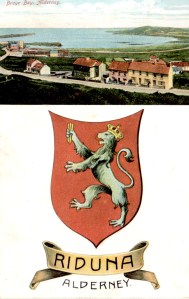
In the first edition of my novel Riduna, I was coloured by childhood visits to the island of Alderney. We called the town ‘St Anne’s’ and not ‘St Anne’ and pronounced Saye Bay, ‘Say’ Bay and not ‘Soy’ Bay, as the locals do, and they have since been quick to put me right. As I’ve visited regularly as an adult, the island has seeped deeper into my psyche and I am influenced more by experience than memories.

Does it matter if you don’t get the facts right? After all it’s fiction.

Yes it does actually. Having said that, it doesn’t pay to be defensive if someone tells you that you have made a minor error. Embrace it and be pleased to receive feedback. It means that the person has read your novel and has cared enough about it to contact you. Local people are understandably defensive about their own patch and you need to reach out to them and gain their trust. I’ve met some wonderful people when I’ve been out and about, who have shared all sorts of memories and personal stories over the last few years. Build bridges and not fences. When I was researching for Riduna a local historian remarked, ‘There’s so little actually written down about Alderney in Victorian times, and much that was written was destroyed during the occupation of WW2. Mind you,’ he said with a sudden thought, ‘why don’t you write about the previous century. You could virtually make the story up since records are virtually non-existent!’

If you don’t know a place well, then why not create one?

An alternative is to dream up a totally imaginative world, the most famous being Tolkein’s Middle Earth, but more recently Bernard Cornwell’s series, although set in Viking and Saxon England, contains a world so far in the past that it has a huge scope for pure imagination and creativity. This requires as much planning, and time consuming cross referencing, as visiting a real place, if the finished result is to be authentic and believable, but it does have the advantage that you have no need to travel away from your front room.

Can a place be as powerful as a character?

Yes, it certainly can. A place can be compelling, drawing the characters and the reader forward to their goal, or repelling and driving them away. It can live deep within the heart of a hero or heroine, as moving as any love affair, ever pulling them back. The word ‘home’ is an extremely emotive word. Where is home? This is an important question to ask. The character may be a  lost soul, with no true roots, but even then they may have a desire to be rooted, which moves the story forward, or a desire to cover their tracks at all costs and start a new life anew, reinventing themselves.

Does your narrative paint a picture in the eyes of the reader?

If you see a photograph, what captions or stories do they evoke?

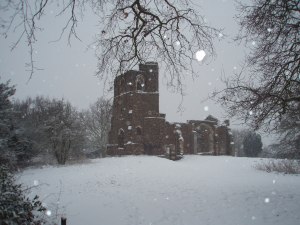
 A church ruin on an icy evening

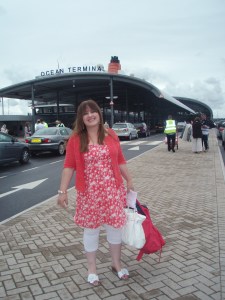
A single traveller on a cruise of a lifetime

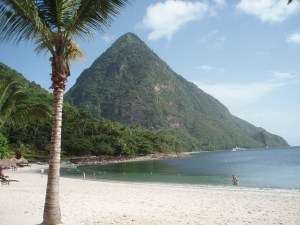
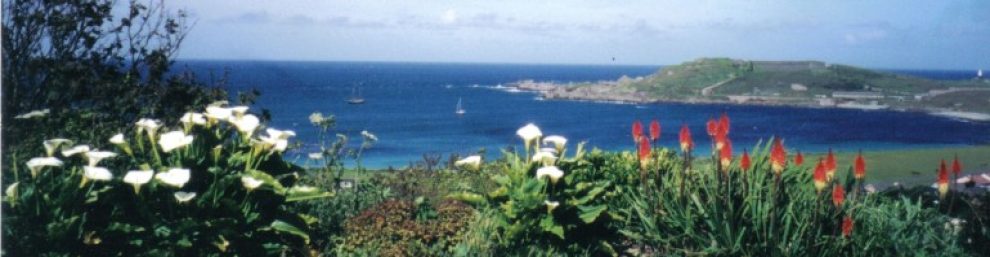
An exotic location; an island of mystery?

With each photograph my mind races with ideas for a novel or story, but does your novel transport the reader to an exciting destination as powerfully as a photo. I believe it should do, but does it have to?

Does there need to be a sense of place in a novel? A personal view.

I have enjoyed books where ‘place’ is not so important and the plot shines, weaving it’s way through the lives of the characters, but I don’t find them nearly as memorable, however well written, exciting, funny or compelling they seem to be at the time of reading. It doesn’t matter whether it is a place I know well, or have visited on holiday, or dream of going to one day. For me, it is the setting of the novel which tends to be the deciding factor in whether the book remains on my shelves or be taken to the nearest charity shop. If it is given a home then the book reminds me to look out for the author’s next release, otherwise it just joins the thousands of stories in the ‘library of forgotten book.’ Now that was in a great novel wasn’t it….. what was it called?

2 Comments

Filed under Book reading, Planning a novel, Reading a novel, Research, Writing, Writing a novel

Home is Where the Heart is ~ Truth or Cliché?

Where is your home?

Is it the bricks and mortar or the shack on the beach which you currently live in or is it a far away place you only dream of?

Where ever you live, do you frequently think of the place you were born or where your family roots are and how much does it colour your everyday life. What do you feel when you return?

Is a sense of home passed down the generations?

With so many people migrating to the far corners of the world and others immigrating to the UK to start a new life, and with an ‘ex pat’ community thriving in pockets from Dubai to Spain and from Gibraltar to the Falkland Islands and taking a little bit of Britishness with them, where is ‘home’ in our society?

Is a nation the sum of the diverse peoples within its community, or is there something tangible which identifies the characteristics and ‘make up’ of  national identity?  Or is a sense of ‘home’ far deeper than that?

When people cry ‘no more immigration’ are they just missing the point along the way, when looking at history in its wider context?

I am reading a novel at the moment where one of the main characters has no sense of belonging anywhere and I find that slightly disturbing. Through personal circumstances and loss she had no idea where to call home, but isn’t that a need deep within all of us? Or is it? I find myself secretly longing for the main character, Casey, to find a place to take root, but is that reflecting a personal need of my own?

In my first novel Riduna, it was always my intention to have home to be ‘Riduna itself,’ the island of Alderney in the Channel Islands, however far away many of my characters reached. Riduna would always remain in their hearts. For Harriet, leaving Riduna was a wrench; a painful parting from which she never recovered. The island remained deep within her, colouring everything she did, and yet she was also fearful to return.

With my second novel ‘Ancasta ~ Guide me Swiftly Home,’ the story took me to the next generation of the Newton family, and even I was surprised as to how powerfully Harriet’s daughter Sarah was affected by her visits to the islands of her mother and father’s births. How an unexpected trip turned into a quest to learn more, which in turn became a longing, equally as strong as her mother’s.

Is love for a place unconditional and as one fellow blogger wrote recently, ‘seen through rose tinted spectacles?’ We do don’t we? We remember only the good bits of a place, a holiday or an event and try to push anything negative into the back of our minds. I suppose that’s human nature.

As the author I had the power to decide whether Harriet or even her daughter Sarah returned to Riduna. As many authors find, the characters themselves led me to follow certain paths, which I had not necessarily predetermined. I could have ignored their will and written it in a completely different direction. What a thought!

There has always been migration and displacement in the world, both forced and chosen, but is our yearning for a particular place to call home, which makes up our psyche, inherent or have we been indoctrinated; in other words is it nurture or nature?

What do you think? Where is your home?

2 Comments

Filed under Alderney, Ancasta, Book reading, Planning a novel, Riduna, Writing a novel