Category Archives: Research

Choosing a Book Title

Background

Choosing a book title is a personal thing. Some authors know the title before they begin to write, in fact it appears miraculously as they are doing their research.

Others wait until they have written the first draft. On reading and editing it a title appears as being an obvious choice.

Then there are some novels which arrive at the publishers and one of the team, it could be the editor doesn’t like the chosen title and persuades the author to choose a different one.

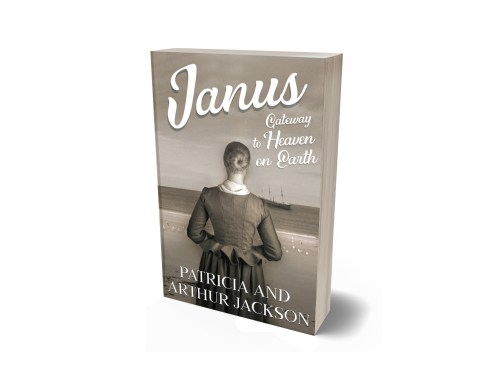
Choosing Janus ~ Gateway to Heaven on Earth

My parent’s original title of their novella was simply ‘Heaven on Earth’ so why did I think fit to amend it? Firstly it is a prequel to my Riduna Series, set from the late Victorian era through to WW1 and on to 1920. For both books in the series I chose names which reflected the setting but added an air of mystique.

Riduna, my first novel, is allegedly the ‘Roman’ name for the island of Alderney. Although some researchers have cast doubt over this more recently, Riduna was once seen on shop fronts and as the name for the local rugby team. In fact, folks from Alderney used to call themselves Ridunains.
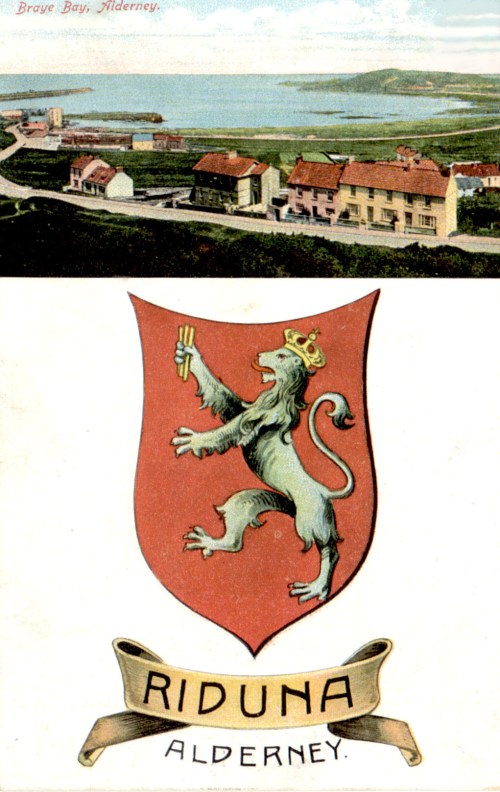
included with permission

Ancasta, from my second book Ancasta ~ Guide me Swiftly Home, is the Goddess of the River Itchen, Southampton, from which this novel flows, before, during and after WW1.

Thus, when I decided to publish my parents’ novella I thought it would be quite nice to continue the theme. Janus is said to the the ‘door’ or ‘gateway’ to another dimension. Since my parent’s little book was titled ‘Heaven on Earth’ I felt that Janus would be a perfect Gateway to the island life thy described therein.

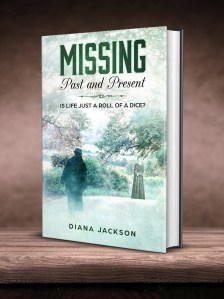
Janus ~ Gateway to Heaven on Earth is available in paperback on Amazon. It will soon be available to order from any good bookshop too.

1 Comment

Filed under Alderney, Author Diana Jackson, Channel Islands, Research, Riduna, Writing a novel

Copyright Issues ~ Seeking Advice

image my Freepik

Eventispress hopes to publish the prequel to my debut novel Riduna late on in 2024.

Background

It was written by my parents at the same time as I wrote Riduna, and was published by The Daily Mail in one of their offers to publish a book and print half a dozen copies for the author for £50. There was no ISBN.

Mum and Dad gave out copies to close family members, but they were always concerned that they did not manage to put in any conversation. They tried, but couldn’t quite make it work. When Dad was first suffering with Dementia I thought it might be a great stimulating activity to work on it with them both, but sadly Covid came along and it was impossible to do so.

I decided a year ago to get the novella out again and work on it, as a tribute to both of my parents, who I sadly lost during Covid. Once it had been edited, I sent it over to the Alderney Society to give it a read through, just in case there were any historical bloomers, but then I thought of copyright issues.

What did I do next?

First I wrote to The Society of Authors, of which I am a member. They have an excellent team who look into legal matters for their clients. Their response was that I needed permission from my sister, the only other beneficiary of my parents’ estate, but also from the Daily Mail.

What happened?

I searched through the website of The Daily Mail to find a suitable person to write to. Having chosen the best fit, I worded my email carefully and sent it off, with no idea when I might receive a reply. To my surprise I had a lovely email within a fortnight, giving my permission to go forward for publication, with a statement to write on the copyright page of the books:

“An earlier version of the novella “Heaven on Earth” was published with the Daily Mail in 2009. Permission to republish has been given by the Daily Mail and Christine Rychlewski, Diana’s sister.”

And finally …

The final step now is a cover designer and off for publication.

Eventually, I will sell the book as a tribute to my parents, Patricia and Arthur Jackson, with all profits to The Alderney Society.

Watch this space!

5 Comments

Filed under Author Diana Jackson, Family History, Publishing your novel, Research

How to Create an Imaginary Setting for a Novel

Draw a map

Draw out a basic map with streets, footpaths, houses, shops and any other key places. Make it large enough to add to. Link it to other towns, real or imaginary, with arrows at the edge of the page. (eg Bedford 5 miles) Add in railway stations and bus stations, if they feature in your novel.

Add Key Illustrative Details

The village or town in your mind’s eye has streets, crossroads and roundabouts, yes, but what makes it come to life is the detail; the gardens and parks with trees, cafes with tables outside, footpaths along rivers, derelict land maybe, the style of buildings, churches, shops and homes. If your map is big enough, you can sketch these on to your original map.

Add descriptive detail

There is a limit to the amount a small sketch can convey. Possibly using post-its, which will grow in numbers even as your novel develops, write key words, adjectives and features, to help each place come to life. (a cafe might have ~ round bright pink bistro tables with fold up chairs outside, a cosy private corner inside with scatter cushions ~cerise pink and yellow, or arm chairs)

Add photos to give a sense of location and the surrounding area

The photos you add may not be exact but, as authors, we often see buildings, people or scenes which remind us of our novel. Even with imaginary settings, the place you have in your mind’s eye is a composite of many pictures of real places.

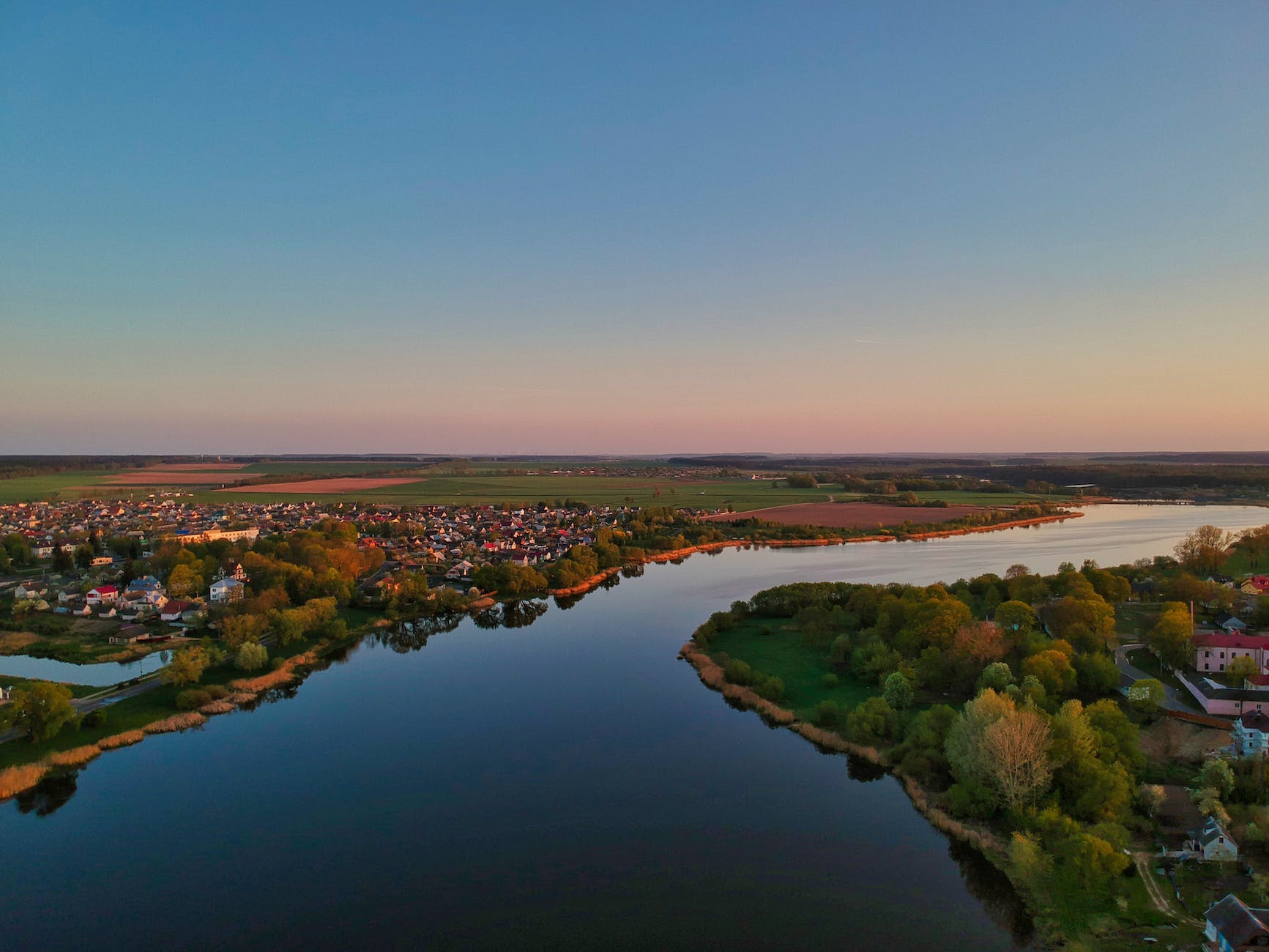
Photo by Egor Kunovsky on Pexels.com

Cross reference notes

Use a notebook for extra details which you are unable to add to the map, or on postits. (19th century Victorian red brick church, alcoves with carved saints observing you as you pass by, dark wood panelling inside, triptych of gold and vibrant colours …)

Why?

Why go to such detail and trouble? With an imaginary place it is much harder to be consistent. If you are in the middle of writing and a query pops into your head, as to whether you remember the details correctly, it takes a long while to find the previous reference or description in your manuscript.

With the visual and written prompts, you can ensure consistency, and enable reader to imagine the setting almost as clearly as you can.

Include the map

Some authors even include a map at the front of their novel. This is not necessary, but some readers appreciate them, especially if a ‘sense of place’ is key to the novel.

Leave a comment

Filed under Planning a novel, Research, Writing, Writing a novel