Category Archives: History of Alderney

More book reviews on Alderney

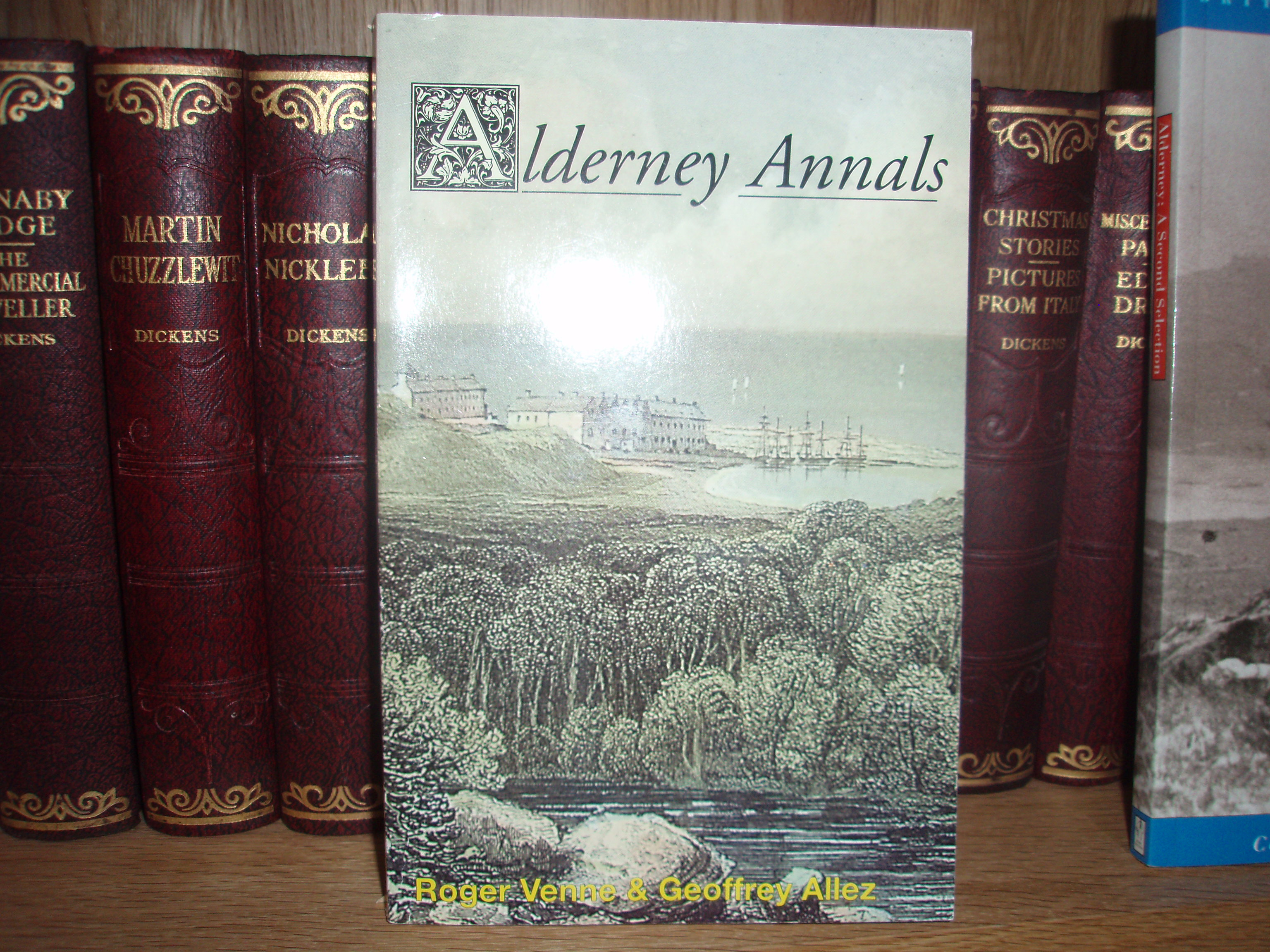
Alderney Annuls by Roger Venne & Geoffrey Allez

What I love about this book is the quotes from historians and travellers back as far as the 16th Century. These bring the island’s history to life with humour giving fascinating facts, detailed lists- for example businesses in 1851, folklore and vivid descriptions of important events, places and people. Its pictures add to the book’s appeal. It is well researched and put together in a readable fashion.

Alderney Annuls by Venne & Allez


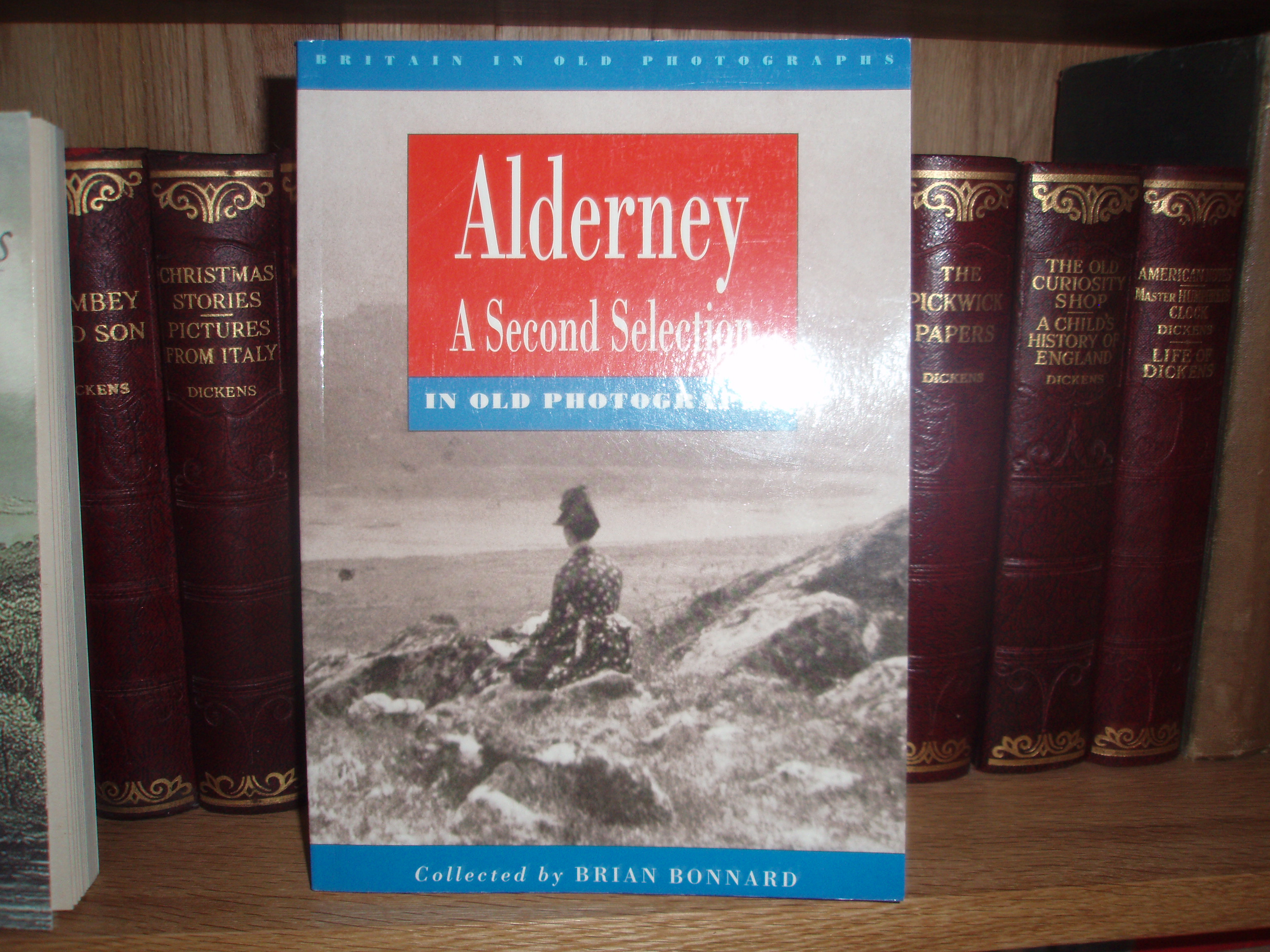
Alderney in Old Photographs  By Brian Bonnard

There are several editions of these wonderful books and what a snapshot of past times they are. Brian Bonnard has collected or been given permission to print postcards, copies of watercolour and oil paintings dating back to 17th Century and photos from 19th and 20th Century. Whether it is to observe the way in which areas of the island have changed, new developments, industry over the years, fashion and fun; each picture tells a story of its own.

It is far more than a book of photos, because Brian has also included snapshots of items from the archives and displays in Alderney Museum dating back to the Bronze Age.

I have two of his editions:

Alderney- A Second Collection and the more recent

Alderney in Old Photographs by Brian Bonnard

I love the picture of the lady with the tall black bonnet sitting above Braye Beach on the Butes!

Also available now – Alderney From Old Photographs ISBN 976-1-84868-360-0

When I was over on Alderney in October last year it was certainly still available for sale in the new bookshop. It can also be bought from The Guernsey Society Website (link on the blog roll) too for those of you who are unable to visit the island, although I would encourage you to do so if you can!

 I gather some of the earlier books are collector’s items!

Next blog -Books on Guernsey

Leave a comment

Filed under Alderney, Channel Islands, History of Alderney, Research

Book Reviews- Personally influencing my writing

Alderney by Victor Coysh

Published back in the 70’s you cannot be interested in the history of Alderney without reading this book from cover to cover.

First Victor Coysh tells us general facts about the island, its location, and ‘present’ day forms of recreation, communication and transport. Of course, much of the information is a little dated, but Coysh is in agreement with today in that, despite offering boat trips, ferries and even a hydrofoil service over the years with greater and lesser success, the main and most reliable form of transport to Alderney is to fly. (Having said this I hear that a new ferry service started last year and so I wish them well.)

Within his ‘rocks, fauna and flora’ chapter Coysh explains the controversial belief that the ‘Alderney’ breed of cattle never actually existed and he also mentions the harvesting of Ormers, recently highlighted by Visit Alderney. I was surprised that he omitted to mention ‘the famous white hedgehog’ of which the island boasts today, or even black rabbits, which I have seen myself, even though he does note an abundance of rabbits. This left me inquisitive as to whether these species are a new phenomenon. Can anyone update us here?

The next chapters share with us a brief account of Alderney’s history, beginning with prehistoric remains documented in detail by Frederick Corbin. He continues though the Iron Age to the Romans and then through the Middle Ages and on to the 19th Century, describing the finds of various archaeological excavations over the last three centuries and referring to documented evidence. Of great interest is the fact that Alderney, once part of the Duchy of Normandy, became linked with the English Crown in the thirteenth century, although not subject to it, and it is governed in much the same way today. His account of settlements over the centuries and the final establishment of St Annes as the main town on the island is quite detailed, and his mention of surnames of note fascinating, since many are still known on the island today and were certainly present before the evacuation in WW2.

The chapters on the nineteenth century and the building of the Victorian Fortifications including the Breakwater have been of particular interest to me in my research, followed by two poingnant chapters on the years of the occupation in WW2 and the islanders’ homecoming, the most famous period of Alderney’s history.

I was particularly inspired by the island’s customs and legends and many would find the descriptions of the numerous wrecks off the island’s shores interesting, although writers have covered this in greater depth since. Finally the book gives the reader a taste of the many delights a visitor can experience during their stay.

Alderney is timeless. With very little imagination you can walk along the cobbled streets and imagine the island as Victor Coysh experienced it andsee it through his eyes, but this book gives the most comprehensive account of the island’s history that I have read to date, written in an informative and readable fashion.

1 Comment

Filed under Alderney, History of Alderney, Writing

Planning a novel – a personal experience

When I began to think of writing a novel I knew little of the plethora of advice out there for aspiring authors. I was not aware of websites, forums or magazines for writers. I knew there were creative writing course and I taught how to plan stories at work, but never considered attending a course or a conference. Maybe they were already in existence, but for me writing was an individual art. I felt alone with my pen and paper. I wrote long hand and typed it up later on my laptop. I was only allowed a laptop, unusual in those days, but I could hide it away when it was not in use, so that it didn’t offend or take up space in our small maisonette.

 I did however enrol with ‘The Writer’s Bureaux’ but unfortunately had little spare time of my own to follow the course to its end. Nevertheless I found the box of useful tools invaluable.

How did I begin planning?

The inspiration for ‘Riduna’ came to me when I was standing on the Butes overlooking Braye Bay on Alderney, thinking of my Great Grandmother Harriet. I remember saying to myself, ‘Yes, I will write the essence of your story as a tribute to your life.’ As I’ve often said since, I knew very little about the true story of my great Grandmother at that time –see ‘Family History’, my January 7th 2010 blog but my first thoughts were:

  • What was it really like for Harriet to live on Alderney in the nineteenth century when it was overrun by red-coated soldiers?
  • Who were the people she grew up with?
  • How did she learn to dance?
  • What did she do that was so terrible that she was sent away?
  • What did it feel like to leave the island of her birth?
  • Where did she go?
  • Who did she go with and in what ways did it change her life?

I suppose these questions formed the skeleton of my first story plan. Unconventional I know but there it was. The following summer I began to research, filling in background information and substance to my ‘plan.’

I didn’t write down notes on plots and subplots. I didn’t write pages on descriptions of characters, neither did I agonise over conflict and resolution.

What did I do next?

Once I had carried out substantial research I allowed the characters to speak for themselves. They flowed from my imagination sharing every element of their joy, feeling empathy for the depth of their despair, grieving, praying and sleeping with them. They filled my life until the agony of my own life’s problems took over and the story was left for quite some time in a metaphorical cupboard.

Over the next few years I returned to the novel on several occasions, each time following a visit to carry out more research. I never entirely let it go, so that when I finally had the time and the inclination to complete ‘Riduna’ I found only a few gaps in the story which I endeavoured to fill, including the story’s final chapter which I was reluctant to write. In fact I ended up writing two versions before I chose the one which I felt was the most apt, leaving the reader with closure but also giving them free reign to use their own imagination.

I was relieved, last year, when I heard another author speak at a Book Fair, saying that they too carried out little detailed plans before they began to write. They allowed the story to tell itself.

Have I learnt anything from this experience?

Yes, certainly. Since ‘Riduna’ was published I have listened to author’s speak at conferences. I have subscribed to a Writer’s magazine and read copious blogs and articles on the internet about planning and writing in general. I have listened, but I don’t like rules on the whole. Having said that I know that I have taken on board some of the advice I have read when writing my second novel.

Have I planned the sequel in a different way?

 Yes I have, but I’m afraid that’s a blog in the future.
Leave a comment

Filed under Alderney, History of Alderney, Planning a novel, Writing, Writing a novel