Category Archives: Historical Fiction

The Solent Area and Beyond ~ A Virtual Tour no 5 ~ The Royal Victoria Park Netley

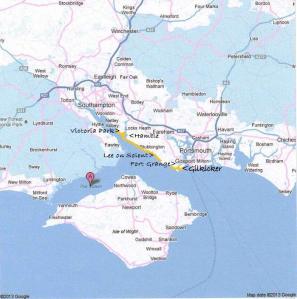
Solent map googleRVPark

In walking distance heading north west along Southampton Water from Hamble we reach The Royal Victoria Park, an open space of an acre or so of grass sloping down to the river, which you can glimpse through the gaps in the tree-line. It is surrounded by woodland, through which there are many paths and tracks, but the Park it can be reached by road through Netley.

I had often seen the lonely building of the chapel in the centre of the park, but in all my years of staying with family in Woolston as a child I do not ever remember visiting it and certainly had not realise that this chapel, standing in isolation on the expanse of lawn, was once part of a truly magnificent monument to our greatness as a nation.The Royal Victoria Hospital came alive for me on my visit when I was camping in Hamble and from then on I could easily imagine some of my characters either working or being taken there.
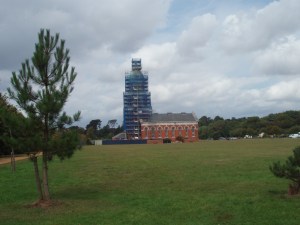
OLYMPUS DIGITAL CAMERAI apologise that my only photo of the chapel

was when it was being restored in 2009. I must go back and take some more photos!

This chapel is certainly a landmark as you sail along Southampton Water to the Isle of Wight or beyond, but The Royal Victoria Military Hospital in Netley must have been an astonishing sight to behold, on entering Southampton Water from the Solent, in the days of Queen Victoria. She was the hospital’s patron  and I can imagine an extremely proud queen visiting the hospital on her return from holidays in her residence on the Isle of Wight, feeling satisfied as she alighted at the hospital’s own small wooden pier, gratified that a place had been created in her name to serve her Empire well.

It was the largest hospital in the world in its day, with corridors of a quarter of a mile long, so long that ‘American GI’s drove Jeeps along them in WW2.’ Guide books describe the unexpected and somewhat off-putting main entrance to this place of healing, with an elephant skeleton facing you and display cabinets of skulls and skeletons along endless corridors. The hospital itself was almost self contained for the lives of the huge community who worked there. There were nissan huts stretching as far out the back as the vast quarter of a mile long facade, seen impressively from the front. The hospital was served by its own branch line in between, but it also had its own wooden jetty, jutting out into the river, so that injured servicemen from all over the world could arrive as speedily as possible.

Florence Nightingale was said to not have been very impressed with the building because leading off those long corridors, bathed in light with fantastic views across Southampton Water, were row upon row of wards. Since these wards were at the back of the building, they never saw the light of day and were dark and dreary places. These were not so welcoming to the thousands of patients who were treated there, returning wounded in body and soul from the Crimean War, WW1 and later WW2.

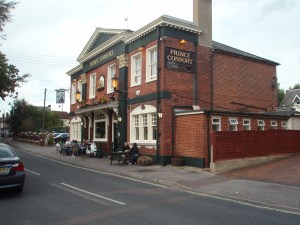
Today you can still enjoy visiting the chapel and visitors centre, or go one of the many planned walks in the area, which are steeped in interesting history. Alternatively you can picnic or enjoy ball games on the grass and just enjoy the views in the sunshine. The Prince Consort is near the entrance to the park, where you can enjoy a drink or have a pleasant meal.
OLYMPUS DIGITAL CAMERA

Leave a comment

Filed under Historical Fiction, Southampton, The Great War, Virtual Tour of the Solent and Beyond, WW1

Historical Fiction ~ Historical Research

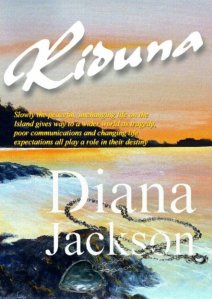
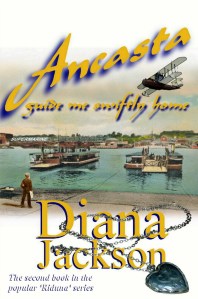
There is always a great deal of controversy between the purists  who research history for its own sake, and those, like myself, who try to popularise it to make it accessible to a wider audience by turning it into fiction. I must admit to taking the research far more methodically for my second novel ‘Ancasta ~ Guide me Swiftly Home’ than I did for ‘Riduna.’

For Ancasta, the research gave me the framework on which to weave the story. The fictional lives of my characters were ‘living history,’ and each key event was seen though their eyes. I included some real characters in the novel too, but the majority were my own creation. I knew my characters, but as history enfolded through my research, so did the direction of their lives change.

I will give you an example of one of my characters, Tom, Harriet’s quiet son, who from a very early age helped out in a local bicycle shop, eventually working there when he left school, unlike his more exuberant brother Jack who became an engineer in White’s Shipyard. When WW1 broke out Tom joined up and it seemed natural that he should join the 9th Cyclists Battalion. (I found this on the internet with little more information) I could have guessed that he would have become a cyclist messenger on the Western Front, in fact this is what I had written in my rough plan. Or later, when I had studied more about WW1, that he could have been involved in combat on the back of his trusty bicycle! Yes, I found that hard to believe too.  I would have dreaded writing that scene, but as it happens he did none of those things. You see, I turned to the Hampshire Regiment Museum for support here and they sent me a detailed account of the 9th Regiment. The regiment did not, as it happens, go anywhere near France, but all the way to India. Since this was quite a difficult chapter for me to write I asked if the curator of the museum if he would mind checking the chapter for me, and Colonel Bullied was more than happy to do so. In fact I was overwhelmed by everyone’s willingness to help.

My point here is that my chapter was purely fiction, from the point of view of the character, but the story I told was plausible, and actually told a snippet of history that very few people knew. Surely, if readers take away from a novel a nugget of truth, they will have a greater awareness of history.

Riduna, on the other hand was a story, already in my head, a love story, through which I weaved moments in history. I tried to be as authentic as possible as to the social history, but there is so little written on Alderney of that period, certainly that has survived, that my story was in fact the framework rather than the historical period. What references I did find referring to the Channel Islands in Victorian times, I read avidly and my research certainly coloured my novel but not the other way around.

With documentaries and the internet you could argue that there is no need for this frivolous adaptation of history. Nevertheless, there is still a huge readership for historical fiction, and through my experience with my research for Ancasta, experts in their own field are more than willing to be involved and support the author to try to get their facts as accurate as possible, and even more than happy to give suggestions along the way.

An example of this was when I was discussing how my ordinary folk would hear the rumours that the boatyard in Woolston may be used by Pemberton Billing to make the new and exciting flying boats.

‘Why not get them to overhear gossip in the local pub!’ a helpful historian suggested.

Funnily enough I was even in that very pub (or at least its replacement, the original having been bombed in WW2!) the Yacht Tavern in Woolston!

I am grateful to so many people who have given me much encouragement throughout my research.

What do you think?

Leave a comment

Filed under Ancasta, Flying Boats and Sea Planes, Historical Fiction, Planning a novel, Research, Writing a novel

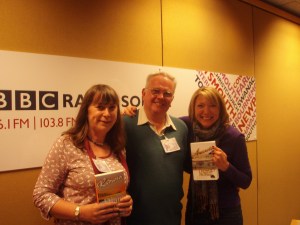
BBC Radio Solent. Diana and Colin have a chat with Katie Martin

Diana, Colin and Katie

I met Colin van Geffen, (the local artist who designed my covers and historian who checked some of my facts) outside the Bitterne Heritage Centre. Both Ancasta ~ Guide me Swiftly Home and Riduna are for sale there. It seemed a fitting place to meet since that’s where my research in the area began several years ago.

Colin suggested The Yacht Tavern for our lunch, down in Itchen Ferry. For those of you who have not been locals to Woolston for very long, Itchen Ferry is the area to the north of the Woolston Bridge, the south side being Woolston, and the villagers have been very protective of their patch for a couple of hundred years or more.

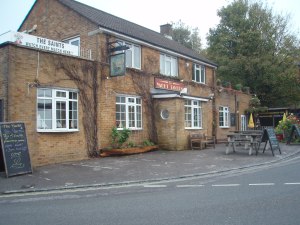
The Yacht Tavern, Itchen Ferry, Woolston

The welcoming landlady Jacqui was really interested in Ancasta, and that we were going to be on Radio Solent in the afternoon. She confirmed that, although the current buildings had probably been there since that area of Woolston was regenerated in the years after WW2, (The Supermarine Works was bombed out during a severe air raid over Southampton) she believed that there was an original public house called the Yacht Inn, on the same site before the war. This confirmed the truth of some of my research and so I was able to say that The Yacht Inn is featured in Ancasta Guide me Swiftly Home. (watch this space)

We had very pleasant,freshly made baguettes before thanking Jacqui and heading over the bridge for Southampton.

Once through the security of the BBC we waited in the foyer, sipping tea and chatting. I was trying not to be too nervous, especially when it was 2.25 and we had not been called, but Colin took it all in his stride and reassured me that it was normal and any minute now we would be collected.

Sure enough, a few seconds later, the friendly face of Rebecca the producer popped her head around the door and lead us up to the studio. I had no time to worry at that point, since Katie greeted us cheerfully before we were positioned in front of two large black microphones and within moments the introductions were made, the questions came and we were on air, with no time to think.

Katie, is a natural. The conversation flowed quite naturally between the three of us, my nerves dissipated and within moments it was all over.

We took photos are were soon ushered out, with Rebecca putting us both on the spot to ask us to share any special memories on Southampton, before we left through the revolving doors.

As I tried to get to sleep last night I was buzzing with all the things I could have said to the people of Southampton.

  • Why Ancasta ~Guide me Swiftly Home is such an appropriate name for the novel and why it is part of Southampton’s important heritage.
  • Yes Ancasta tells the story of the birth of Supermarine through the eyes of the family who lived in Woolston between 1910 and 1920 but it is about far more than that – The change in women’s roles during WW1, life at Gillkicker Foft and The Queen Victoria Hospital-Netley and the role of the Hampshire 9th Cyclist Regiment in the war………… in fact the history of the area during that time, including the Titanic

On reflection though, in the light of this morning, it all went extremely well and I would like to thank Jacqui, Rebecca and Katie for making me feel so welcome.It was not only an enjoyable experience but a truly memorable day out in Southampton.

Leave a comment

Filed under Ancasta, Early Flight, Flying Boats and Sea Planes, Historical Fiction, Marketing your novel, Research, Riduna, Southampton, Supermarine, Woolston