Category Archives: Early Flight

A Centenary Flight ~ Oldest British Plane to Fly

The Blackburn Monoplane 1912 to 2012

Last Sunday (7th October) there was a buzz at the Shuttleworth Air Day. Attendance to the show was high, the mood buoyant and we milled around with anticipation as we waited for the display to start.  I did a double take when several pipers, resplendent in their kilts, walked towards us but no, we were still in the heart of Bedfordshire and the Bedford Pipers were to perform for us. The sun shone and folks smiled.

The focus of the day was a Fast Jet Reunion and those watching were certainly not disappointed as the Folland Red Gnats did acrobats in the sky (Hey, I know where they were probably made…. we saw one outside Follands in Hamble near Southampton!) There were others including the Vampire Trainer (Can anyone tell me why it’s called a Vampire?)  and the Hawker Hunter. (1955) As well as the Jets there was the Hawker Demon, 1933, and the Hawker Hind, 1934. (My elderly 103 yr old friend Norman worked at Hawkers back in the 30’s so I felt a connection)

Then we arrived at the part of the show which truly interested me, the World War One planes. I have read about Tommy Sopwith and what a character he was, and then there was the SE5a which features in my novel ‘Ancasta.’ The sun was sinking fast but it was a still evening and so we were filled with hope that the old Edwardians would be able to fly. Our wait was rewarded with the Bristol Boxkite, (although I believe this is a replica) also featured in my novel and the Avro Triplane. I never tire of watching these priceless machines take to the skies.

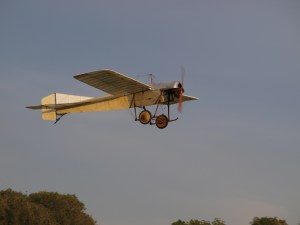
For me though, the climax of the day was watching the Blackburn Type D Monoplane, (Impressed… I copied this carefully from the programme) the oldest British plane which can still fly, take off on its 100th birthday. It first flew in December 1912 and Richard Shuttleworth found it in a barn of hay in 1937, before he bought it and had it restored. Thus, on Sunday The Shuttleworth Collection yet again treated us to a precious celebration of history come to life before our eyes!

As we were walking back through the remaining cars to go home I remarked on a lovely e type Jaguar.

‘That’s scary,’ my husband said. ‘You are recognising cars now.’

‘Oh,’ I said. ‘Do you know there are three things you’ve taught me since we’ve been together?’

‘What are those?’ he asked, puffing up proudly in a way only men can.

‘Cars, aeroplanes and how to swear!’ I replied.

Nevertheless it was another memorable flying day at Shuttleworth and as the announcer exclaimed at one point over the loud speaker,

‘We have to thank the RSPB for this unscheduled part of the show,’ as a flock of ducks flew in V formation overhead!
Leave a comment

Filed under Ancasta, Early Flight, Frivolous Flying Facts, The Shuttleworth Collection

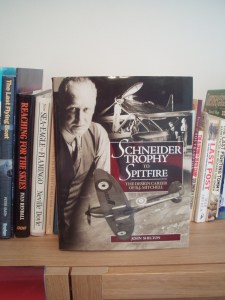
‘Schneider Trophy to Spitfire’ by John Shelton

Schneider Trophy to Spitfire by John Shelton

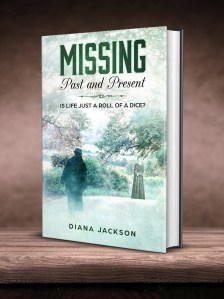
I bought a copy of John Shelton’s comprehensive reference book ‘Schneider Trophy to Spitfire‘ when visiting the RAF Museum in Hendon. With its chronological factual information, enhanced by original photographs, diagrams, adverts and anecdotes, it a an extremely readable history of early flying boats leading to the development of the Spitfire. Looking at the double page photo of Flt Lt B.D Hobbs in his Supermarine Sea Lion in the sea at Bournemouth is so clear, although black and white, that it looks as if it could have been taken yesterday and not in 1919.

My specific interest in reading background for my novel Ancasta Guide me Swiftly Home was only up until 1920, but with my family connections with Supermarine Woolston, with both my uncle and grandfather working there at the start of WW2, I was compelled to read it to the end.

RJ Mitchell was an amazing man with a vision for the future.  His engineering skills in designing the first flying boats and then sea planes, culminating in the Supermarine Rolls Royce S.6B winning the Schneider Trophy outright in 1931 over the Solent was an inspiration. John Shelton’s knowledge on the subject and his extensively detailed and meticulous research  has produced a volume which would be enjoyed by any person interested in history, especially that of flight.

I was able to refer to ‘Schneider Trophy to Spitfire’ on two occasions recently away from the context of my writing. One was the question posed, ‘When were metal rather than wooden hulls introduced?’

(John Shelton discusses in detail the Napier ‘Lion’  engine which could be supplied with either a metal or wooden hull in the ‘Southampton’ which appeared in March 1925)

The second was, ‘The Schneider Trophy winner was a sea plane, or float plane. When did the design suddenly change from flying boats?’

(Again Shelton describes the Supermarine Napier S4 ‘designed in an inspired moment… the greatest credit is due to RJ Mitchell for his courage in striking out on entirely new lines……..((from ‘Flight’)) and was first flown by Biard in 1925)

Supermarine’s Chief Designer was only 29 years old at the time and it must have been quite revolutionary for its day!

It was not until a recent visit to Solent Sky, the air museum in Southampton, when I looked at an exhibit of small model aircraft in the upper gallery that I could see even more clearly the development from the Schnieder Trophy to the Spitfire. Once the S4 had been established, and the world record in speed had been gained, it was not such a big leap to develop a sleek, fast and enduring landplane, the Type 224 Spitfire which is on display in Hendon today.

As a writer of historical fiction, you need to read around your subject in depth in order to weave the lives of your characters around the facts in certain moments in time so that the story is natural and believable. I would like to thank John for writing such a readable and interesting account, the fact that some of it went way beyond my technical understanding was irrelevant and I can highly recommend his book.

Leave a comment

Filed under Book reviews, Early Flight, Flying Boats and Sea Planes, Historical Fiction, Schneider Trophy, Southampton, Supermarine

I’m leaving, on a Sea Plane, Don’t Know When I’ll be Back Again!

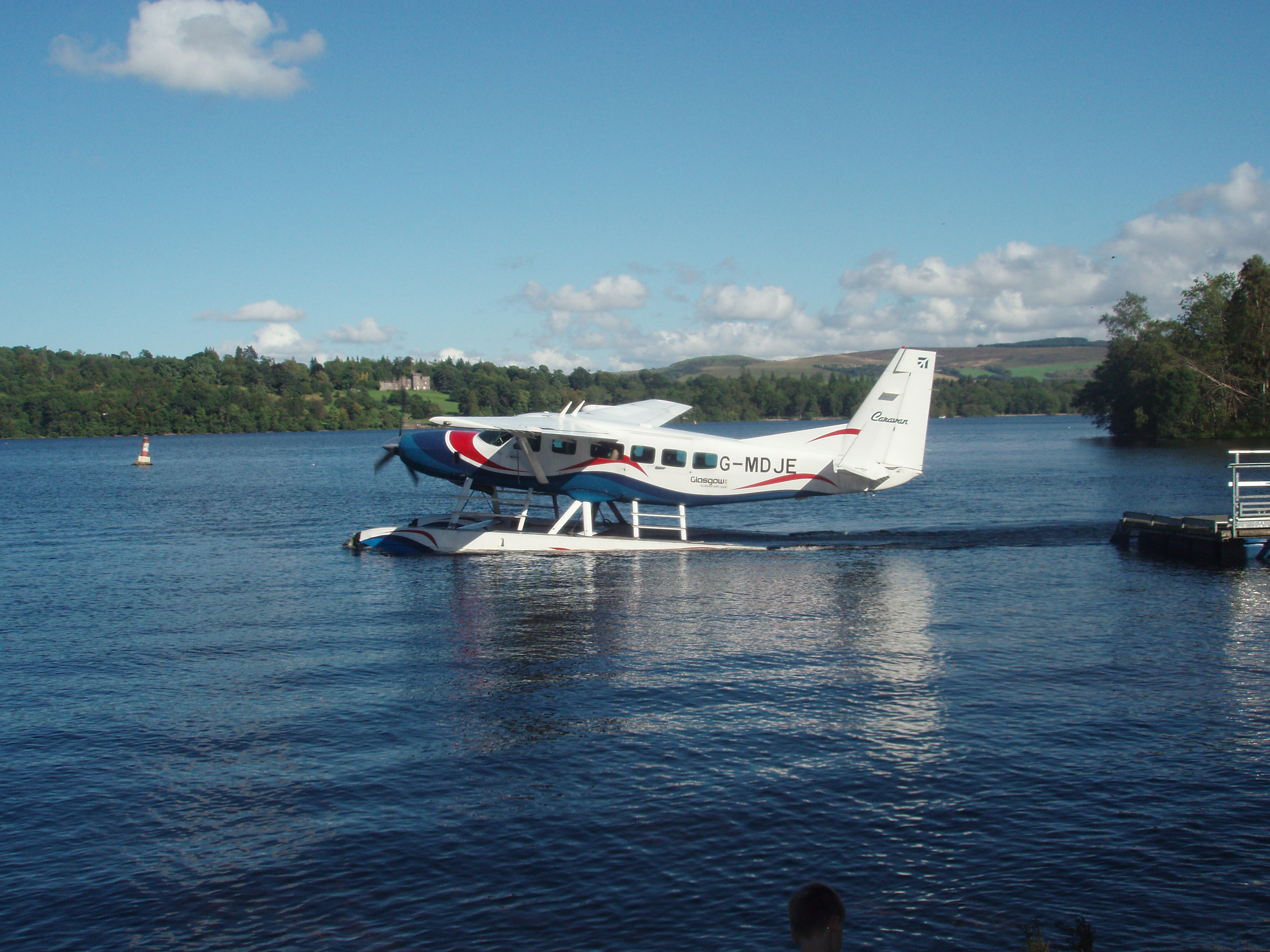
The Loch was calm, the sun was shining through scattered cloud and the air was still and warm as we waited for the arrival of the sea plane which was to take us on one of the most exhilarating experiences of my life. It had been my greatest wish to fly in a sea plane or flying boat, ever since I embarked on research for Ancasta ~ Guide me Swiftly Home three years ago.

Although Ancasta is a family saga, part of its tale is the story of the birth of Supermarine through the eyes of my main characters, Harriet and her sons. This was a Supermarine long before the Spitfire was thought of, when RJ Mitchell was designing innovative flying boats, with ever faster capabilities, in order to compete in the famous Schneider Trophy contest which first began in 1913.

While researching, I discovered Loch Lomond Sea Planes, the only company, as far as I am aware, who offer flights to the public in the whole of the UK. I mentioned it to my husband, which sewed a seed in his memory, and he bought me a pleasure trip for my birthday. What a birthday present!

To say that I was excited is an understatement. We ‘checked in’ in the grounds of the Cameron House Hotel, a stately Victorian Castle on the banks of the Loch, popular for weddings. The pilot gave out safety instructions before we settled in our allotted seats, ten people including the pilot, and he taxied out into the more open waters of Loch Lomond.

‘We’ll gain speed and the nose will dip just before we lift off the surface of the water,’ he explained.

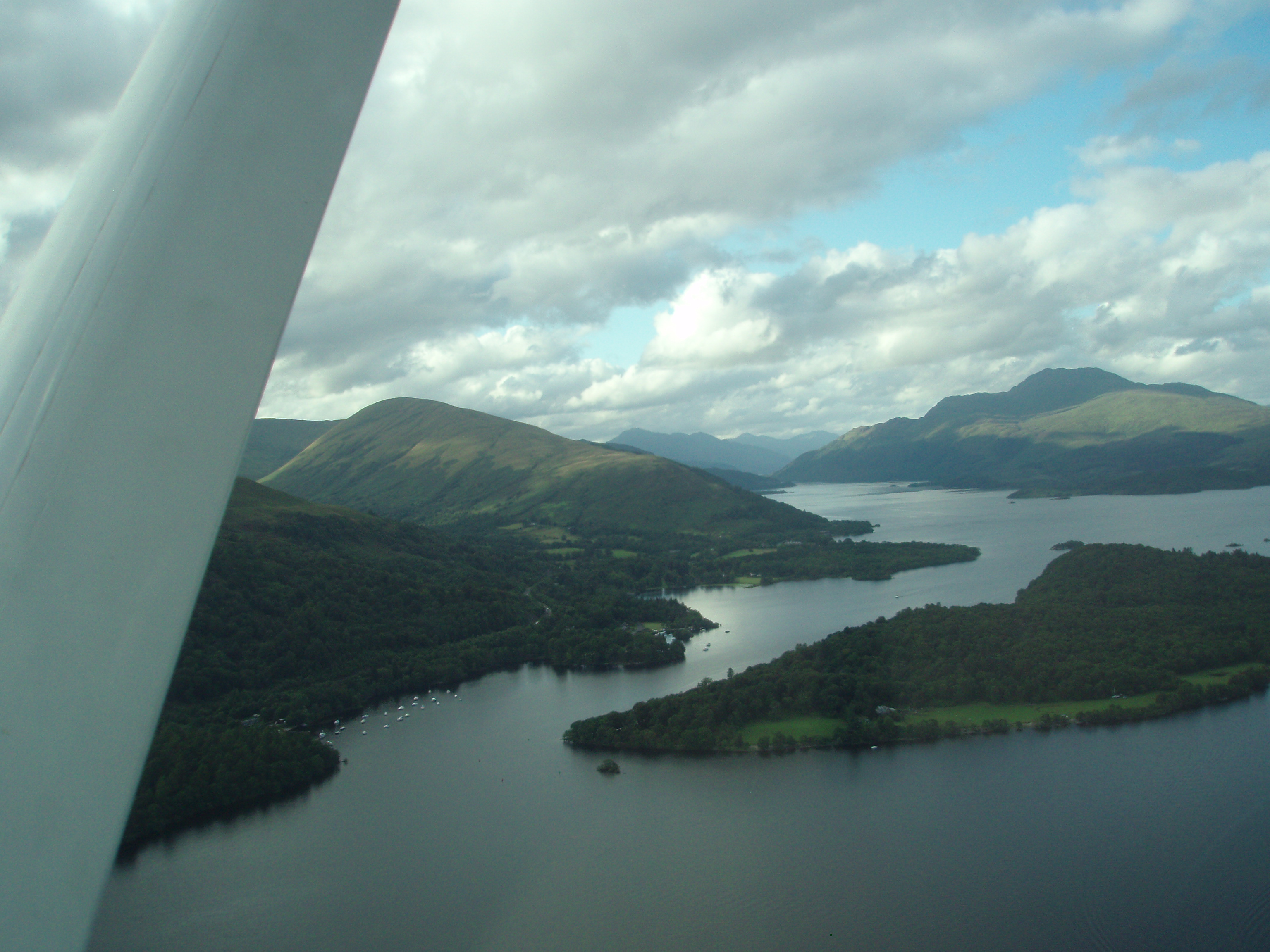
The take off was so smooth as we glided out, and the water’s spray beneath us gathered momentum until we were gracefully sweeping up into the sky above the mountains, the swell below us sending ripples to the  water’s edge. Hills, valleys, mountains, streams, all swathed in sunlight below us. Soon we were in sight of the Western Isles; Mull just visible in the far distance and the sun on its course to set above Islay ahead of us, before we banked and turned back across the highlands.

With the mountains to our left and the lowlands of Scotland in the distance we glided in a gentle descent towards the Loch and landed on the water as smoothly as if we were icing a cake. Magic!

Leave a comment

Filed under Ancasta, Early Flight, Flying Boats and Sea Planes, Research