Category Archives: Book reading

Real v Imaginary Settings in a Novel

WHY IMAGINARY LOCATIONS ARE CHOSEN?

There are many reasons why an author may choose to write in an imaginary setting rather than in a real location. Here are a few of them. Do let us know if you can think of others.

To Avoid Association with Crime

Agatha Christie was the mistress of creativity when it came to imaginary villages where her crimes too place. She did not wish the reader to associate her murderers and criminals with real villages. Brackhampton and  Chipping Cleghorn to name but two of her places; names close enough to their Cotswolds equivalence in order to conjure a picture in the reader’s mind.

To Deter Literary Tourists from Snooping
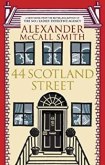
Alexander Mc Call Smith successful ’44 Scotland Street’ series is set in Edinburgh but many settings within the novel are fictional.

In Book trails, an interesting site to check up on if you re investigating an area for its literary connections, tells us:
“Although Scotland Street is real and can indeed be visited (as we did) no.44 not surprisingly is fictional due to the risk of people, readers etc knocking on the door.”

The writer was able to locate a possible cafe which could well be the one that Big Lou’s Coffee Shop is based on (but maybe not!)

Very considerate and essential I should think.

An Allegory or Hidden Message

In John Bunyan’s Pilgrim’s Progress in which, I’m sure you know, Christian is on a journey towards the Celestial City. It is an allegory of life as he faces trials and tribulations on the way towards death; Christian’s ultimate goal of heaven.

Pure Fantasy

Fantasy novels are usually in fantasy settings, but not always!

Emerald City, which is pure fantasy, became a successful TV series. It is known and loved by children and adults alike telling, of course, of the stories of the wonderful Land of Oz.

Fictional Towns in Literature

Wikipedia have a page on Imaginary settings for novels. It’s quite an interesting list.

WHY REAL LOCATIONS ARE CHOSEN

To Associate with a Famous Landmark or Place

When I think of classical fiction set in London, immediately my mind turns to Charles Dickens; for Bath I think of Jane Austen and for Dorset my thoughts turn to the rolling fields of Thomas Hardy country. This list could go on and I’m sure in other parts of the world you could add some well known authors and places.

Genfinnan photo on visitscotland.com

More recently, which novels have an instant association with the Glenfinnan Viaduct?

Hogwarts and Harry Potter of course!

Under normal circumstances this particular landmark has become a victim of its own success and usually, in the height of the summer it is almost impossible to park there. To ensure you are able to see the famous steam train going over, I recommend getting there early before the coaches arrive and choose your spot to stand.


In answering whether all of Maeve Binchy’s books were located in Dublin she replied:

“Not all; but I set many of my books in Dublin because I am very familiar with the place and I know the nuances and lights and shade of the city.”

To Associate with a Less Familiar Location

Peter May’s haunting mysteries are set in the Outer Hebrides; Uist, Barra, Lewis and Harris. Although, I should think, his novels are very popular reading matter for islanders, they are certainly well read worldwide.

Author Anne Allen has chosen to set all of her novels on the island of Guernsey. She has a captive audience (normally) of tourists and folks who have visited to island in the past but also those who have family associations with Guernsey.

My Riduna series stem from the island of Alderney and my mysteries are set mainly in Bedfordshire, although in

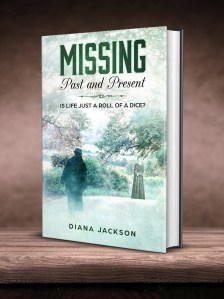
MISSING, Past and Present the actual town and village are fictional to protect the location of the empty house which inspired the novel.

Historical Fiction

Needs to be location specific to be credible, unless it included fantasy elements.

In a New Author’s Own Area

There is something appealing about trying out a new author who lives close by and has written in your shared locality. See Maeve Binchy’s comment above.

Write what is familiar,’ is the mantra, especially as a new author.

Targeted Marketing

Many authors write in familiar locations local to where they live by:

  • Building up their reputation with local newspapers etc before branching out nationally if they are successful, becoming a local celebrity.
  • Encouraging people to order books in their local bookshops and maybe having book signings.
  • Giving local talks where books can be sold.
  • Selling at gift fairs and craft markets.
  • Writing blog posts about the location of the novel. This is a wonderful hook. I wrote virtual tours of the various locations of my novels and they were quite popular at the time,but with clear Categories and Tags folks still read them from searches years on.
  • Giving a focus for Facebook and Twitter, without the hard sell.

Whichever you decide, some authors put maps in the front of their novels. Do you think this is a good idea?


We have visited the
3 Comments

Filed under Book reading, Planning a novel, Reading a novel, Writing, Writing a novel

Genre Bending Novels ~ What, Where and How ~ Answers for Writers and Readers

Have you even wanted to write or read a book which doesn’t quite fit into the norm of genre?

For the writer

Here’s some useful advice for the writer on current trends, how to go about writing such a novel and how to pitch it or market it once it’s completed.

For the Reader

Following all of this useful advice are places to look out for the ‘best’ genre bending novels available on the market at the moment. Why don’t you check them out?

Moving on from my last few posts on Themes in novel writing I was planning to write a post devoted to Cross Genre and so I carried out some research, finding some wonderful articles on the subject and so I thought I’d share some of them here instead.

Why reinvent to wheel?

Cross Genre Novels Explained

writing-cross-genre-novels-trends-marketing-insights

An excellent blog which gives:

  • an overall picture of what ‘cross genre’ writing is
  • the current trends eg science/fantasy and magical/realism

How to Write & Sell a Cross-Genre Novel

Michelle Richmond, author of Year of Fog

as well as explaining how to write and pitch a Cross Genre novel she discusses the need to:

  • Recognize your primary genre—and use it as your compass
  •  Draw on your strengths as a writer, regardless of genre

cross genre writing

is a blog which tells you 3 Rules for Writing Cross-Genre Suspense

Lists of Cross Genre Novels

A good place to start for an up to date list of cross genre novels is

Goodreads

Other sites are:

Mysteryreaders.org

which lists cross genre mysteries collected in different subcategories

Postmodern Mysteries

Is an eclectic mix of ‘off the wall’ alternative mysteries.

Genre Bending Novels

And finally above is a list of 50 top genre bending novels brought out in April 2020!

Where does that put my latest MISSING, Past and Present?

 Mystery  is a genre of literature whose stories focus on a puzzling crime, situation, or circumstance that needs to be solved. … Many mystery stories involve what is called a “whodunit” scenario, meaning the mystery revolves around the uncovering a culprit or criminal.

Women’s fiction is an umbrella term for women centered books that focus on women’s life experience that are marketed to female readers, and includes many mainstream novels or women’s rights Books. It is distinct from Women’s writing, which refers to literature written by women.

…but it’s not a typical mystery. There are no dead bodies and there maybe no crime committed, just missing people

… but it’s not marketed for women. Many of my readers have been men too.

You see, the thing about Genre bending is that you need to have an open mind when you read the novel and not begin with any preconceived ideas.


2 Comments

Filed under Blogs, Book reading, Book reviews, Marketing your novel, Reading a novel, Writing, Writing a novel

Themes in Novel Writing ~ 6 ~ Themes to Craft an Alternative Mystery Genre Novel

Keeping up the tension in a novel ~

Typical crime mysteries

In a murder mystery themes of death, fear, hatred, evil, crime and a multitude of equally negative themes keep up the tension in a novel.

Of course, with a missing person theme, or in the case of my latest novel missing people, all of the above themes could be relevant, but they could also include kidnapping, capture, ransom, abduction and hijacking, to name but a few. The tension could be enhanced by the place which is the ‘prison’ and the dramatic way they are being held. We’ve all seen the movies.

Here’s another good post on themes in mystery novels which traces recent changes in the genre:

fmwriters.com ~ a murderous act

Thinking outside the box  v Reader Expectations

In a title like ‘MISSING’ all of the above could have been used equally to evoke drama, but that wasn’t how I planned to develop MISSING Past and Present. Gerald, Dot’s husband disappeared. He chose to leave, so what causes the tension?

Themes such as betrayal, abandonment, devastation or mental health issues for example a total break-down leading to destitution, poverty and homelessness. All of these things in fact.

Thinking ‘outside the box’ in a mystery is a risk. As one of the police in the novel said at one point in the investigation, ‘We don’t even know if a crime has been committed.’

This is not necessarily what the reader is expecting, but did it pay off?

Here are a couple of reader’s comments on reviews:

Derik Birk’s ***** review ~  An intriguing and addictive tale

“Most books I read are full of violent action but though there is very little such action in this book, I really liked this story of a woman re-inventing herself after a bewildering set of events that almost destroy her.”

Here’s the full review on Derik’s site: Dodging Arrows

H Bane ***** review ~ Really Great Book

“This is such a well written book that really just draws you in. Dorothy leads us on a journey on how she ended up where she’s at. We also have the story she writes of Millie.”

Jackie McAll ***** review ~  Is it just the roll of the dice? Super book

Diana Jackson has a way of writing that easily draws you into the lives of her characters. Although this book handles large themes of destiny and change, love and forgiveness, they are handled in an easily readable way. I loved the story within the story (deserving of a book of its own!). She saves a surprise for the end ! Highly recommended.

Both reviews are great reviews but, I’m sure you’ll agree, they are not typical of reviews in the mystery genre.

Qualities I wished for my protagonist

In order to keep these readers interested how do I think I ‘drew readers in’ or made it ‘addictive?’

resilience

Resilience and Fortitude

I believe it was the themes of fortitude and resilience, qualities of my protagonist Dot, which kept the story moving. I didn’t want Dot to be searching, in fact it was her foster son Jamal (a Syrian refugee) who took on that mantel, when his brother also disappeared and he was arrested. I wanted Dot’s strength of character to pull her through the worst of times, only just!

Another theme I could add here was escapism. Dot managed to escape the effects of her tragic circumstances by:

  • escaping into the past ~ the back story in the form of her memories
  • escaping in the present ~ through mindfulness of the natural world around her
  • escaping from even her own thoughts ~ by creating and writing the story of Millie, an aspirant nun who had lived in the place where she squatted a couple of centuries before.

Only time will tell if my gamble with ‘mystery’ worked.


3 Comments

Filed under Book reading, Book reviews, Marketing your novel, MISSING Past and Present, Planning a novel, Writing, Writing a novel