Tag Archives: Historical Fiction

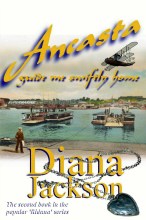
Ancasta, a review of the novel by Diana Jackson

The Friends of Weston Shore, Southampton have written this review of Ancasta Guide me Swiftly Home. I’ll be down at West Quay Waterstones Southampton this Saturday 12th between 11am and 1 pm. Please come and say hello and many thanks for this wonderful review!

westonshore's avatarFriends of Weston Shore

It is widely believed that when the Roman Empire ruled these lands, an area near or on what is now known as Bitterne Manor was a settlement called Clausentum.  Whilst this belief about Clausentum and its location is not universally upheld, what is clear is that there was a Roman settlement in this area. One of the priceless treasures that reveals this truth is an inscription from those times, a dedication to the goddess Ancasta, the deity associated with the River Itchen.

The derivation of the name Ancasta, it is speculated, maybe from an older word for swift.  With the name of the goddess as the title for her new novel, Diana Jackson continues chronicling the lives of some of her characters from her previous book Riduna.  With the hand of time moving on relentlessly in her narrative, she takes us along for the ride in seeing…

View original post 375 more words

Leave a comment

Filed under Ancasta, Book reviews, Events, Southampton

Ancasta ~ Guide me Swiftly Home now available on Kindle worldwide! 08/11/2012

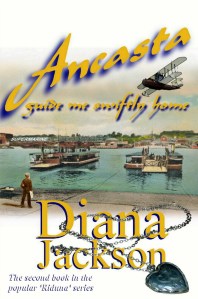
Ancasta ~ Guide me Swiftly Home

This is the second novel in The Riduna Series by Diana Jackson

NOW AVAILABLE AS A PAPERBACK AND ON KINDLE WORLDWIDE~ 7th November 2012!

SEE BELOW FOR DETAILS

Local historian in the history of aviation in the Southampton area,

Colin van Geffen writes:

“In Ancasta, against the background of the new 20th century, we are re-introduced to the progress of life for the next generation from Riduna, Diana Jackson’s first novel, of the growing Newton family, now living at Woolston, near Southampton on the south coast of England. The author succeeds in jolting the reader’s emotions to give a clear understanding of how things were for so many ‘ordinary’ people in those dark days of wartime. No families were spared the loss or sacrifice of a loved one, but life had to go on.”

Diana writes:

Why is the novel called Ancasta ~ Guide me Swiftly Home?

The River Itchen, important in Roman Times when Southampton was already a strategic port, was blessed by the Goddess Ancasta whom the Romans prayed to for the swift and safe return of their vessels.

Will each member of the family return safely from the Great War which takes Harriet’s sons as far away as Turkey and India?

Will the roles of women, especially Harriet and her headstrong daughter Sarah, empowered by the daunting responsibility of their loved ones so far away, change their lives forever?

Will the island of Riduna, so deep in Harriet’s soul continue to caste its magic over Sarah too?

Ancasta tells the story of Harriet’s family from 1910 to 1920 as it weaves tightly through this period in Woolston’s history, with the birth of Supermarine, early flying boat production and The Schneider Trophy, though the excitement of this new age in flight is marred by the destruction of The Great War.

Ancasta is available or can be ordered through any good bookshop or can be bought online in the UK:

AMAZON paperback                     AMAZON ~ Kindle version                  WATERSTONES ~on line

or in the rest of the world:

AMAZON USA                    AMAZON INDIA                    AMAZON FRANCE                      AMAZON GERMANY

Check out book reviews on Amazon UK from people who attended one of my face to face events on the

Ancasta Guide me Swiftly Home tab on this blog

Leave a comment

Filed under Ancasta, Book reviews, Events

Historical Fiction ~ Historical Research

There is always a great deal of controversy between the purists  who research history for its own sake, and those, like myself, who try to popularise it to make it accessible to a wider audience by turning it into fiction. I must admit to taking the research far more methodically for my second novel ‘Ancasta ~ Guide me Swiftly Home’ than I did for ‘Riduna.’
For Ancasta, the research gave me the framework on which to weave the story. The fictional lives of my characters were ‘living history,’ and each key event was seen though their eyes. I included some real characters in the novel too, but the majority were my own creation. I knew my characters, but as history enfolded through my research, so did the direction of their lives change.

I will give you an example of one of my characters, Tom, Harriet’s quiet son, who from a very early age helped out in a local bicycle shop, eventually working there when he left school, unlike his more exuberant brother Jack who became an engineer in White’s Shipyard. When WW1 broke out Tom joined up and it seemed natural that he should join the 9th Cyclists Battalion. (I found this on the internet with little more information) I could have guessed that he would have become a cyclist messenger on the Western Front, in fact this is what I had written in my rough plan. Or later, when I had studied more about WW1, that he could have been involved in combat on the back of his trusty bicycle! Yes, I found that hard to believe too.  I would have dreaded writing that scene, but as it happens he did none of those things. You see, I turned to the Hampshire Regiment Museum for support here and they sent me a detailed account of the 9th Regiment. The regiment did not, as it happens, go anywhere near France, but all the way to India. Since this was quite a difficult chapter for me to write I asked if the curator of the museum if he would mind checking the chapter for me, and Colonel Bullied was more than happy to do so. In fact I was overwhelmed by everyone’s willingness to help.

My point here is that my chapter was purely fiction, from the point of view of the character, but the story I told was plausible, and actually told a snippet of history that very few people knew. Surely, if readers take away from a novel a nugget of truth, they will have a greater awareness of history.
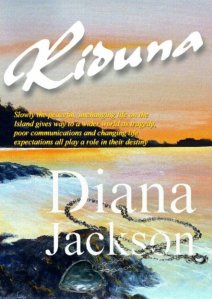
Riduna, on the other hand was a story, already in my head, a love story, through which I weaved moments in history. I tried to be as authentic as possible as to the social history, but there is so little written on Alderney of that period, certainly that has survived, that my story was in fact the framework rather than the historical period. What references I did find referring to the Channel Islands in Victorian times, I read avidly and my research certainly coloured my novel but not the other way around.

With documentaries and the internet you could argue that there is no need for this frivolous adaptation of history. Nevertheless, there is still a huge readership for historical fiction, and through my experience with my research for Ancasta, experts in their own field are more than willing to be involved and support the author to try to get their facts as accurate as possible, and even more than happy to give suggestions along the way.

An example of this was when I was discussing how my ordinary folk would hear the rumours that the boatyard in Woolston may be used by Pemberton Billing to make the new and exciting flying boats.

‘Why not get them to overhear gossip in the local pub!’ a helpful historian suggested.

Funnily enough I was even in that very pub (or at least its replacement, the original having been bombed in WW2!) the Yacht Tavern in Woolston!

I am grateful to so many people who have given me much encouragement throughout my research.

What do you think?
Leave a comment

Filed under Ancasta, Flying Boats and Sea Planes, Historical Fiction, Planning a novel, Research, Writing a novel