Tag Archives: Hampshire

The Solent Area ~ Virtual Tour no 9 ~ Over the water to Hythe

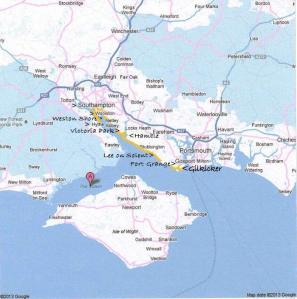
Solent map googleHythe

Teturning to my virtual tour of the Solent and Beyond we take the Hotspur over the water from near Southampton Pier is a great way to travel to Hythe, passing any of the Cunard Queens which may be in dock. You journey takes you not far along Southampton Water, passing the mouth of the River Itchen and the unmistakable three towers of Weston Shore. It is only a short ride, taking about fifteen minutes to reach the little town of Hythe, on the edge of the New Forest. May commute this way everyday and shoppers enjoy the hop over to Southampton too. It would take you about an hour to do the journey by road but it’s much less fun.

You alight at the end of an unusual wooden pier built in 1881, although the train which runs along its length was not installed until 1909 and then only for transporting baggage. The present electric railway was put in in 1922 and looks much the same today. You can catch the train and trundle along towards the town or you can also enjoy a stroll along the pier’s length of over one quarter of a mile, with interesting historical facts on placards and regular intervals, such as the visit from King George VI just before DDay in 1944.
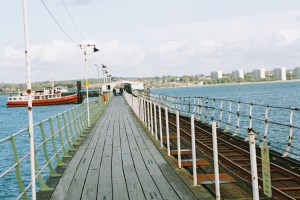
Hythe Pier

Hythe Pier

Hythe is a quaint place to visit with several cafes and riverside walks, including the fairly recently built marina, which is a wonderful place to stroll, have something to eat and watch the shipping go in and out of Southampton Harbour. In fact, the Cunard dock is right opposite and so here, or at the end of the pier, are the best places for photo shots of the ships berthed or just leaving Southampton.
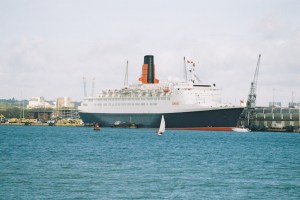
QE2 on the day of her final cruise to the Med

QE2 on the day of her final cruise to the Med

My next post is at Calshot, perfectly timed for the centenary celebrations. Watch Inside Out on the BBC tonight if my informant is correct! (25/03/2013)


Leave a comment

Filed under Southampton, Virtual Tour of the Solent and Beyond, Weston Shore

May 1912 The RFC was born ~ Another 100 Year Old Flying Fact!

In May 1912, one hundred years ago, The Royal Flying Corps was born, serving both the army and navy of the day. It took a while for the military to take these new air machines seriously, known as aeroplanes by that time. Up until then many in the military would not consider the potential of this relatively new, and still flimsy, mode of transport. They were looked upon as frivolous toys for the rich and famous, who had too much time and money on their hands to fritter away for pleasure and thrills. To put this in perspective, it was only nine years since the Wright Brothers’ first powered flight. Pretty amazing!

It became impossible to ignore the increasing skills of the pilots of the day, as exciting feats in aerial acrobatics hit the press. You can read in more detail on the following link, about the first pilot, a Frenchman called Adolphe Pegoud who, in 1912, performed a ‘loop the loop’ and also flew upside down, much to the astonishment of all who witnessed the act.

History of Aviation by James Watkins

A detailed history of the conception of the Royal Flying Corps can be found on many blogs and also Wikipedea , but what interests me is the affect it had on the area of my research; in Hampshire,  Southampton Water and the Solent.

Firstly, The Royal Flying Corps’ 1st squadron were based at Farnborough in Hampshire, originally famous for its Air Balloon factory.

Secondly, in my last blog I talked about The Naval Review in 1912 and the first flight off a moving ship. The annual Naval Review, a red letter event in the calender of Portsmouth and the surrounding area, would no longer be a time when the prowess of the naval fleet took all the limelight, since now the flying power of the navy began to steal the show. 

The first waterplane to take off in the UK was in November 1911 from Lake Windermere, Cumbria, and so it was not surprising that the Solent area was just a few months behind when in 1912 that the first “Waterplane“took off from Hamble, Hampshire, sponsored by the Daily Mail.

Aeroplane factories were springing up all over the country, especially with the endorsement of the military, and the shed, which was built in order to assemble and house the waterplane at Hamble Point, beside the Hamble River, where the aircraft made a successful test flight in early July 1912, was Luke and Co Ltd and Hamble Engineering.

The Solent area was certainly a key military location for the UK. It was on the coast for patrols and cross channel flights and was a significant strategic area for the  army, with the Victorian Palmerstone Fortresses guarding this part of the coastline. Then, of course, there was Portsmouth, the long established naval base.

This was truly an  exciting period in the history of this region, and more is yet to come.  

Leave a comment

Filed under Early Flight, Flying Boats and Sea Planes, Southampton