Category Archives: Writing

Background to writing

How to Create an Imaginary Setting for a Novel

Draw a map

Draw out a basic map with streets, footpaths, houses, shops and any other key places. Make it large enough to add to. Link it to other towns, real or imaginary, with arrows at the edge of the page. (eg Bedford 5 miles) Add in railway stations and bus stations, if they feature in your novel.

Add Key Illustrative Details

The village or town in your mind’s eye has streets, crossroads and roundabouts, yes, but what makes it come to life is the detail; the gardens and parks with trees, cafes with tables outside, footpaths along rivers, derelict land maybe, the style of buildings, churches, shops and homes. If your map is big enough, you can sketch these on to your original map.

Add descriptive detail

There is a limit to the amount a small sketch can convey. Possibly using post-its, which will grow in numbers even as your novel develops, write key words, adjectives and features, to help each place come to life. (a cafe might have ~ round bright pink bistro tables with fold up chairs outside, a cosy private corner inside with scatter cushions ~cerise pink and yellow, or arm chairs)

Add photos to give a sense of location and the surrounding area

The photos you add may not be exact but, as authors, we often see buildings, people or scenes which remind us of our novel. Even with imaginary settings, the place you have in your mind’s eye is a composite of many pictures of real places.
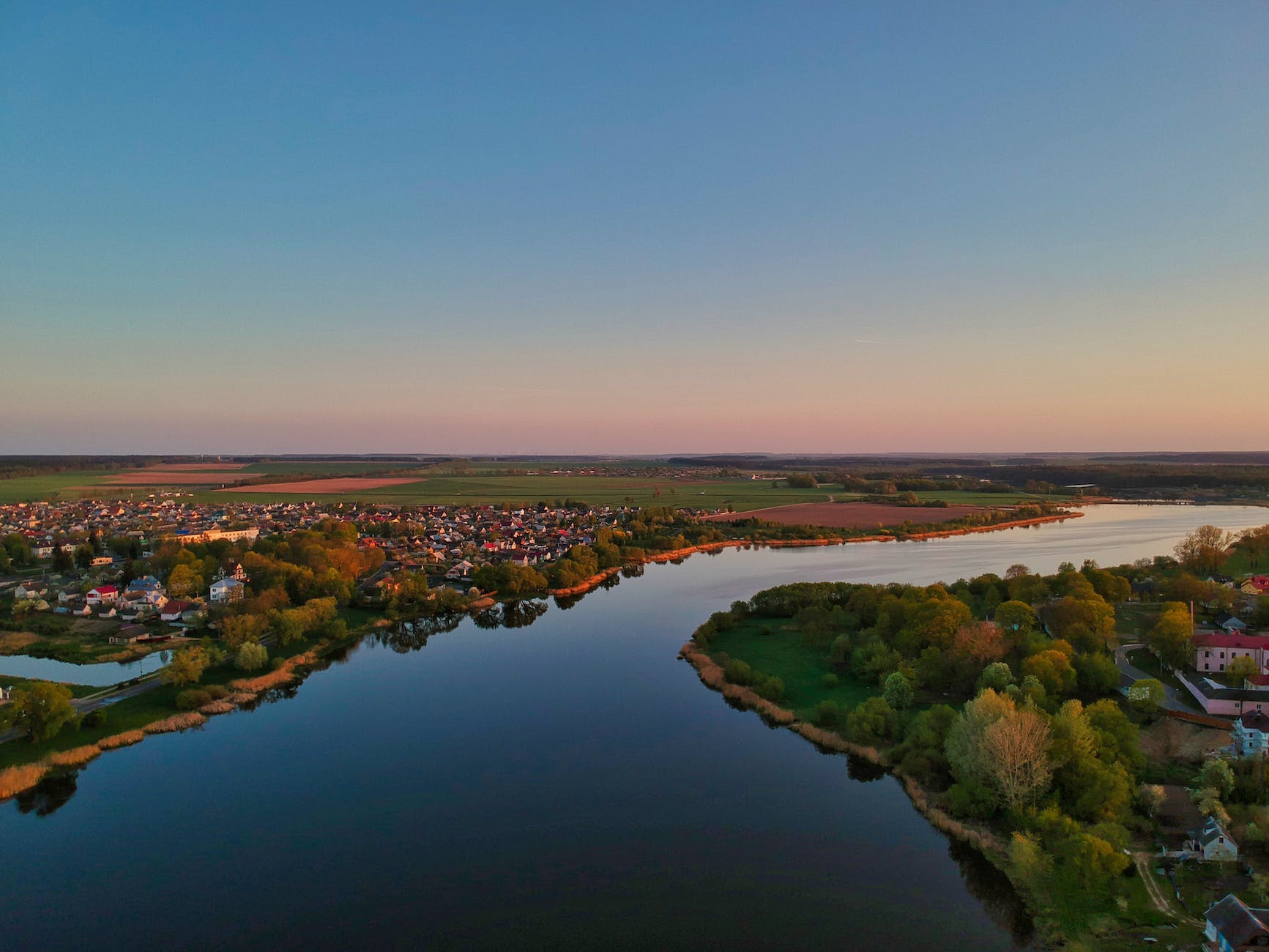
Photo by Egor Kunovsky on Pexels.com

Cross reference notes

Use a notebook for extra details which you are unable to add to the map, or on postits. (19th century Victorian red brick church, alcoves with carved saints observing you as you pass by, dark wood panelling inside, triptych of gold and vibrant colours …)

Why?

Why go to such detail and trouble? With an imaginary place it is much harder to be consistent. If you are in the middle of writing and a query pops into your head, as to whether you remember the details correctly, it takes a long while to find the previous reference or description in your manuscript.

With the visual and written prompts, you can ensure consistency, and enable reader to imagine the setting almost as clearly as you can.

Include the map

Some authors even include a map at the front of their novel. This is not necessary, but some readers appreciate them, especially if a ‘sense of place’ is key to the novel.
Leave a comment

Filed under Planning a novel, Research, Writing, Writing a novel

My Place to Write ~ A Place to Call Home

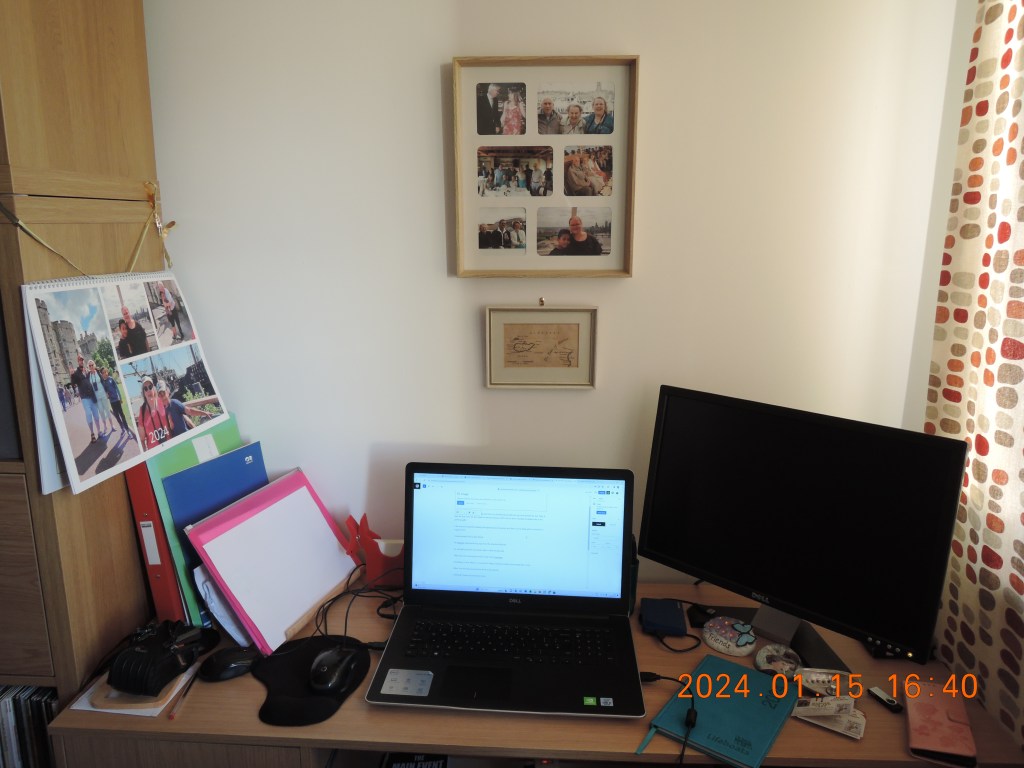
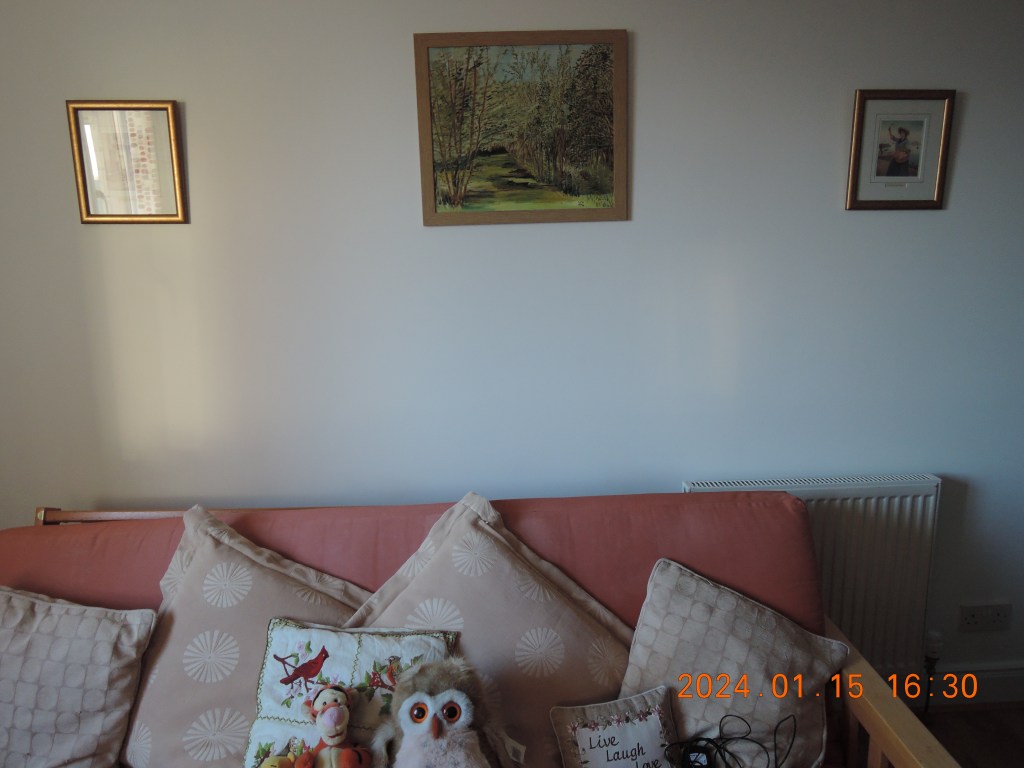
My place to write has much improved since my husband has finally put up some pictures for me. Since it was the first room we decorated in the house back in 2015, he has been reluctant to make holes in the pristine walls!

I am now surrounded by family photographs above my desk and items on my desk make me happy:

A paperweight from a dear friend

An Abolone shell and a tiny map from the island of Alderney; the birthplace of my Great Grandmother and the inspiration for my first steps into writing novels.

An oil painting which my parents had on their lounge wall.

Old prints of a Guernsey girl and Cornet Street Guernsey; the birth place of my Great Grandfather.

Everything, in fact, which is connected to happy memories, places and people that I love.

What has this improvement has done to my psyche?

I feel that I have truly arrived at home.

1 Comment

Filed under Author Diana Jackson, Writing

After Inspiration comes Planning~ Ideas on how to plan a novel

I was scrolling through my draft blog posts with the idea of deleting some of them when I came across this one on planning. Although it was first drafted in 2014 it is as pertinent today as it was then and interesting to see how my methods adapted and matured with each novel.

How do you plan a novel? Once you have your key inspiration what do you do next?

At our Ampthill Writers’ get together we were having a discussion about how we plan our writing ~ quite different for non-fiction or poetry. Here are some of the ideas put forward:

  • Make notes of key events ~ beginning, most important happenings in the plot and how it is going to end
  • a summary of the plot ~ writing a lengthy synopsis before you begin
  • chapter by chapter outline
  • An in depth getting to know your characters and let them lead the plot

I’m more prone to a mix of having an idea of key events and getting to know my characters – as one Facebook friend tried to explain to the other day, ‘I hear voices in my head. ~ ‘Oh dear,’ she added, ‘that makes me sound a bit mad!’ I have total empathy for her.

A poet among us reflected, ‘The difference between writing poetry and fiction, it seems to me, is that in poetry you write from the heart, but you authors seem to write fiction with your heads.’

At first I disagreed. Certainly my first novel ‘Riduna’ was written straight from the heart, and I’m afraid to say those inner voices were talking to me all the time, especially my great great grandmother Harriet! They always are when I’m in full flow ~ and sometimes even when I’m not. One author remarked as to how frustrating it is to have inspiration in the shower!

After ‘Riduna’ was first published in 2009 and I continued to write, other factors came into play:

~ tips I’d learnt from the plethora of writing advice in magazines and on line

~ a greater awareness of the reader

~ the voices of those experts who helped me with my research

~in fact, the depth of research for ‘Ancasta ~Guide me Swiftly Home’ was a huge factor and sometimes whole chapters needed to be revised following new information being revealed to me

Then, after publishing ‘Ancasta’,  I  also reworked my original manuscript of ‘Riduna’, acting on advice I had been given and my own writing maturity.

So, how did I approach planning for ‘Murder, now and then’?

  1. Firstly I had my research notes from the internet and the Bedford and Jersey archives. This gave me a clear picture of the characters back in 1919, especially from descriptive newspaper cuttings.
  2. I  also had a clear vision of the actual murder in 2019, which had run like a movie scene in my head as I drove around close to home. Three of the key characters were in this ‘vision’.
  3. Then I was given a lovely ‘save the rhino’ notepad and I snipped corners to find sections more easily. I used this for a brief outline ~ in chapters ~ characters ~ research in Jersey ~ research in Bedford ~ areas to follow up ~ marketing ideas (thinking ahead before I had even begun)
  4. My notes in each of these sections evolved and sometimes changed, rather than be formed in any linear fashion.
  5. I expanded on my outline in chapters as I began to write, so that I could keep track of events and a clear time line.
  6. If I had any large problems while I was writing, the resolution usually came to me overnight or when I was doing a mundane task like weeding the garden ~ not usually in the shower!

The main problem I had with point five above was in fact the time line. In the end, instead, I used a large two dimensional board with postits which I could move around with one axis ‘time’ and the other axis ‘key characters.’ This was the only way I could keep consistency and make sure all of the characters got to the right place when they were needed.

Even then, it was such a complex plot that I was fortunate to have a brilliant editor, who picked up any anomalies. Since he lived locally too, he even cycled along part of the route taken by one of my characters, just to check it was possible in the time given ~ now that’s dedication for you, and I am truly grateful!


Murder, now and then is available on Kindle and as a paperback from Amazon worldwide. Copies for bookshops or libraries can be bought through enquiries@eventispress.co.uk.

Unfortunately Eventispress does not consider it viable to go through the normal distribution channels in the UK, as they did with Riduna and Ancasta, because the costs are too high.

Leave a comment

Filed under Author Diana Jackson, Planning a novel, Writing, Writing a novel