Category Archives: Virtual Tour of the Solent and Beyond

The Solent Area Virtual Tour no 7 ~ Woolston and Itchen Village

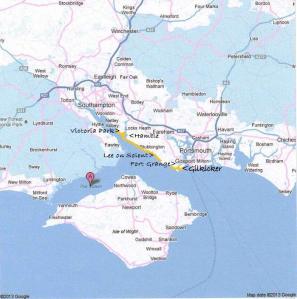
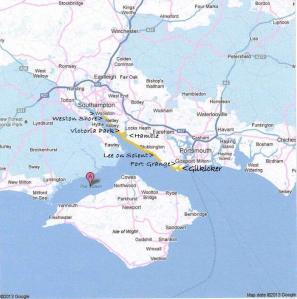
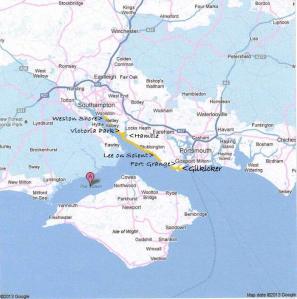
Solent map googleWoolston

Today I am going to share with you a snapshot of old Wooston through copies of my Grandfather’s book of postcards. They are not dated, but looking at postcards of a similar era I would certainly say they were Edwardian.
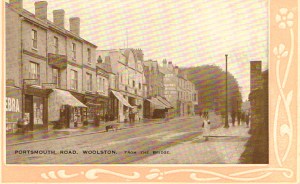
Portsmouth Road Woolston Southampton

Portsmouth Road Woolston Southampton

Above is the Portsmouth Road on its way down towards the Floating Bridge, and below is the Floating Bridge looking over towards Southampton:
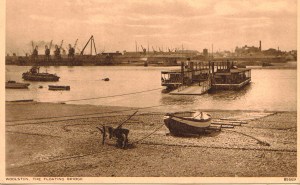
The Floating Bridge Woolston

The Floating Bridge Woolston

Then, travelling up the road to the outskirts of Itchen is Pear Tree Green church, not changed much today and still on the green overlooking the River Itchen:
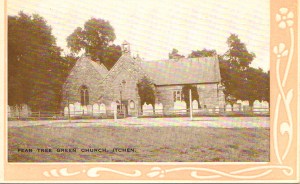
Pear Tree Green Church

Pear Tree Green Church

Still on the Itchen side of the Portsmouth Road is Bridge Road. The little of it left today is under the new bridge:
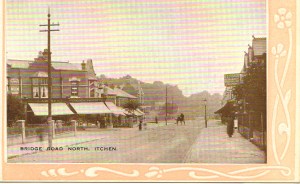
Bridge Road

Bridge Road

Many locals will remember or recognise Ludlow School, still on the Itchen side of the Portsmouth Road although many called it Woolston:
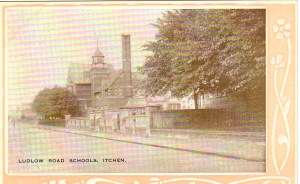
Ludlow School Itchen (Woolston)

Ludlow School Itchen (Woolston)

Here we have Manor Road. Many of these streets in and around Woolston look much the same today:
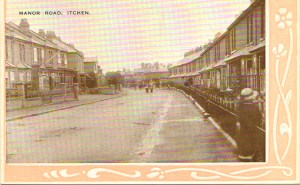
Manor Road.tif

Now we move much later and here is an ariel photo of the Supermarine Works in Woolston which I date in the 1930’s. It was bombed and flattened in 1940.
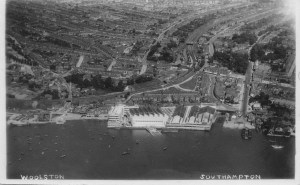
Supermarine Woolston

Supermarine Woolston

Finally one of my own postcards from the 1960’s of the hovercraft which ran from just over the river to the Isle of Wight:
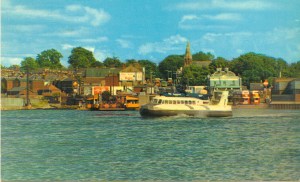
Hovercraft to Isle of Wight

….and so what are Woolston and Itchen Village famous for, apart from being the location from which my second novel Ancasta Guide me Swiftly Home flows.

Firstly there’s Supermarine, initially famous for winning Great Britain the Schneider Trophy back in 1931. It was first opened and the name ‘Supermarine’ emblazoned on its roof 100 years ago in 1913. (even though the company was not registered officially under that name until 1916.) Famous in those days for its flying boats and then its sea planes, it must have been a wonderful site, watching them glide along towards Southampton Water and take off. Of course, most people know Supermarine for the Spitfire and it was here that RJ Mitchell developed the first prototype, which my father was lucky enough to see on its inaugural flight.

Even before Supermarine there was Thornycroft, whose land on the banks of the river has finally been made safe, flattened and is being redeveloped. Wikipedia says that the yard launched over 100 ships between 1876 and 1889 alone!

I am going to leave you with a lovely old photo of the River Itchen. Is this the mill at Swaythling just up the river in 1910 or in the late nineteenth century? I can find no photo which looks exactly like this but I’d love to know.
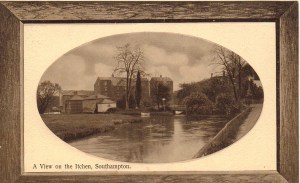
Mill Ichen river.tif

4 Comments

Filed under Ancasta, Schneider Trophy, Southampton, Supermarine, Virtual Tour of the Solent and Beyond, Woolston

The Solent Area Virtual Tour no 6 ~ Netley Abbey and Weston Shore

Solent map googleWeston Shore

Walking or driving in a north westerly direction along Southampton Water you pass another landmark, Netley Abbey, where you can take an atmospheric stroll amongst its ruins. Originally a monastery, it inspired both artists and poets through the 18th and 19th centuries, including John Constable, and still does today. In fact it has long been a popular tourist attraction, visited by one of my heroines Jane Austen no less, and people used to come down for day trips from London on the train in the Victorian era!

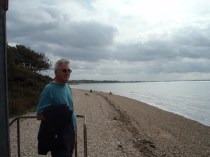
Once you have enjoyed exploring Netley Abbey I would like to take you through a woodland area and along to Weston Shore, a long pebbly beach enjoyed by walkers, wind surfers, fishermen and bird watchers just on the outskirts of Southampton. I must admit that my love of this little corner of England is mixed up with my childhood memories, but it is a wonderful place to watch ships sail along Southampton Water from Southampton Docks.

The Romans sailed in to Britannia along these very waters, allegedly for the first time, and built a settlement, Clausentum, on the banks of the River Itchen at what is now called Bitterne. (Ancasta, the title of my second novel, was allegedly an Anglo Roman Goddess of the River Itchen from which my novel flows) Other famous ships, which would have been observed standing on Weston Shore, included the Mayflower, ship of the Pilgrim Fathers, bound for America in April 1620.  Just over one hundred years ago, in April 1912, the first and last sightings of the Titanic was watched with pride and celebration, soon to be turned to mourning as many a street in the area lost many of their brothers, sisters, friends and neighbours. The whole of the Southampton area was stunned by the loss. Then, through the Crimean and Great Wars troop ships sailed out and returned carrying our injured and in 1913 the unusual sight of flying boats would have inspired speculation, admiration and certainly doubt from the local onlookers.

Then of course there were the Queens which the Southampton people took to their hearts, the Queen Mary, the first Queen Elizabeth and then the QE2, the fastest merchant ship in the world.  (I was so sad when I heard that she was left to rust in Dubai, but I notice recent good news that there are now plans to turn her into a luxury hotel!) I remember the excitement of watching all of these grand ladies both from the shore and from my grandma’s upstairs bedroom window. Even the sight of the massive cruise liners today, including the Queen Mary, stirs emotions, although nothing could beat watching the QE2 in her day, in my opinion.

Back to Weston Shore, today there is a group who have become custodians of the area called The Weston Shore Society. You can get news of their events and updates on The Friends on Weston Shore blog. They arrange regular parties  to clear any rubbish washed on to the tide line and social events and walks for local people to enjoy and appreciate their surroundings. In fact, you can also enjoy the Westwood Woodland Park close by too. You just need to get out of the car an explore.

Weston Shore has its own charm in a quirky sort of way, but it was its proximity to Woolston which made it a perfect setting for scenes in my novels including Ancasta, when my characters sought a place for solace or to breathe and feel connected to the river, sea and the places beyond.

Dreaming of Distant Shores

Dreaming of Distant Shores

2 Comments

Filed under Ancasta, Southampton, Virtual Tour of the Solent and Beyond, Weston Shore, Woolston

The Solent Area and Beyond ~ A Virtual Tour no 5 ~ The Royal Victoria Park Netley

Solent map googleRVPark

In walking distance heading north west along Southampton Water from Hamble we reach The Royal Victoria Park, an open space of an acre or so of grass sloping down to the river, which you can glimpse through the gaps in the tree-line. It is surrounded by woodland, through which there are many paths and tracks, but the Park it can be reached by road through Netley.

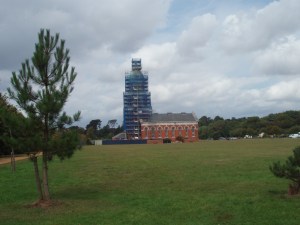
I had often seen the lonely building of the chapel in the centre of the park, but in all my years of staying with family in Woolston as a child I do not ever remember visiting it and certainly had not realise that this chapel, standing in isolation on the expanse of lawn, was once part of a truly magnificent monument to our greatness as a nation.The Royal Victoria Hospital came alive for me on my visit when I was camping in Hamble and from then on I could easily imagine some of my characters either working or being taken there.

OLYMPUS DIGITAL CAMERAI apologise that my only photo of the chapel

was when it was being restored in 2009. I must go back and take some more photos!

This chapel is certainly a landmark as you sail along Southampton Water to the Isle of Wight or beyond, but The Royal Victoria Military Hospital in Netley must have been an astonishing sight to behold, on entering Southampton Water from the Solent, in the days of Queen Victoria. She was the hospital’s patron  and I can imagine an extremely proud queen visiting the hospital on her return from holidays in her residence on the Isle of Wight, feeling satisfied as she alighted at the hospital’s own small wooden pier, gratified that a place had been created in her name to serve her Empire well.

It was the largest hospital in the world in its day, with corridors of a quarter of a mile long, so long that ‘American GI’s drove Jeeps along them in WW2.’ Guide books describe the unexpected and somewhat off-putting main entrance to this place of healing, with an elephant skeleton facing you and display cabinets of skulls and skeletons along endless corridors. The hospital itself was almost self contained for the lives of the huge community who worked there. There were nissan huts stretching as far out the back as the vast quarter of a mile long facade, seen impressively from the front. The hospital was served by its own branch line in between, but it also had its own wooden jetty, jutting out into the river, so that injured servicemen from all over the world could arrive as speedily as possible.

Florence Nightingale was said to not have been very impressed with the building because leading off those long corridors, bathed in light with fantastic views across Southampton Water, were row upon row of wards. Since these wards were at the back of the building, they never saw the light of day and were dark and dreary places. These were not so welcoming to the thousands of patients who were treated there, returning wounded in body and soul from the Crimean War, WW1 and later WW2.

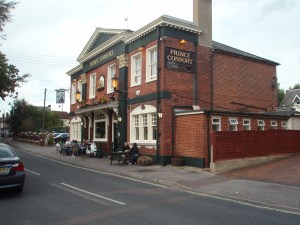
Today you can still enjoy visiting the chapel and visitors centre, or go one of the many planned walks in the area, which are steeped in interesting history. Alternatively you can picnic or enjoy ball games on the grass and just enjoy the views in the sunshine. The Prince Consort is near the entrance to the park, where you can enjoy a drink or have a pleasant meal.

OLYMPUS DIGITAL CAMERA

Leave a comment

Filed under Historical Fiction, Southampton, The Great War, Virtual Tour of the Solent and Beyond, WW1