Category Archives: Research

The Solent ~ Virtual history tour No 4 ~ Amble in Hamble

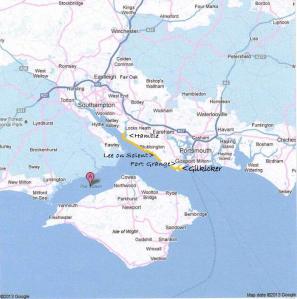
Solent map googleHamble

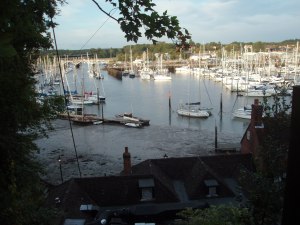
Approximately 8 miles north west as the crow flies from Lee on Solent and a few miles further by road, Hamble is a gem of a place snuggled at the mouth of the River Hamble as it flows into Southampton Water and the Solent beyond. It is well known to the sailing fraternity, who moor their many and varied yachts in the protected waters of the marina. I remember Hamble as a child, but chose to visit more recently. We stayed at the Riverside Campsite for a couple of nights in order to carry out some research for my second novel, but have stopped off on a couple of occasions since, just because it is so lovely and peaceful.

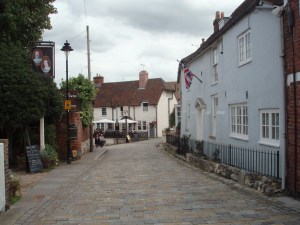
Passing Tesco on your right as you leave the M27 at Junction 8 you might wonder where on earth you are going to be staying, but as soon as you turn into Satchels Lane you are in the countryside. The campsite is situated behind the marina, right on the river, with a pleasant restaurant only a couple of minutes away, if you don’t want to cook. As a base to discover the history of the area, or to just explore and enjoy a refreshing break, it is perfect. Just ten minutes walk and you are in the village of Hamble. Unspoilt by time, its cobbled streets and quaint shops, inns and restaurants lead you down to the quayside, where you can watch the river traffic, have a cup of tea or ice cream and plan your day.
OLYMPUS DIGITAL CAMERA

What a choice! You could take the Pink Ferry across to Warsash and take a walk along the river or have a bite to eat at The Rising Sun. You might be interested to know that the WRAF, the Women’s Royal Air Force was formed in April 1918 and some were based at the Airstation at Warsash.

Alternatively you could catch a boat trip up to Bursledon, hearing about the history of the area on route. There you might be surprised to see the Woolston Ferry at its final destination. Now a restaurant, The Floating Bridge is moored beside the river and it is certainly on my ‘to go’ list.

There are several walks into the history of the area, which could be combined into one full days walk. Well marked paths take you through woodlands, along the river, on the banks of Southampton Water and across fields which were once airfields. Maps can be picked up at the campsite with all the details.

One walk takes you close to Southampton Water, with a couple of detours, and over to The Royal Victoria Park, location of the old Victorian hospital, which I will describe in my next post.

Another walk visits the sites of the two original airfields in the area. Aviation history seeps into the very pores of Hamble where planes were built as far back as 1911 at Hamble Point. The First World War brought famous names like AV Roe and Sopwith. In fact the Avro 504, featuring in my novel, could well have been built in Hamble. Fairy Aviation, too, developed a factory in the area. By World War Two around 3000 people were employed making amongst others Spitfires, Wellington Bombers and Sunderlands. I was interested to read that worker travelled from nearly villages and towns including Woolston. Also, when I attend one of Shuttleworth’s air display days, I don’t just observe planes fly with the respect they are due. Now I recognise so many of their names and by association I imagine the people who made them, the location of their manufacture as well as their important place in our history.

It is hard to believe that this sleepy backwater was such a hub of technological revolution in the early 20th century and the locals in those days were not all that enthusiastic about the noise pollution either!

That is not to say that aviation has left Hamble for good. Near the old church, well worth a visit, Follands remains, with a red Gnat outside its main gates.

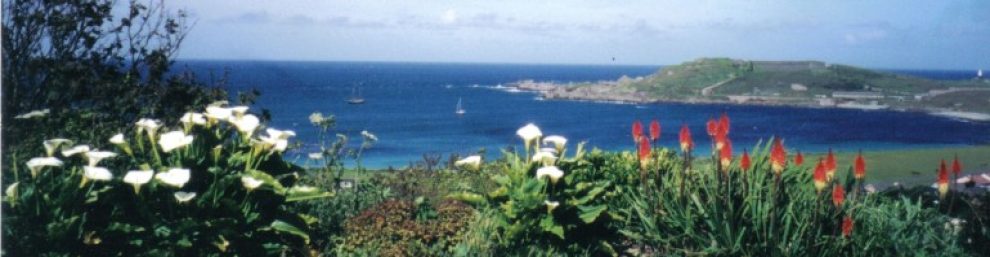
Here is the main cobbled street of Hamble meandering down to the quay.
OLYMPUS DIGITAL CAMERA

2 Comments

Filed under Ancasta, Early Flight, Research, Virtual Tour of the Solent and Beyond

The Solent and beyond ~ A Virtual History Tour Post No 3 ~ Lee on Solent. Seaplanes, hovercraft and helicopters!

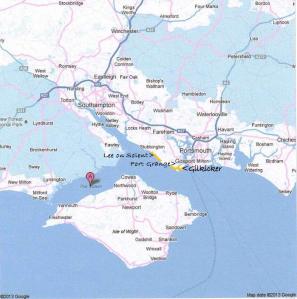
Solent map googleLee

On my virtual historical tour of the Solent we will continue heading north west, but will pause a while at Lee on Solent. This is an unscheduled stop because Lee on Solent does not in fact feature in my novel ‘Ancasta ~ Guide me Swiftly Home,’ but the bay certainly has important history and my parents lived at Stubbington, the far end of the bay for a few years and so I know it quite well.

Lee on Solent was key in World War one as a strategic sea plane and training base from July 1917 for the RNAS, using both Shorts and Fairy Aviation planes, although sea plane trials had been made from the beach since 1915.

In 1939 it became the more familiar HMS Deadalus,(although its names changed a couple more times before reverting back to HMS Deadalus again a few years before it was closed) and remained a naval base and barracks until 2005 when the large expanse of land, airfield and buildings were sold for redevelopment. For anyone interested in the base, here are a couple of video links on Youtube:

Mast Manning Display in 1993 Hey look at that. Formation Display on a mast!

HMS Deadalus Closure in 2005 A nostalgic tour of the barracks!

The uses of the base have been varied and interesting starting with seaplanes in 1917 but later it was important for military hovercraft development and testing, and finally the base was best known for its coastguard and helicopter rescue missions. Life was never dull living in the area for the last 100 years, and a walk along the sea front would have its exciting moments and photographic opportunities as well as a sea front to relax and enjoy the views across the Solent to The Isle of Wight.

The Fleet air arm archives inform us that back in 2001 the airfield was still used for air sea rescue, but also for a Catalina restoration company and the Hovercraft Museum Trust. (Having enjoyed watching the Duxford Catalina fly – an amazingly whilte and graceful 1930’s flying boat, on a couple of occasions I was excited to research this link but records show that, oncce restored, this Catalina in Lee was due to be ferried to the USA and its new owner. Anyone know any more?)

I am pleases to say that the Hovercraft Museum still exists but visiting is by appointment only. This link will take you to the website for more information:

The Hovercraft Museum Lee on Solent

The museum claims to be the only one of its kind in the world!

Although Lee on Solent did not feature in Ancasta~Guide me Swiftly Home, I am planning for it to be a location in the third in the Riduna series, for which I am currently researching. Watch this spece!

Leave a comment

Filed under Early Flight, Flying Boats and Sea Planes, Research, Virtual Tour of the Solent and Beyond

The Solent and Beyond ~ Virtual Social History Tour Post no 2 ~ Fort Grange

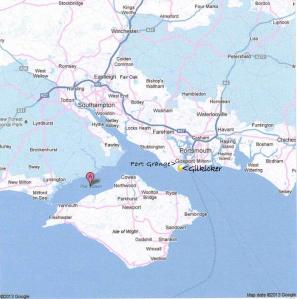
Solent map googleFG

For my second post in this series we are going to travel a short distance along Stokes Bay and follow the route of main road, until we pass Fort Grange, the second in a row of five Palmerstone fortresses. Four of these forts are still within the grounds HMS Sultan Naval Base, Gosport.

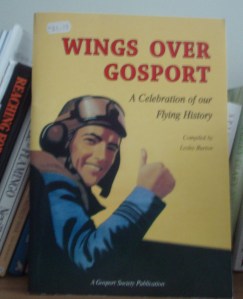
The Aero club were given permission to use the base as far back as 1909 and when my characters moved to Gilkicker in 1910, flights over their heads would have been exciting, but relatively frequent. In 1914 the forward thinking members of the military at the War Department authorised the use of Fort Grange and neighbouring Rowner, to accommodate squadrons from the Royal Flying Corps, formed in May 1912, but what stands out as the significance of the base at Fort Grange was one of its pilots, a Lt. Col. Robert Smith-Barry. On his arrival he was extremely critical of the standard of flying and in particular the training of these poor souls, who were all too quickly sent to France to meet their fate. I quote here from ‘Wings Over Gosport’ compiled by Lesley Burton who describes the training techniques he observed:

“It involved the trainee pilot sitting in the observer’s seat watching points until he transferred to the pilot’s seat and it was his turn to see if he had absorbed the instruction given by his instructor. Directions were conveyed to him by hand signals, loud bawling and by flag waving signals from the ground!”

It was not until 1917 though, that Smith-Barry introduced what became known as the Gosport Tube, a mouth piece which linked the instructor to an early ear piece on the trainee pilot  by a tube.

In fact, the Grange became well known for its excellent training and both novices and experiences pilots benefited from time spent there. As you can imagine, in the early days of flight, people learnt by trial and error, much as they did riding a bicycle, and so a more methodical approach was vital if these young men were going to play an effective role in World War One, and impress the more sceptical elements of the War Office, who saw aeroplanes more as frivolous toys for the rich, who wanted a thrill greater than the motor car.

The location of Fort Grange, not far from the newly refurbished married persons barracks at Fort Gilkicker, made this an exciting location for my newly married couple, where the regular flights overhead inspired Anthony, my young officer, to dream of being able to learn to fly.

If you would like to know more about The Grange, I can recommend ‘Wings Over Gosport’ which is a Gosport Society Publication.

OLYMPUS DIGITAL CAMERA

Leave a comment

Filed under Ancasta, Early Flight, Research, Virtual Tour of the Solent and Beyond