|
“Diana weaves a story that is real and true and makes you feel that you are right there living it!”
Reviewed by Michelle Randall for Readers’ Favorite
Ancasta is the continuation of the family saga that began in Riduna. Harriet is now a widow with four grown children. Edward is still traveling the seas, enjoying his freedom. As the world starts to change and a war looms, we follow the former childhood friends and sweethearts as they deal with the ravages and realities of war in England. No one is untouched by the war, as Harriet will watch her twin sons both volunteer for service along with her daughter’s husband. It will also be a time to reunite with old friends; Jane, with whom she had lost touch will become the steady rock of a friend that Harriet leaned on before she had Joe. Now with Joe gone, Jane will again become that rock. Diana Jackson doesn’t pull any punches with the tragedies and realities of war and what it was like. Still, that does not diminish the glow of the story of a family once again facing the idea that dreams change and life goes on. In first Riduna and then Ancasta, we follow Harriet and Edward, who always thought their path in life would be together, but the reality of life was that it was not meant to be. Finally, in their retirement years, are they able to realize that it wasn’t them who changed but the world around them and that things happened to them to make the dreams change. Diana Jackson weaves a story that is real and true and makes you feel that you are right there living it. It is a wonderful mix of the romance and realities of life with some of the technological advances of the historical time period of the novel. It is definitely a novel of moving on and never giving up, one any reader will enjoy. |
| **** review!
You can read this review and others on The Readers’ Favorite website at https://readersfavorite.com/book-review/26379
|
Category Archives: Reading a novel
Readers’ Favorite Review ~ Ancasta Guide me Swiftly Home
Filed under Ancasta, Book reading, Book reviews, Reading a novel
Location, location, location ~ How important is a sense of place in a novel?
Is a strong sense of place important for a novel’s success?
Good characterisation is vital for a successful novel, as is a sense of the time period. In fact the era, whether a modern setting or in the past, needs to seep into every nook and cranny of the plot, dialogue, setting and language too, but I also believe that the best novels are rooted firmly in a clear sense of place. A good novel transports you to somewhere else, allowing you to travel without leaving your favourite armchair. The reader should be able to picture the location in their mind and live with the characters as their lives weave through the plot.
Which places are associated with authors and which authors use a sense of place as part of their identity?
Crime and mystery novels use the setting to give atmosphere, tension and contrast; the latter being the key…. danger and safety……. dark and light……the sandy, sunlight beach and the gloomy alleyway for example, but to make a series there also needs to be consistency to draw the reader back. You associate Peter James with Brighton, Ian Rankin with Edinbugh, (whose latest novel is ranked number 12 in the Amazon top 100 today) Colin Dexter with Oxford (Inspector Morse!), Stieg Larsson with Sweden……the list goes on.
Then there’s the popular fiction of the late Maeve Binchy, rooted firmly in Ireland and more recent successful authors like Victoria Hislop, who I will always associate with the deep-blue seascapes of Greece, although her latest novel is set in Spain, I believe.
Jodi Picoult’s successful books are challenging and thought provoking. She chooses topics to be controversial and stretch the reader’s understanding of their own values and sometimes highlight their misconceptions, but ‘place’ is important in each of her novels, whether it be a prison, hospital or courtroom. I loved ‘The Tenth Circle’ as much because its descriptions of Alaska and the way of life of modern Eskimos was describes so vividly, that it took me out of my comfort zone and transported me to a world I know nothing about.
Certainly the classics, which influence many writers, reflect this view of an identity with ‘place’…. Daphne De Maurier’s Cornwall, Thomas Hardy’s Wessex and The Bronte sisters’ Yorkshire. Mind you, although Jane Austen is associated with many places including Bath, her characters went all over England and I can’t count the number of towns where I’ve seen claims of connections with Dickens.
Should you only write about a location you know well?
The advice is to write only about a place you are truly familiar with but, if you don’t live there, certainly you need to spend a considerable amount of time on location, researching, walking and observing, noting down characteristics, descriptions of places, atmosphere and associated events. It is helpful to keep a map to hand and check details as meticulously as you can.
In the first edition of my novel Riduna, I was coloured by childhood visits to the island of Alderney. We called the town ‘St Anne’s’ and not ‘St Anne’ and pronounced Saye Bay, ‘Say’ Bay and not ‘Soy’ Bay, as the locals do, and they have since been quick to put me right. As I’ve visited regularly as an adult, the island has seeped deeper into my psyche and I am influenced more by experience than memories.
Does it matter if you don’t get the facts right? After all it’s fiction.
Yes it does actually. Having said that, it doesn’t pay to be defensive if someone tells you that you have made a minor error. Embrace it and be pleased to receive feedback. It means that the person has read your novel and has cared enough about it to contact you. Local people are understandably defensive about their own patch and you need to reach out to them and gain their trust. I’ve met some wonderful people when I’ve been out and about, who have shared all sorts of memories and personal stories over the last few years. Build bridges and not fences. When I was researching for Riduna a local historian remarked, ‘There’s so little actually written down about Alderney in Victorian times, and much that was written was destroyed during the occupation of WW2. Mind you,’ he said with a sudden thought, ‘why don’t you write about the previous century. You could virtually make the story up since records are virtually non-existent!’
If you don’t know a place well, then why not create one?
An alternative is to dream up a totally imaginative world, the most famous being Tolkein’s Middle Earth, but more recently Bernard Cornwell’s series, although set in Viking and Saxon England, contains a world so far in the past that it has a huge scope for pure imagination and creativity. This requires as much planning, and time consuming cross referencing, as visiting a real place, if the finished result is to be authentic and believable, but it does have the advantage that you have no need to travel away from your front room.
Can a place be as powerful as a character?
Yes, it certainly can. A place can be compelling, drawing the characters and the reader forward to their goal, or repelling and driving them away. It can live deep within the heart of a hero or heroine, as moving as any love affair, ever pulling them back. The word ‘home’ is an extremely emotive word. Where is home? This is an important question to ask. The character may be a lost soul, with no true roots, but even then they may have a desire to be rooted, which moves the story forward, or a desire to cover their tracks at all costs and start a new life anew, reinventing themselves.
Does your narrative paint a picture in the eyes of the reader?
If you see a photograph, what captions or stories do they evoke?
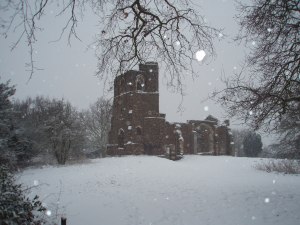
A church ruin on an icy evening
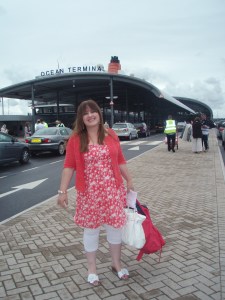
A single traveller on a cruise of a lifetime

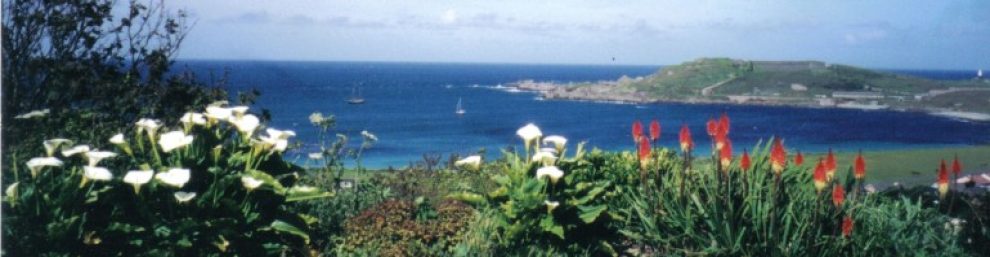
An exotic location; an island of mystery?
With each photograph my mind races with ideas for a novel or story, but does your novel transport the reader to an exciting destination as powerfully as a photo. I believe it should do, but does it have to?
Does there need to be a sense of place in a novel? A personal view.
I have enjoyed books where ‘place’ is not so important and the plot shines, weaving it’s way through the lives of the characters, but I don’t find them nearly as memorable, however well written, exciting, funny or compelling they seem to be at the time of reading. It doesn’t matter whether it is a place I know well, or have visited on holiday, or dream of going to one day. For me, it is the setting of the novel which tends to be the deciding factor in whether the book remains on my shelves or be taken to the nearest charity shop. If it is given a home then the book reminds me to look out for the author’s next release, otherwise it just joins the thousands of stories in the ‘library of forgotten book.’ Now that was in a great novel wasn’t it….. what was it called?
Filed under Book reading, Planning a novel, Reading a novel, Research, Writing, Writing a novel
Can I Snuggle in bed with a Kindle? ~ Part 2
About a year ago I wrote my first blog about Kindle as a ‘Kindle Sceptic.’ I like reading in bed, on the beach and occasionally in the bath and I was utterly convinced that sand and water would do a Kindle no good and that the experience of reading using a kindle, during those last minutes before tucking down to sleep, would be a bit like taking your office to bed with you. After all I’d banned TV’s and radio’s from the bedroom, wanting it to be an electrical free, calm space to relax and recuperate.
I had several comments with balanced views on both sides following that post, but I must admit the ‘no’s were a bit like me. In truth, they’d never tried to use one, so they didn’t really know.
It was to my utter astonishment therefore, knowing full well my views on the matter, that my husband bought me a Kindle for Christmas. There it sat in its box until about February when I thought I’d better at least look at it. I plugged it into my PC and must admit to feeling a bit smug when I couldn’t use it to download books because I didn’t have WIFI!
There it stayed until September when we converted to WIFI, after no end of internet problems over the summer. I checked it worked OK, but even then I was reluctant to download a book which I preferred to buy in paperback. For a couple of weeks I leant it to my niece, for research purposes you understand, but in the end she gave it back to me, disguised in a dark plastic bag, so that I did not offend my husband.
Then there was a book I dearly wanted to read, but it was only available on Kindle,
Rachel’s Shoe by Peter Lihou
and so I plucked up courage and downloaded it with ease.
What did I think of the experience:
- I liked the way it knew what page I was on without me having to skim through, if I lost my bookmark
- I liked being able to put it down in my lap and continue to read, with a bowl of cereal in the other hand
- I found it easy to read and turn pages, although I did have to put my bedside light on
What didn’t I like:
- I still had the feeling that it was just another screen to grab my attention…. PC, laptop, TV, iphone…. I was reluctant to use another one, especially in the sacrosanct space where I try to sleep
- I was worried about the effect on my eyes, especially when I was tired at the end of the day
It helped that I loved the book. Rachel’s Shoe will feature in my next Guest Post, and it was certainly a page turner, even though a virtual one.
‘I think I’ll alternate and see how I get on,’ I remarked to my husband. ‘After all I’d like to read more indie writers rather than the old faithful authors I usually beam towards in Waterstones. I do miss my little independent bookshop though, where Rob used to make suggestions and through him I branched out into Peter James and the Stieg Larsson’s trilogy, which I lapped up greedily, waiting impatiently to my return to Horatio’s in Ampthill in order to buy the next one.
Oh yes, that’s another notch in the Kindle’s favour. No waiting time! Just download instantly.
At what cost though, I can’t help but ask myself? Mind you, I’m sure you could argue that I might just as well still be a cave dweller!
What a thought.
Filed under Book reading, Book Shops, Reading a novel
 Diana Jackson