Category Archives: Planning a novel

Themes in Novel Writing ~ 6 ~ Themes to Craft an Alternative Mystery Genre Novel

Keeping up the tension in a novel ~

Typical crime mysteries

In a murder mystery themes of death, fear, hatred, evil, crime and a multitude of equally negative themes keep up the tension in a novel.

Of course, with a missing person theme, or in the case of my latest novel missing people, all of the above themes could be relevant, but they could also include kidnapping, capture, ransom, abduction and hijacking, to name but a few. The tension could be enhanced by the place which is the ‘prison’ and the dramatic way they are being held. We’ve all seen the movies.

Here’s another good post on themes in mystery novels which traces recent changes in the genre:

fmwriters.com ~ a murderous act

Thinking outside the box  v Reader Expectations

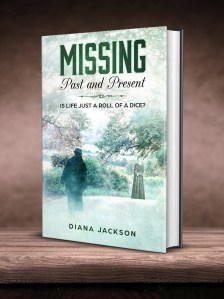
In a title like ‘MISSING’ all of the above could have been used equally to evoke drama, but that wasn’t how I planned to develop MISSING Past and Present. Gerald, Dot’s husband disappeared. He chose to leave, so what causes the tension?

Themes such as betrayal, abandonment, devastation or mental health issues for example a total break-down leading to destitution, poverty and homelessness. All of these things in fact.

Thinking ‘outside the box’ in a mystery is a risk. As one of the police in the novel said at one point in the investigation, ‘We don’t even know if a crime has been committed.’

This is not necessarily what the reader is expecting, but did it pay off?

Here are a couple of reader’s comments on reviews:

Derik Birk’s ***** review ~  An intriguing and addictive tale

“Most books I read are full of violent action but though there is very little such action in this book, I really liked this story of a woman re-inventing herself after a bewildering set of events that almost destroy her.”

Here’s the full review on Derik’s site: Dodging Arrows

H Bane ***** review ~ Really Great Book

“This is such a well written book that really just draws you in. Dorothy leads us on a journey on how she ended up where she’s at. We also have the story she writes of Millie.”

Jackie McAll ***** review ~  Is it just the roll of the dice? Super book

Diana Jackson has a way of writing that easily draws you into the lives of her characters. Although this book handles large themes of destiny and change, love and forgiveness, they are handled in an easily readable way. I loved the story within the story (deserving of a book of its own!). She saves a surprise for the end ! Highly recommended.

Both reviews are great reviews but, I’m sure you’ll agree, they are not typical of reviews in the mystery genre.

Qualities I wished for my protagonist

In order to keep these readers interested how do I think I ‘drew readers in’ or made it ‘addictive?’

resilience

Resilience and Fortitude

I believe it was the themes of fortitude and resilience, qualities of my protagonist Dot, which kept the story moving. I didn’t want Dot to be searching, in fact it was her foster son Jamal (a Syrian refugee) who took on that mantel, when his brother also disappeared and he was arrested. I wanted Dot’s strength of character to pull her through the worst of times, only just!

Another theme I could add here was escapism. Dot managed to escape the effects of her tragic circumstances by:

  • escaping into the past ~ the back story in the form of her memories
  • escaping in the present ~ through mindfulness of the natural world around her
  • escaping from even her own thoughts ~ by creating and writing the story of Millie, an aspirant nun who had lived in the place where she squatted a couple of centuries before.

Only time will tell if my gamble with ‘mystery’ worked.


3 Comments

Filed under Book reading, Book reviews, Marketing your novel, MISSING Past and Present, Planning a novel, Writing, Writing a novel

Themes in Novel Writing ~4 ~ Gender Inequality

This is part of a series on Themes in Writing Novels, some we chose deliberately, some we develop as the novel unfolds and others we slip into quite by chance, but Themes are certainly worth thinking about for writing the back blurb or book description and for marketing purposes, to find your target audience.

From plenglish.com

What facets of Gender equality could a writer focus on?

  • Prestige and occupation (eg A high flyer in business where it is a woman rather than a man who is corrupt)
  • Finance (There are the old cliches, a man finding a rich woman to marry, or a rich man or woman searching for love where money isn’t the main issue ~ so what more unusual theme could there be ~  maybe a man attracted to a woman who lives an alternative lifestyle where the environment is the main factor, avoiding impending disaster ~ a sort of updated ‘The Good Life’)
  • A sports event eg boxing, where a woman excels
  • A woman priest at the centre of a murder inquiry
  • Women spies have been written about but they are quite rare.

Of course these facets are mainly focused on the woman in the novel. Inequalities perceived against men are another issue. A husband beater for example or a male manicurist. Why not?

This post and the next are two opposing facets of Dorothy, my main protagonist in MISSING, Past and Present:

  • Theme 4 Gender Inequality

  • Theme 5 Fortitude and Resilience

You see Dot is a women of her time. (not necessarily of now) She defers to her husband Gerald in all things and uses female guile to get her own way, sometimes making Gerald believe it was his idea in the first place. She knows little about the household finances and is a bit old fashioned. Dot works in a library for most of her married life; a safe occupation, until she decides it is time for a life change and hits on the idea of becoming a foster parent. She knows that Gerald will not think very positively about the idea and so she begins a campaign, leaving leaflets around and adverts in magazines or in local papers on coffee tables.

As a person who has supported myself and been the bread winner on occasions through my life, she is definitely not a reflection of my own life and personality (and it is certainly not my memoir, as one reader guessed quite incorrectly.) I’m sure, however, that I share some of Dot’s traits; I think all of my main women characters have a bit of me in them if you scrutinize them carefully. One example of this is that Dot, like me, is a WASPI. (women against state pension inequality) She is 60 and will not get her pension until over 65. This would not have been too drastic if Dot had been able to continue fostering children, but when her husband disappeared, leaving her destitute, she had the sell the marital home.

In today’s world, readers and writers find it hard to conceive of an era where ladies like Dot were the norm, rather than an exception. Yet, to compensate with what could be considered as a ‘walk over’ Dot has other quailities ~ Resilience and Fortitude, discussed in my next post.

Here are two very different recent posts which might inspire you in this theme, although, in fact, they raise the bar to inspire Gender Equality rather than Inequality!

  1. They Dared to Fly ~ Laura Ingalls in the 1930’s

  2. Elizabeth Evans, Businesswoman and Philanthropist in 18th Century on English Historical Fiction Authors’ Blog

Can you think of any other unusual ways to tackle or highlight Gender Inequality in a novel either for a man protagonist or a woman? It would be great if you could share them with us.


3 Comments

Filed under Marketing your novel, MISSING Past and Present, Planning a novel, Research, Writing, Writing a novel

Themes in Novel Writing ~ Theme 3 ~ Racism

(Link to photo source)

RACISM IN NOVEL WRITING

If you glance no further than the first few lines of this blog, then I can recommend reading Jodie Picoult’s Small Great ThingsNever to be shy of controversy in her writing, Jodie hits racism head on (all types described below). I’ve only read about a quarter of the book so far and in it are subtle forms of racism right to what I perceive as downright ignorant, depressing and dangerous behaviour. The most distressing of all is that some of the characters believe implicitly that they are in the right! See challenge your own perceptions below.

How do you write a novel, highlighting racist attitudes without glorifying or trivialising them?

In my novel I didn’t set out to highlight racist attitudes, I wrote from experience, the personality of each character led to conversations which hopefully raised awareness or set alarm bells ringing with the reader, or maybe not, dependent on the reader’s own path of life, their upbringing and their values.

To challenge these values, sometimes so built into a person that it is almost inherent, you need to understand that there are different types of racism.

What are the different types of racism?

I’m no expert but I have been a teacher for most of my adult life, in schools with pupils of many cultural, religious, ethnic and economic backgrounds?  (and yes, the latter induces prejudice too of a different sort, albeit not directly racism ~ see posts on homelessness for the extreme cases) I taught from reception up, but after a change in direction I have even taught 16 to 19 year olds at a college of further education, where each class represented up to ten different racial backgrounds. Challenging but rewarding. I’ve witnessed, or even seen first hand, racism in many different forms. I’ve tried to handle each situation sensitively, firmly if necessary, and with the older students as a learning experience in their development as young adults.

There’s overt racism

~ the kind that makes most people squirm, extremely angry or very sad when you hear about it. This type is usually driven by prejudiced attitudes learnt from birth to the grave, unless that is we can break the pattern. Hopefully, seeing the police treatment of George Floyd on video which galvanised the world into condemnation has been an example of doing just that.

There’s institutional racism

~ where people from varied backgrounds have different opportunities in life, at school, college, in the work place and in their daily lives.

There’s subtle forms of racism

~ these are the moments that can pass unnoticed; a comment given without malice, a joke, a generalisation made or even a throw-away remark. The perpetrator, and it could be you and I, is not even aware of it. In a way this goes even deeper than overt racism because each ‘hit’ (virtual) on an individual undermines their confidence and sense of worth. That’s not to say that all of us shouldn’t be able to laugh at ourselves from time to time, along with others or on our own. It takes a really good teacher to pick up on these remarks and to turn them into a positive, highlighting their danger without undermining either the speaker or the person being spoken to or talked about.

And racism between races

It is not just a case of Black and White.

One area hardly touched on is racism between different African backgrounds, different Asian backgrounds, black against white or even white against white.

A black American lady, with whom I am connected on Twitter, gave a thoughtful tweet, ‘Is racism something we are taught about from birth. My parents would go ballistic if I took home a white boyfriend.’

A lovely Scottish friend once remarked, ‘I don’t think of you both as English. You are just Roger and Diana.’ I laughed. She is a dear friend and had no idea what she had said.

Back to Novel Writing

What type of racism?

I chose to go for a more subtle approach in my novel. The story was not about racism, but it happened to be a theme where issues of racism popped up quite naturally. It is something I feel strongly about but I’m not into writing about overt racism. (See Jodie Picoult)

Asking questions ~ cause and effect

Once I had decided on my characters I began by asking questions.

  • Dot and Gerald were about to foster children. What would happen if they were Syrian, Muslim refugees?
  • Orla and her sister were Irish Roman Catholics. What would happen if Orla fell in love with Jamal, Dot’s foster son?
  • The farmers wife is eastern European. How would such a conservative farmer cope with their different backgrounds?
  • And then finally, (see last post on mixed marriage) what effect would Dot’s view of the world be if she, of Jewish background had married Gerald a Church of England attender?

Letting the characters speak for themselves

Now,  let the words flow from your experience and knowledge. The characters, in my experience of writing, tend to speak for themselves and they certainly challenge my own misconceptions at times.

Challenge your own perceptions

It is probably best not to write about it if you can think of nothing relevant here, but if your upbringing has been of a monoculture for most of your life, then I challenge you to widen your experiences; not by a sanitised holiday abroad (if you could have one at this moment in time) but even by research on the internet or getting to know people on Twitter etc, however superficial that may be. Widen your scope for reading material.

I’m just beginning to read Small Great Things by Jodie Picoult, an author adept at challenging our prejudices and preconceptions. A must read in my opinion!


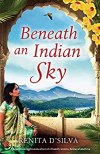
I’ve just finished Beneath an Indian Sky by RenitaD’Silva. An Excellent book! A period in history, not highlighting racism, but seeped in a cultural background with which I was unfamiliar, with its own tensions, prejudices and values.

This will be my June book review.


1 Comment

Filed under MISSING Past and Present, Planning a novel, Research, Writing, Writing a novel