Category Archives: Planning a novel

Historical Fiction ~ Historical Research

There is always a great deal of controversy between the purists  who research history for its own sake, and those, like myself, who try to popularise it to make it accessible to a wider audience by turning it into fiction. I must admit to taking the research far more methodically for my second novel ‘Ancasta ~ Guide me Swiftly Home’ than I did for ‘Riduna.’
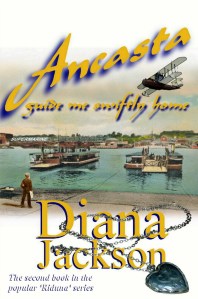
For Ancasta, the research gave me the framework on which to weave the story. The fictional lives of my characters were ‘living history,’ and each key event was seen though their eyes. I included some real characters in the novel too, but the majority were my own creation. I knew my characters, but as history enfolded through my research, so did the direction of their lives change.

I will give you an example of one of my characters, Tom, Harriet’s quiet son, who from a very early age helped out in a local bicycle shop, eventually working there when he left school, unlike his more exuberant brother Jack who became an engineer in White’s Shipyard. When WW1 broke out Tom joined up and it seemed natural that he should join the 9th Cyclists Battalion. (I found this on the internet with little more information) I could have guessed that he would have become a cyclist messenger on the Western Front, in fact this is what I had written in my rough plan. Or later, when I had studied more about WW1, that he could have been involved in combat on the back of his trusty bicycle! Yes, I found that hard to believe too.  I would have dreaded writing that scene, but as it happens he did none of those things. You see, I turned to the Hampshire Regiment Museum for support here and they sent me a detailed account of the 9th Regiment. The regiment did not, as it happens, go anywhere near France, but all the way to India. Since this was quite a difficult chapter for me to write I asked if the curator of the museum if he would mind checking the chapter for me, and Colonel Bullied was more than happy to do so. In fact I was overwhelmed by everyone’s willingness to help.

My point here is that my chapter was purely fiction, from the point of view of the character, but the story I told was plausible, and actually told a snippet of history that very few people knew. Surely, if readers take away from a novel a nugget of truth, they will have a greater awareness of history.
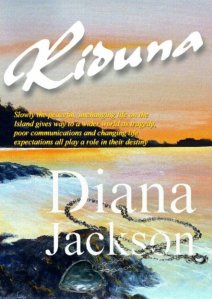
Riduna, on the other hand was a story, already in my head, a love story, through which I weaved moments in history. I tried to be as authentic as possible as to the social history, but there is so little written on Alderney of that period, certainly that has survived, that my story was in fact the framework rather than the historical period. What references I did find referring to the Channel Islands in Victorian times, I read avidly and my research certainly coloured my novel but not the other way around.

With documentaries and the internet you could argue that there is no need for this frivolous adaptation of history. Nevertheless, there is still a huge readership for historical fiction, and through my experience with my research for Ancasta, experts in their own field are more than willing to be involved and support the author to try to get their facts as accurate as possible, and even more than happy to give suggestions along the way.

An example of this was when I was discussing how my ordinary folk would hear the rumours that the boatyard in Woolston may be used by Pemberton Billing to make the new and exciting flying boats.

‘Why not get them to overhear gossip in the local pub!’ a helpful historian suggested.

Funnily enough I was even in that very pub (or at least its replacement, the original having been bombed in WW2!) the Yacht Tavern in Woolston!

I am grateful to so many people who have given me much encouragement throughout my research.

What do you think?
Leave a comment

Filed under Ancasta, Flying Boats and Sea Planes, Historical Fiction, Planning a novel, Research, Writing a novel

It’s just a ‘Wet Bank Holiday Monday’ sung to the tune of ‘Pleasant Valley Sunday!’ or making a novel memorable

The Monkees song ‘Pleasant Valley Sunday’ was rolling around my head but more the tune to words ‘It’s just a wet bank holiday Monday!’ At this point I would like to pay a tribute to Davey Jones who died at the relatively young age of 66 years in March this year.

I admit it. I was a member of the Monkees Club when I was very little. That dates me doesn’t it and it prompted me to browse on the internet for the rest of the real lyrics and I was taken aback by the timeless nature of verse two:

‘See Mrs. Gray, she’s proud today
Because her roses are in bloom,
And Mr. Green, he’s so serene,
He’s got a TV in every room.

Another pleasant valley Sunday,
Here in Status Symbol Land,
Mothers complain about how hard life is,
And the kids just don’t understand.
Creature comfort goals, they only numb my soul,
And make it hard for me to see.
Ahhh…thoughts all seem to stray to places far away,
I need a change of scenery.’

If you’d like to read the whole song click on this link:

Lyrics

Wow, what a pertinent message from what I considered to be a frivolous pop band. Isn’t that what a lot of people are striving for today; moving away from ‘Status Symbol Land’ towards something more worthwhile?

The wonderful thing, and sometimes irritating, about a catchy tune is the fact that we cannot get it out of our heads and even more amazing, years later, sometimes we still remember all the words too. Mind you it could be a person, time or place which triggers the memory.

How many novels stand the test of time in the same way? Of course there are the classic we are all introduced to at school but how many others. I could count on two hands those novels which have made such an impact on me that I could call them unforgettable and those are the ones I like to keep and they are not necessarily well known, they just met a particular need at the time. Like songs too, their messages often stand the test of time.

How can we as authors strive to achieve this impossible feat?

  1. Writing the best written novel we can. Goes without saying.
  2. Writing a series perhaps.
  3. Linking a story to a particular setting so that the place stirs memories of the novel and characters for the reader.- ~ a good holiday read maybe
  4. A unique plot line.

What do you think? How are you striving to achieve the impossible?

What can I remember about ‘Pleasant Valley Sunday’?

1. The Monkees sang it.

2. ‘Charcoals burning everywhere’ and

3. ‘no one seems to care’

Not bad I suppose for a song frm the ’60’s’!

Leave a comment

Filed under Book reading, Planning a novel, Reading a novel, Writing a novel

A novel impression – unsung heroes v familiar friends and foes

Have you ever thought of the people who never experience the accolade they deserve for their contribution. Last week we focussed on Steve Jobs, remembering his greatness rather than the technology he created.

When you listen to a wonderful  rendition of Mozart, Bach or Beethoven do you ever think of the individual violinist or percussionist?

When you watch a  drama or documentary on the TV do you ever sing the praises of the director or each bit part actor?

When you visit Wiseley or any other famous garden do you ever think of the person who does the weeding?

An author, on the other hand leads you from general truths and events to minute details of individual lives. A successful writer will know how to draw on the reader’s empathy and involvement until the dividing line between the reader’s reality and that of the fictional characters begins to blur at the edges.  The reader needs to understand intimately all of the key players as the drama unfolds.

When a wonderful piece of music comes to an end you are often left with an impression; an echoing but lasting memory of  the experience, but when you come to the end of an excellent novel,  do you ever feel you’ve just said goodbye to a dear friend or a close family member? Do you sometimes feel at a loss for a day or two; almost bereft?

How do we achieve this as an author? How do we leave our readers looking forward to more?

  • Innate ability?
  • Ever learning more about the craft of writing?
  • Forethought and careful planning?

Probably all three!

Tools a writer uses:

  • Sticking to a successful format that readers become familiar with (Agatha Christie)
  • Using a main character or characters within different story lines
  • Writing a series – sequel, prequel..
  • Using the same setting – location for a several stories
  • Setting several novels in the same time period

Leave a comment

Filed under Planning a novel, Reading a novel, Writing, Writing a novel