Category Archives: History of Alderney

A Special Light to light up Christmas ~ Mannez Lighthouse Alderney 1912 ~ 2012

Mannez Lighthouse 1912 ~2012

Mannez Lighthouse
1912 ~2012

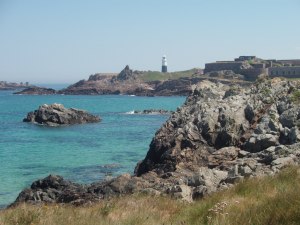
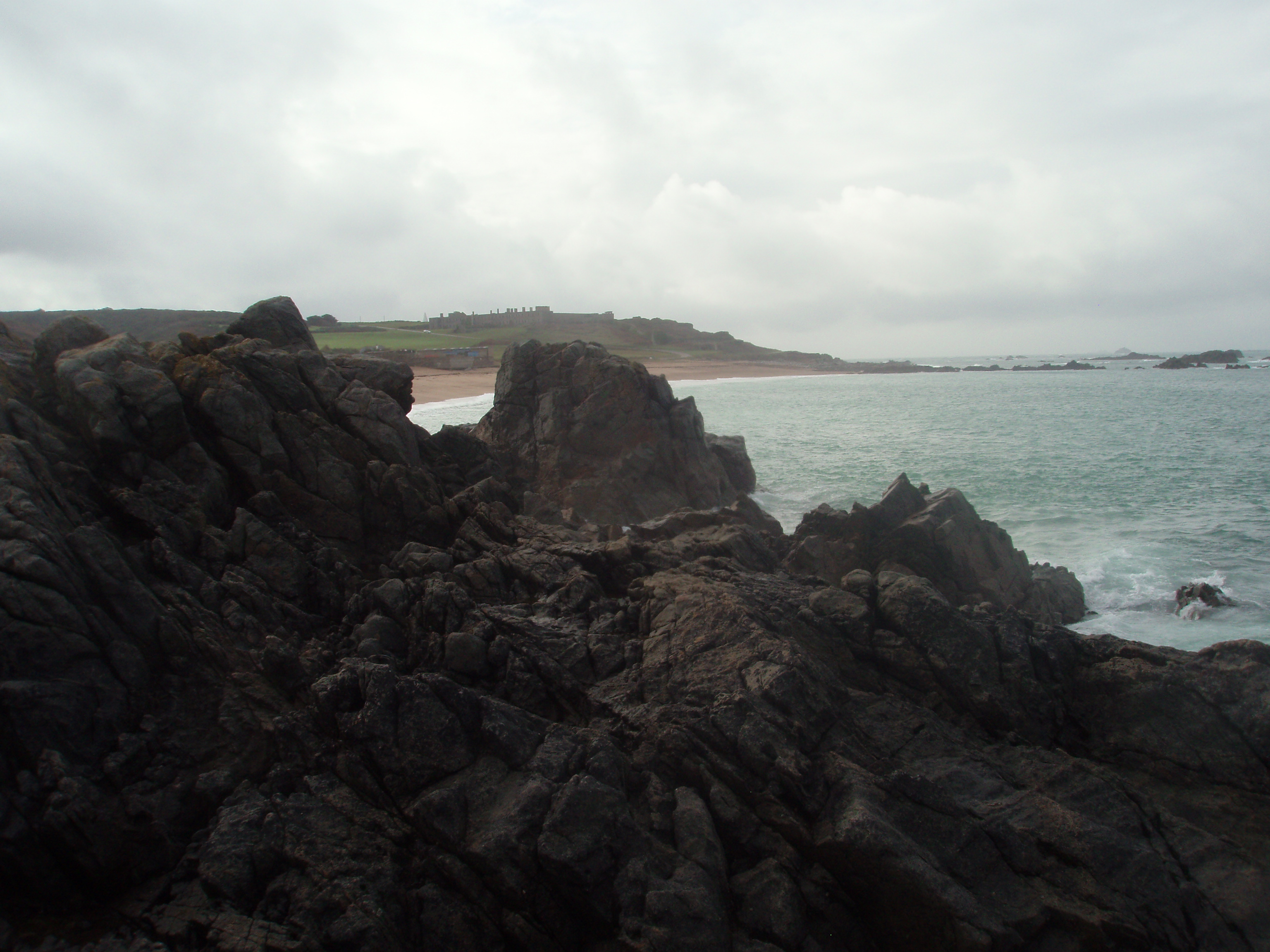
There are two stretches of dangerous waters around Alderney, the Alderney Race to the north-east and The Swinge to the north-west.  Mannez Lighthouse was built in 1912 to protect shipping on the Race and this actually stands on the north-east end of the island near the lovely Corblets and Arch Bays. This is not to be confused with the famous Les Casquets Lighthouse, whose stories have inspired both song and poem, situated off the coast of Alderney on a rock to the north-west of the island, far beyond the island of Burhou (famous for its colony of puffins.)

With many a wreck around Alderney’s waters, I’m sure both lighthouses have helped to give confidence and assurance as they have lit up these difficult stretches of waters. For the last 100 years the Mannez Lighthouse has guided ships around the submerged rocks and raging currents of The Race, through twilight times and storms and fog. Not many intelligent sailors would attempt either stretch of water at night I shouldn’t think, although I’m sure a good few have tried, some to their cost.

The building of this iconic black and white striped structure of Mannez was overseen by a local businessman (according to Wikipedia) called William Baron. The last lighthouse keeper in residence left in 1997. In 2011 the main beam was switched off and the fog horn silenced at the same time, and now the light given out is minimal. Let’s hope the number of island wrecks are not increased by this action and that the most advanced navigational equipment keep sea travellers safe around Alderney’s beautiful shores.

You can still visit Mannez Lighthouse during the summer and climb the tower to enjoy the fantastic views over the island and beyond, and the island’s little railway still chugs its path to the quarry, only a short walk away, although the railway’s famous station master ‘Elizabeth Beresford’ of Womble fame, passed away a couple of years ago.

And so I would like to leave you with this apt festive message, celebrating 100 years of light shining in the darkness of  Alderney:

May you follow your light and be kept safe as we celebrate

the Light of the World this Christmas Time.
OLYMPUS DIGITAL CAMERA

Happy Christmas!

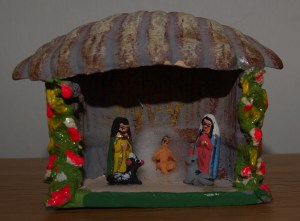
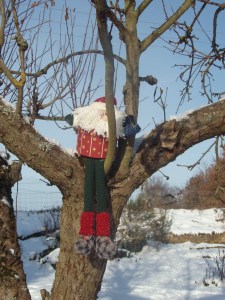
(I searched in all my decorations boxes for this little nativity so that I could take a photo. It is only about 3cm high and I knew I would have put it somewhere safe. Yesterday evening it suddenly came to me…. it was snug inside Santa! Maybe there’s a metaphor in there somewhere  about the magic of Christmas, but the true meaning of Christmas is still hidden beneath waiting for us to find it?)
OLYMPUS DIGITAL CAMERA

Leave a comment

Filed under Alderney, History of Alderney

A salutary lesson…..Never rush a blog post or a comment!

I was checking the statistics of my blog posts just now and was surprised to see that the post:

‘Legends and Folktales ~The Lighthouse Keeper’s Daughter’ came near the top, alongside ‘Can you Snuggle in Bed with a Kindle’ and ‘I feel somebody has pressed the pause button on my life.’ Strange I thought.

Are school children in the country doing projects on lighthouses?

Is the school on Alderney researching it’s own folklore?

You see, it is not just in at a particular moment in time but the same post pops up as having been read fairly regularly. This prompted me to return to read the post which, incidentally,  I wrote back in April 2011.

The post said nothing remarkable. It is a story I know well but it never seems to lose its charm, of a lighthouse keeper’s daughter who was born on les Casquets, a rock just off the coast of the island of Alderney. It goes on to talk about population trends and gives a link to an article about the benefits of moving to Alderney. Maybe that’s the reason why there is an unusually high number of readers, those who are looking for a simpler life, away from the rat race, on a beautiful island within fairly easy reach of the UK. (If only I could) Ah, it began to make sense.

Then I checked through the article and that seemed to be fine but

Ouch! Then I checked the comments.

One of the last light house keeper’s on les Casquets had taken the trouble to let me know that the name of the young girl was Rosebud, an unusual name since she lived on a rock, with no roses in sight. Unfortunately I must have been in a hurry when I wrote the reply because, I’m ashamed to say, that there were no less than two mistakes in my short but polite reply. Oh dear.

It was a salutary lesson and I’m sure my blush sent waves back through my newly acquired Wi Fi. As writer’s we compose blog posts, sometimes when our mind is on other things, but we need to remember:

Our blog is like a showcase to the world

Many posts may be read and thought little of

A few of our posts will have an impact but

Grammatical or punctuation mistakes will certainly be remembered and come back and haunt us.

Will anyone else admit to making mistakes which embarrass them?

2 Comments

Filed under Alderney, Blogs, History of Alderney, Proof Reading, Writing

Gone Fishing on Alderney!

This blog will talk about my

first fishing lesson on Alderney

Fishing in the name of research

WW1 on the island of Alderney

The Alderney Fishing Festival


Continuing my series of blogs to thank various places and people who not only helped me with my research but made the experience so pleasurable, I return to the beautiful island of Alderney. You see, I wanted my chapters ion Alderney in my novel Ancasta, about life on the island during WW1 to be as authentic as possible.

Alongside reading about the effect on the island of a whole generation of young men going to war and being in such close proximity to the French coast I soon realised that an important aspect of the islanders’ bid for survival would have been fishing. The everyday islanders would have thought twice before venturing off the coast of France in fishing boats because of possible submarines, but would certainly have fished off the rocks and the breakwater, in fact there is fishing tackle from that era in the Alderney museum and photos of men standing in line on the breakwater fishing for mackerel. One of them had this massive rod and as they caught a fish they’d flip it up to their brother or son who was standing waiting on the next level platform.

I knew nothing about fishing myself, but I was pleased to be in touch with a man on twitter whose family has lived on Alderney since the nineteenth century. First tweets about fishing shot backwards and forwards between us and then DM’s (direct messages to those who are not familiar with Twitter!) In the end the maximum 40 characters defeated us and we exchanged emails and have since become good friends. Vic certainly gave me a flavour of the favourite places his grandfather and father took him fishing, what they caught and the different methods they used. He explained spring tides and neaps until I think I understood, and gave colourful accounts of his fishing exploits and fond memories of his childhood on Alderney.

How do you describe someone fishing when you know nothing about it?

What were the sights, smells and sounds associated?

How did it feel to scramble out to and stand precarious on a rock for a couple of hours, while the sea swirled below?

Many questions filled my mind and needed to be resolved before I attempted the chapter.

I was planning my next trip to the island that October and so I got in touch with Mark who owns the fishing tackle, outdoor sports shop at the top of Victoria Street and and gives fishing lessons. I explained my quest to him and asked whether he would mind taking out a novice such a myself. He was delighted to do so!

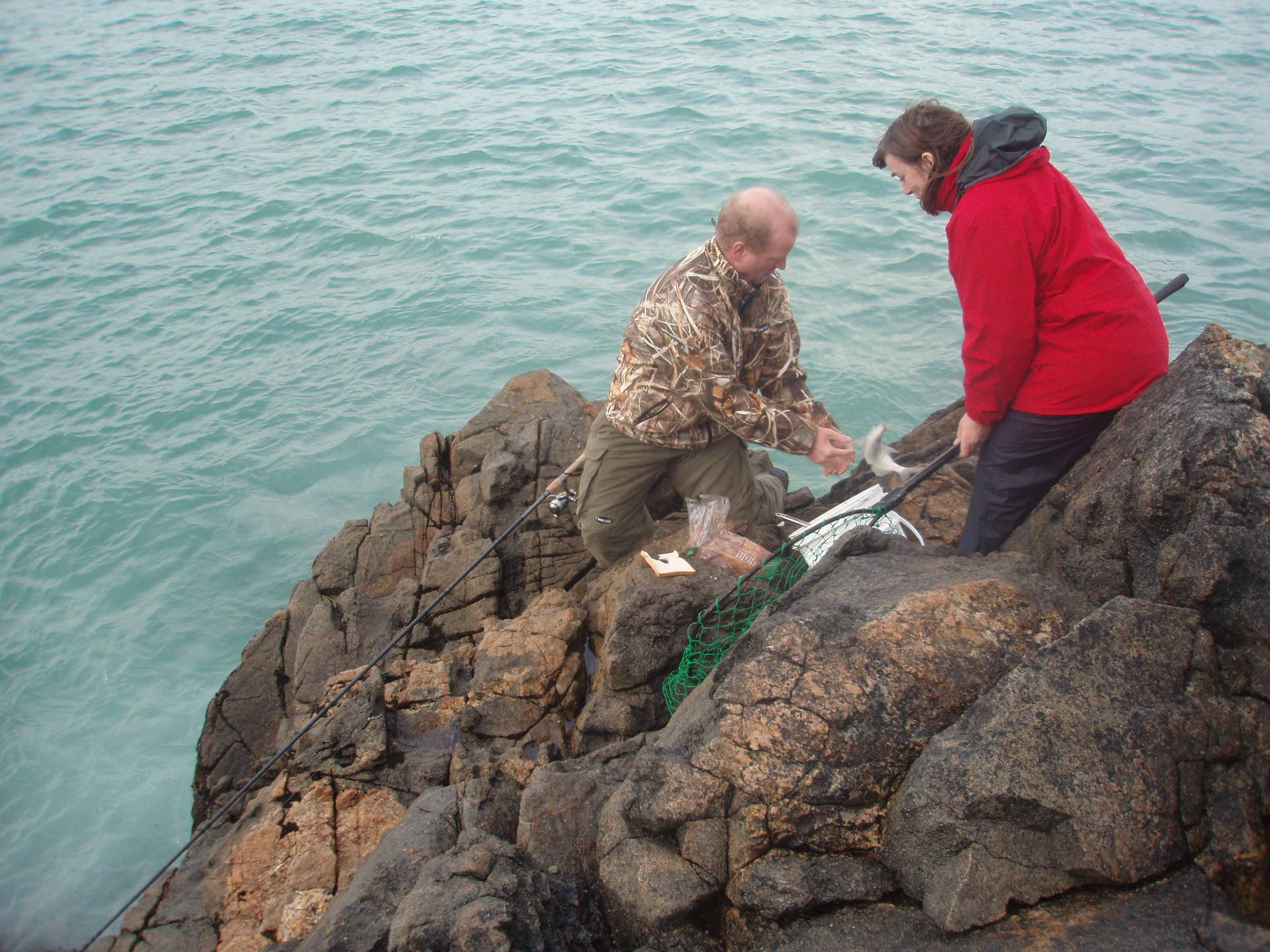
On the day of the lesson we met Mark down by Crabby Bay, shared the tackle between us before scrambling out to the rocks beside Fort Doyle. With the Swinge restlessly swirling around the island of Burou to our left and Fort  Doyle to our right I watched Mark as he prepared the rod, line and bait. We discussed the sort of bait my character might use and that they would probably have used feathers in those days, all the time I was alert to vocabulary which described the action, scene and senses. I jotted down notes, but most of all I captured the ambiance of the experience to aid my memory.

As we waited patiently for a bite I noted my thoughts, the panoramic scene around us, the changing nature of the sea and sky, Mark’s actions, his stance, the feelings of anticipation and yet timelessness. It was quite an experience. I asked the occasional question as they came to mind and gradually I was lulled into a sense of peace in the moment.

The excitement of our first bite brought me out of my reverie and I was thrilled when mark landed our first mullet, handling it with almost reverence as he explained how quickly the glistening colours fade when the fish dies. I was quite in awe of the experience. More in tune with the cycle of life and enjoying the opportunity to paint the sea scape in words I settled back on my rock but did not have long to wait before we landed our second mullet of the day, then nearly lost it. Slippery things fish!

On our next visit to the island it happened to coincide with Alderney’s annual fishing festival, a time when men compete to find the best outcrop of rocks, the vantage point where they might catch the biggest fish of the week. Trophies are fought over (metaphorically) and in the evenings groups of men sit in the various cosy and welcoming hostelries, including The Divers Arms, discussing their successes and the giants who got away.

This year it is the week commencing 13th October, so if you love to fish, I cannot think of a better place to do it than the beautiful island of Alderney. If you do, say hello to Mark. I’m sure you’ll meet him as the week progresses.

The Alderney Fishing Festival 2012


4 Comments

Filed under Alderney, Ancasta, History of Alderney, Research