Category Archives: Book reviews

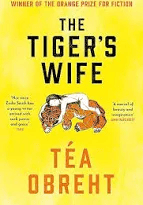
Diana’s July Book Review ~ The Tiger’s Wife by Tea Obreht

I was recommended to read this book and it is certainly an interesting and unusual plot, with fascinating characters.

I liked the obvious close relationship between grandfather and grand-daughter. I could identify with this, having talked to my own grandma about just about everything. The way in which the grandfather’s life unfolded through the memories, and then finally first hand experience, by Natalie the grand-daughter was poignant; both doctors too.

Some of the characters seemed to do a personality change through the book, which was a bit disconcerting, but then the storyline, for several, was tragic to say the least. Occasionally, I found the jumping of years and locations a bit disjointed and hard to follow, but that’s maybe because my memory isn’t what it used to be.

The Tiger’s Wife skipped between reality and pure fantasy and I kind of liked that element, and the descriptive, almost poetic qualities of Tea’s writing is exceptional for a young writer. It certainly would provoke discussion in a book club. Well done for winning the Orange Prize for Fiction and being a best seller in The New York Times!

Leave a comment

Filed under Book reading, Book reviews, Reading a novel

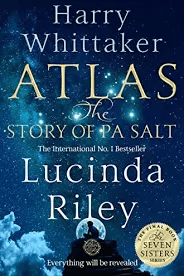
Diana June Review ~ The Seven Sisters Series by Lucinda Riley

I am making no apologies for writing another review for this fantastic series, which kept me engrossed for several weeks.

I finished the last book ‘The Story of Pa Salt’ last week, which was completed by Lucinda Riley’s son after Lucinda sadly passed away. To be honest with you, although I could recommend some of the series as stand alone books (and I have, especially my favourite ‘The Moon Sister’!) I think the last two, ‘The Story of Pa Salt’ and ‘The Missing Sister’, would be quite difficult to read without the background of the other books, but otherwise I think they are a fantastic, ingenious series of books, and although the plot is complex, with many twists and turns, they kept me gripped right to the end.

I was spellbound, in a different world, and not just one setting but many varied settings from the Australian outback to the Highlands of Scotland, from the heat of Mexico to the outstanding beauty of an island on a lake in Switzerland, in London and New York too. Each adopted sister was very different. I love books which explore family history and each book in this series was unique in this too, as each sister tries to explore their past in order to connect with the present.

It must have been such a gifted writer to keep all the threads in mind consistently, and probably took the great skills of more than one editor to check it, cross referencing each book.

‘The Story of Pa Salt’ certainly brought all of these threads together, tying up loose ends and answering nagging doubts along the way. Extremely clever, but satisfying too!

Leave a comment

Filed under Book reading, Book reviews, Family History

What do I look for in Historical Fiction?

Image from the Historical Novel Society

If you follow the link above to the Historical Novel Society website they define the genre.

After last week’s contrasting book reviews I’ve been reflecting on what, to me, is great Historical Fiction.

What do others say?

10 Steps for Writing Historical Fiction by Krystal N. Craiker

How to write good Historical Fiction by Dave Chesson

What’s my take …

Initial Inspiration

There is usually a spark to any novel writing which lights the way. In historical fiction it is usually an era, person or an event in history.

Thorough Research

It is impossible to write Historical Fiction without a great deal of research and the way you keep notes is a vital process to making your novel writing run smoothly. The setting, way of life and man’s accomplishments; these peripheral areas of study which brings your eventual novel to life and gives it authenticity.

Expand your notes on detailed descriptions of your characters and the place in which they live.

Plan your novel

A linear time line of events is useful here. As you plot your novel then there will be gaps to fill. Make a strategy as to how you are going to span the years and be consistent in your approach. Will you bring in back story in snippets, as a prologue or afterward or just hint to it within your text?

Write the first draft

As you write you maybe aware of gaps in the plot or anomalies you hadn’t noticed before. Rather than stop the flow and go back to research you could keep a careful note of these issues. Also, I’m sure on rereading you, your beta readers or definitely your editor, will pick you up on an inconsistencies you have missed sometime in the future. The most important thing at this stage is adhering to your notes but also the flow of the story, to keep your readers interest on board.

Edit in stages

Unless they are a miracle worker, an author of historical fiction needs to reread the novel several times, maybe focussing of different areas:

consistency of facts,

flow of story,

descriptive and creative vocabulary,

Then send it to your beta- readers

and finally punctuation grammar and spelling.

Then send it to your editor.

Innovative Ideas

Like in art, for prizes in literature they seem to be looking for something new. I would like to think that judges might think twice and put the value of a ‘pleasurable’ read high up in their priorities.

What do you think?
Leave a comment

Filed under Book reading, Book reviews, Historical Fiction, Inspiration