Tag Archives: The Great War

Virtual Tour of the Solent and Beyond ~No 15~ India ~ The last Post

This is my last post in my virtual journey to the various locations in Ancasta Guide me Swiftly Home and it’s a place I never expected to go to when I planned the novel. Although I made an outline before I began to write, for me it’s always the research, as well as intuition and listening to my characters, which leads the flow of my writing. I often end up in locations which are a complete surprise to me and India was one of these.

I had a vague idea that Siberia played a part in the Great War, but I had absolutely no idea that we sentSolent Google Map Karachi1 troops to India, in fact my character arrived in Karachi, which was part of India rather than Pakistan back in 1916, when this part of my novel took place.
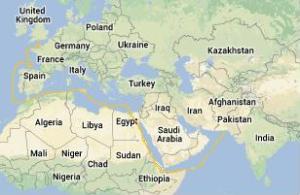
I was asked during one of my talks at Bitterne Library whether I’d visited India (& Pakistan) as part of my research, and I have to hold up my hand and admit that I didn’t and so how did I write the relevant chapters?

I don’t want to tell you the story, but I my aim was to weave historical detail around a plausible tale. Letters reaching home from so far away were sporadic and so this added to the anxiety of family left behind in Woolston. First I read as much as I could on the internet but, always liking to verify these web pages, I was sent copies of accounts of the times sent to me by The Hampshire Regiment Museum in Winchester. I have subsequently visited the museum and, almost as if to prove a point that the world is not so far apart, there were Gurkhas and their wives visiting at the same time, who took part in WW2. These accounts coloured my writing, not only with detail but descriptions and atmosphere. How did the troops feel to be so far away? What did they do? What did the area look like?

Here is a link to the Imperial War Museum where you can see the badge of the 9th (Cyclist) Battalion, The Hampshire Regiment.

Other questions pertinent to my story were,

How did Harriet’s son Tom, the quiet unadventurous one, cope with life in India?

Did he return?

What part did he play in the Great War?

What news of his experiences was he able to send home in his letters?

Through my story I tried to show the contrast in conditions to life here in England, or even to those poor souls out in the muddy fields of France, but most of what you read in the ‘India’ chapters are my imagination, seamlessly interspersed with factual details of the day. I can thank staff at the museum for reading the chapters to check for authenticity.

And so I end my virtual tour today. I have enjoyed sharing my journey with you, of locations that have become so vivid in my imagination that, when I visit them, (maybe I will go to Karachi one day too) I can imagine my characters living and working as if it were all true. Well, they certainly are true in my heart!
Leave a comment

Filed under Ancasta, Historical Fiction, Planning a novel, The Great War, Virtual Tour of the Solent and Beyond, WW1

Virtual Tour of the Solent and Beyond~No 13~Over the English Channel to France in the Great War

Over to France

Over to France

Ancasta Guide me Swiftly Home is set between 1910 and 1920 and so the members of the Newton family see many facets of World War One; the life changing experiences of the women at home in Woolston as Harriet opens her home for convalescent soldiers; the marked effect on their children and Jane’s world at The Royal Victoria Hospital. Life goes on as best it can.

There is a continuous flow of ships up and down Southampton Water, including Edward’s ship, commandeered to send new troops to France and to return full to the gunnels with the injured. Every home in every street is affected, when memories of the horror of the Titanic have barely had the chance to heal. Although Ancasta dwells more on those who remain in Woolston, France is never far from their minds, especially when Anthony, Harriet’s son-in-law is trained initially as an observer, on reconniassnace missions taking photographs of the area of conflict from the air. Then, having taken part in several successful fact finding missions he came home to fulifil his wish to complete his full pilot training.  

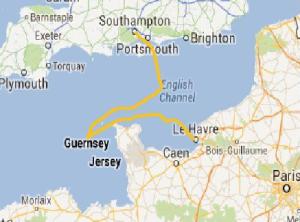
Thus Ancasta has chapters which tell Anthony’s story from his training at Gosport to his long journey to France, by ship to Le Havre and then by barge up the river to Rouen; the sights on this trip in sharp contrast to the ones he will witness shortly. We read of some of his  experiences in France through letters to his wife wife Sarah, who has moved back home to Woolston to live with her mother Harriet for the duration of the war. Through these extracts we learn of Anthony’s joy of learning to fly and we see the war on the home front through his eyes, not in the depths of the muddy fields of France but almost as a movie from above. It is nonetheless vivid in its devastation.

These chapters were inspired expecially by an old tome I borrowed from The Shuttleworth Archives called ‘Sagittarius Rising’ by Cecil Lewis, a gripping true account which reads more like a novel in itself.

Will Anthony be one of the lucky ones to return? What are the odds with my no 13 post on my virtual tour?

When you think of the sacrifice so many of these young men made for us all though, luck doesn’t really come into it, does it?

The name of the novel ‘Ancasta’ is even more pertinent during this period as the women prayed for the swift and safe return of their loved ones from France just as the Romans prayed to Ancasta, ‘The Swift One’ centuries before in this very location.

There are many websites and blogs related to The Great War but here is a link to one I follow:

Great War Photos

Leave a comment

Filed under Ancasta, Early Flight, Research, Role of Women, The Great War, Virtual Tour of the Solent and Beyond, Woolston, WW1

Good News! Ancasta will be launched 7th July 2012!

I can finally announce the good news that my second novel:

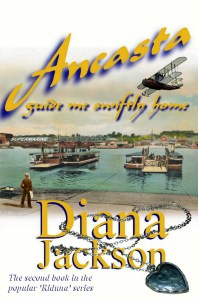
Ancasta – Guide me Swiftly Home

which will be launched on:

 Saturday 7th July 2012

Why Ancasta?

Ancasta was a Roman Goddess of the River Itchen in Southampton, UK to whom travellers prayed to guide them swiftly home to the port of Southampton. Since my novel flows out of the river to Southampton Water, The Channel Islands and beyond, this seemed a fitting title.

Ancasta is the second in The Riduna Series and it tells the story of the next generation of Harriet’s family, who lived in Woolston, Southampton between 1910 and 1920. It is an auspicious period in Woolston’s history, with the development of flying boats, the opening of Supermarine and the Schneider Trophy,

but as each member of the family play quite different, and in most cases less documented, roles in the Great War, no family is spared loss. The beautiful island of Riduna continues to have influence on Harriet and members of her family, and I see it as almost another character in its own right.

Ancasta can be read alone, but for anyone who did not read Riduna, the first in the series, it will be available too.

This time though, as well as promoting both as real books, they w

ill also be available as e books throughout the world.

In the next few weeks, towards the launch, I will share background information about the novel, but in particular pay tribute to the many people and organisations who have helped me with my research and supported me throughout this exciting journey.

Leave a comment

Filed under Ancasta, Early Flight, Flying Boats and Sea Planes, Historical Fiction, Southampton, Supermarine, Woolston