Category Archives: Writing

Background to writing

Watch the word count 85,000, 90,000, 100,000…

I was interested to read an article in the newspaper recently which discussed the new fashion of shorter novels to fit in the the e reader life style. Novellas are coming back into fashion, as are short stories, bite commuter sized reads to while away the hour travelling by train.

When I wrote   ‘Riduna’ I did not think of an optimum length. I just wrote the story until it was finished and, although the editorial process was fairly vigorous, it did not run to cutting out chunks of the novel to make it shorter.

Thus the final word count was just over 102,000 words; (Not 200,000 as mentioned in one newspaper article and I’m not sure whether it was a slip of the tongue on my part or a slip of the pen on behalf of the journalist! I’ll give the journalist the benefit of the doubt since I was quite nervous to be interviewed in those early days)  The actual word count of 102,000 seemed ok for a first novel but larger than the optimum count I’ve heard mentioned of 85,000 since.

I hoped to aim for nearer 85,000 for my second novel, which I hope to be out before the end of the year, but even then I have finished up with over 98,000. Unlike Riduna, which is a very gentle book describing the weaving in and out of island life through the eyes of my key characters until half way through when the pace quickens and every page is full of drama as the saga unfolds, my new novel is action packed throughout. It would take an expert with an independent eye to trim it down, if it was felt necessary to do so.

In my eyes the length  (within reasonable parameters) makes little difference  to a paper based novel, so long as the story is compelling and the characters believable, except maybe in the temptation to decrease the size of print, but is it the same for e books? If my publisher were to bring Riduna out as an e book would it be better to offer an abridged version?

I’m inclined to think the answer is ‘yes.’ What do you think?
2 Comments

Filed under Planning a novel, Riduna, Writing, Writing a novel

e book revolution – From a writer on the edge

I have read several articles recently about the e book revolution and how it is changing not only how we read, publish and advertise our writing but also that the whole industry is in a state of flux from publishing companies to bookshops. As a writer this can be quite exciting, albeit a bit daunting. Personally I feel as if I’m standing on the fringe, on the outside of a revolution watching it happen, almost as if I’m watching a fast action movie, when you’re left in suspense but your brain is trying to tell you it’s not real.

Years ago I had a similar experience in a space simulator at Universal Studios.  However hard I told myself that I was sitting in a capsule which was suspended over a 3D screen and that we had barely moved half a metre since the start of the ‘flight’, the signals to my brain were contradicting reality and I felt as if I’d journeyed through several time zones, shooting through the air, narrowly missing buildings towering in front of me. Later on in a theatre I even felt mice rushing under my feet. How did they do that?

I digress. Form all the articles I’ve read, I’ve been gleaning how it all affects me as I write?

  • It gives choices barely contemplated a couple of years ago
  • It provides opportunities for writing to be available to an audience almost immediately
  • With Social Media Networking it is possible to reach that audience equally fast, to all parts of the globe
  • The writer appears to have more control over their writing

I’ve said nothing new here so what are the pitfalls:

  • Ensuring that the quality of the writing is not undermined
  • Not being tempted to short cut the vital editorial process. The final novel should still be as perfect as possible before it reaches the public
  • The writer’s time is no longer taken exclusively with the creativity of research, writing and proof reading but in experiencing hands on marketing in a way never seen before, a far cry from the odd book signing or library talk of the past- this can be a positive thing but it is also very time consuming
  • The novel itself, the creation which took months of painstaking work, can be read and deleted almost as instantly as it arrived, whoosh, back into the ether

Do you think the two worlds will be able to live amiably side by side for a while?

I do hope so because as a reader there’s nothing quite like reading a real book and there are those I’ve kept for years because I treasure them so much. Sometimes life is just too instant. How do you wrap up an e book to put under the Christmas tree and think of the festive season without anticipation of wondering which book lies inside the wrapping?

Leave a comment

Filed under Book Shops, Marketing your novel, Reading a novel, Writing, Writing a novel

Which Setting? – An Inspiration to Write

Choosing the right setting for your novel is vital but how do we do it?

Familiar or Imaginary

If we choose a familar location it has loads of advantages:

  • You can imagine each scene and the descriptions flow effortlessly as you write
  • Your audience loves to read about places they know
  • Promotion is more straight forward because  your initial drive can focus on reaching out to people with links with that location

If we choose a local setting there are added advantages:

  • You are more likely to have success with local papers if it is local interest
  • You are more likely to be interviewed on local radio
  • Local bookshops will feel more parochial and will be happy to promote your work in their ever popular local interest section
  • Talks in libraries and to various local groups will be popular
  • It is easier for a new author to begin making a name locally

If you choose a holiday location:

  • You may have a fresh audience for some years to come
  • People often buy books to read on holiday
  • People often buy books to remind themselves of a memorable holiday
  • The setting is usually beautiful, inspiring, exciting……
  • It is a setting which lifts readers beyond their everyday lives

If you choose an imaginary setting then:

  • You can let your imagination truly take over
  • You are not restricted to accurate detail as long as it is plausible
  • You are aiming for a wide audience
  • The scenes you evoke stand for themselves and do not need association to be successful

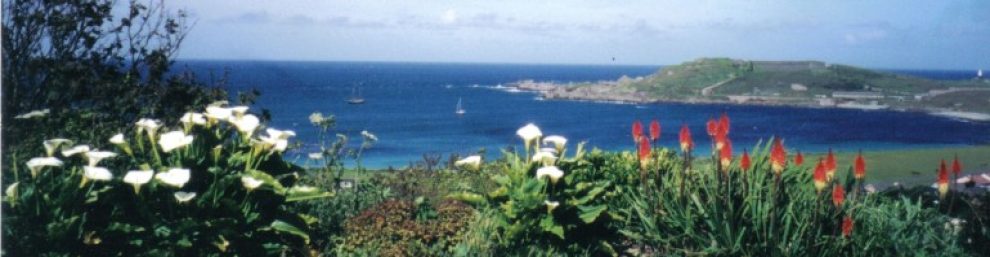
Your setting may have been your original inspiration, as Alderney was mine. As I stood on the Butes wondering what life might have been like in Victorian times I knew I just had to carry out some research. Alderney is unique as a setting for a novel. Many have been written on Guernsey and Jersey but, as far as I know, ‘Riduna’ is the first novel inspired by the beautiful island of Alderney.

My current writing was inspired looking out over a field one day. Very different!

Was it a location which inspired you to write?

Leave a comment

Filed under Marketing your novel, Planning a novel, Riduna, Writing, Writing a novel