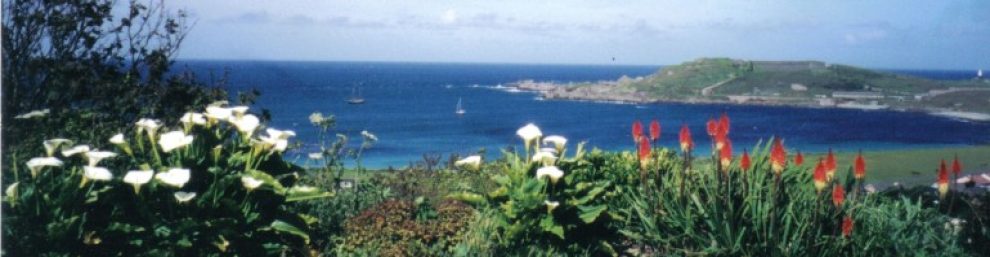
My initial inspiration for The Riduna series was my Great grandmother, born on the island of Alderney in 1865.
‘Apparently she was a bit of a handful and they shipped her off to live with her aunt on Guernsey when she was fifteen,’ my Dad explained one day, in one of his lucid moments. He is sharing more about family and memories now, but I heard little when I was younger.
‘No it’s not Harriet, it’s Harriet Jane,’ my Aunt once corrected me, and since my Aunt was not evacuated out of Southampton during the war, she knew this formidable lady more than most. My Dad was sent off to Bournemouth for August and enjoyed a summer by the sea, while Southampton remained under the cloud of WW2 and my Great Grandmother lived with my Grandparents at the time, her husband having returned to Guernsey before WW2.
I digress.
(I have to stress here that I am talking fact here rather than fiction. My novels are fiction. Although there are links with ‘Harriet Jane,’ they do not tell her story, neither chronologically nor physically, but I am known to confuse the two from time to time when speaking, even taking on the persona of Harriet myself. Is that unusual in an author?)
In my series Harriet is the protagonist and in Riduna she is the central figure from whom all her family, friends and acquaintances are linked. Initially a young girl of just sixteen years, although we see flashbacks to her birth, she experiences all the emotions of that of a young girl today, only under quite archaic constrictions. Everyone knew everyone else’s business on a small island like Alderney, and probably still do. In fact it is her best friend Jane, whose story runs alongside Harriet’s, who eventually becomes a nurse. We see her again in Ancasta ~ Guide me Swiftly Home, starting work at The Royal Victoria Hospital, described in my last post ‘Spike Island.’
The conflicts of womanhood, which I described in my previous but one post on Feminine Issues, were also apparent in Riduna, as choices were made between career and love. It was rare for a woman to have both. Jane, Harriet’s best friend and confidante in the novel, made her choice at the end of Riduna, but you see in Ancasta that the decision is still challenged from time to time.
Although there were business women in the Victorian age, they tended to be those of independent means, often widows who had the strength of character to make their own decisions or needed to continue the family firm in order to survive. Many excellent posts describe the role of Victorian women succinctly including:
As Harriet moves on from ‘Riduna’ to ‘Ancasta’ she is now in her mid 40’s, but she is still a woman who feels the emotions of love and passion, but they are tempered by the maturity of bringing up her family and her recent bereavement. She is the matriarch of the family and yet again every thread leads back to Harriet as we read about the lives of her close family and friends and the parts they play in the war. (The Great War)
Harriet needs to make those very decisions as to how to survive, described in the BBC article. What are her choices? To take in sewing work from one of the local manor houses, which she has loathed all her life, or is there some other way? It is her daughter Sarah, even more headstrong than Harriet, who helps her to decide. Fate plays it’s part too as she is asked by her son whether she could take in paying guests and the idea of a guest house is born.
In Ancasta it is Sarah who takes on the role of pushing the boundaries of womanhood further still. Whereas 19th century born Harriet’s evolution from taking care of the home and family to business woman was thrust upon her by circumstances, we see 20th century born Sarah forever challenging her given role. In all probability Sarah was loved and spoilt as the youngest child and only daughter of the Newton’s, although we are not told this is story, and she was almost certainly more of a handful than Harriet in her youth, since she had far more freedom. I don’t think Sarah’s husband Anthony, recently trained to be an officer in the army, knew what he was letting himself in for as they stepped down the aisle at the end of Riduna.
Throughout Ancasta Sarah is aware of the power shift, the changing roles of women in England and her conflict is whether to be involved with this new movement at the expense of the quality of her family life. Will she regret it if she does? Will it break her or will it make her stronger?
Maybe I will write the story of Sarah’s childhood and post it as a story for free. Let me know if you would like me to.
All of this developed naturally as the manuscripts evolved. I did not plan in minute detail to reflect women in society in this way but I’m glad it happened.
What women in history do you admire?

 Diana Jackson