Category Archives: Flying Boats and Sea Planes

Virtual Tour of the Solent and Beyond no 10 ~ 100yrs of RNAS Calshot!

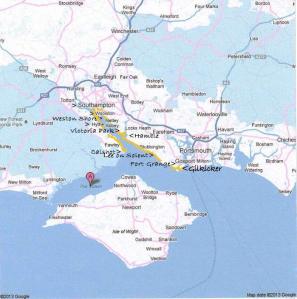
Solent map googleCalshot

My tour of the Solent area, which began just after Christmas, is timed perfectly to reach Calshot Spit at about the beginning of March because 100 years ago, in March 1913, RNAS Calshot was first opened as a naval air station to launch and service flying boats before and during the First World War.

It was also from Calshot, nearly two decades later in 1931, that the sea plane S.6B was launched, and was the outright winner of the Schneider Trophy. 

Another interesting fact, announced by a plaque on a mess wall, was that Lawrence of Arabia was stationed there once too.

(as was my Dad just after the end of the Second World War, and he flew in the Sunderland expeditions to Germany, but there is no plaque for my Dad unfortunately!)

Quite a different aircraft entirely, the Sunderland.

So, arriving at Calshot Spit today, a short journey from Hythe on my virtual tour, we can find the amazing old flying boat hangers still put to good use but as an activity centre. The whole area is a wonderful place for all ages to enjoy instruction and experience in a variety of sports including sailing and wind surfing, but there’s an indoor cycle track and ‘rock climbing wall’ too.

Many information boards in the main hanger tell the history of the site and you can also relax in the Spinnaker Bar and watch the sailing, at what feels like just a stones throw from the coast of the Isle of Wight. Alternatively you can stroll up to Calshot Castle, one of Henry VIII forts, guarding the Solent and the entrance to Southampton Water. Standing there admiring the views it’s not hard to imagine all those famous moments in history with the excitement of sea plane launches and the huge flying boats.

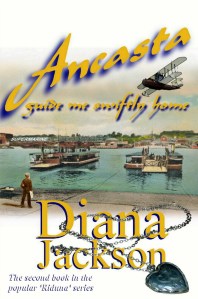
One of my characters in Ancasta ~ Guide me Swiftly Home was stationed at Calshot before he joined up in 1914 and served on an early sea plane carrier out in Turkey.

You can watch an episode of Inside Out on the amazing events at Calshot beginning in March 1913 and on through to just after the end of WW2 in 1948!

(available for another few days only on BBC i player)
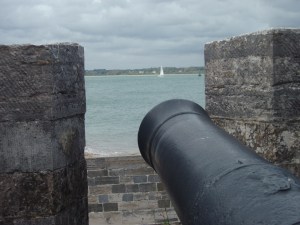
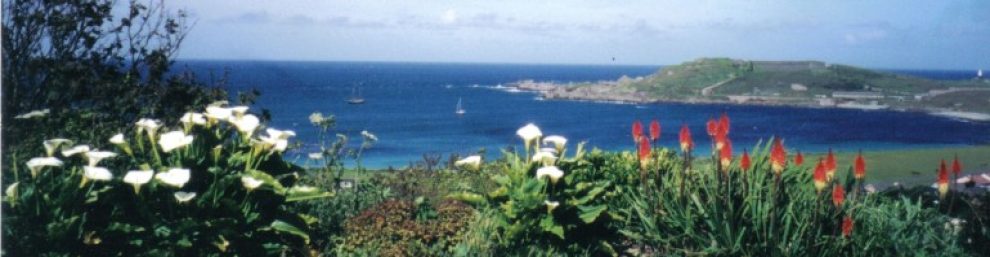
View from Calshot Castle

View from Calshot Castle

This is the first of three centenaries celebrated in my novel

and concludes my tour of the Solent area. The next post goes Beyond the Solent!
Leave a comment

Filed under Ancasta, Early Flight, Flying Boats and Sea Planes, Schneider Trophy, Virtual Tour of the Solent and Beyond, WW1

The Solent and beyond ~ A Virtual History Tour Post No 3 ~ Lee on Solent. Seaplanes, hovercraft and helicopters!

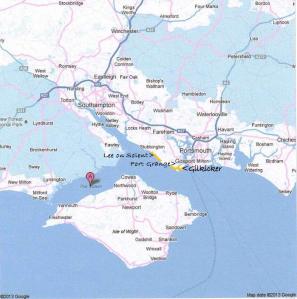
Solent map googleLee

On my virtual historical tour of the Solent we will continue heading north west, but will pause a while at Lee on Solent. This is an unscheduled stop because Lee on Solent does not in fact feature in my novel ‘Ancasta ~ Guide me Swiftly Home,’ but the bay certainly has important history and my parents lived at Stubbington, the far end of the bay for a few years and so I know it quite well.

Lee on Solent was key in World War one as a strategic sea plane and training base from July 1917 for the RNAS, using both Shorts and Fairy Aviation planes, although sea plane trials had been made from the beach since 1915.

In 1939 it became the more familiar HMS Deadalus,(although its names changed a couple more times before reverting back to HMS Deadalus again a few years before it was closed) and remained a naval base and barracks until 2005 when the large expanse of land, airfield and buildings were sold for redevelopment. For anyone interested in the base, here are a couple of video links on Youtube:

Mast Manning Display in 1993 Hey look at that. Formation Display on a mast!

HMS Deadalus Closure in 2005 A nostalgic tour of the barracks!

The uses of the base have been varied and interesting starting with seaplanes in 1917 but later it was important for military hovercraft development and testing, and finally the base was best known for its coastguard and helicopter rescue missions. Life was never dull living in the area for the last 100 years, and a walk along the sea front would have its exciting moments and photographic opportunities as well as a sea front to relax and enjoy the views across the Solent to The Isle of Wight.

The Fleet air arm archives inform us that back in 2001 the airfield was still used for air sea rescue, but also for a Catalina restoration company and the Hovercraft Museum Trust. (Having enjoyed watching the Duxford Catalina fly – an amazingly whilte and graceful 1930’s flying boat, on a couple of occasions I was excited to research this link but records show that, oncce restored, this Catalina in Lee was due to be ferried to the USA and its new owner. Anyone know any more?)

I am pleases to say that the Hovercraft Museum still exists but visiting is by appointment only. This link will take you to the website for more information:

The Hovercraft Museum Lee on Solent

The museum claims to be the only one of its kind in the world!

Although Lee on Solent did not feature in Ancasta~Guide me Swiftly Home, I am planning for it to be a location in the third in the Riduna series, for which I am currently researching. Watch this spece!

Leave a comment

Filed under Early Flight, Flying Boats and Sea Planes, Research, Virtual Tour of the Solent and Beyond

Historical Fiction ~ Historical Research

There is always a great deal of controversy between the purists  who research history for its own sake, and those, like myself, who try to popularise it to make it accessible to a wider audience by turning it into fiction. I must admit to taking the research far more methodically for my second novel ‘Ancasta ~ Guide me Swiftly Home’ than I did for ‘Riduna.’

For Ancasta, the research gave me the framework on which to weave the story. The fictional lives of my characters were ‘living history,’ and each key event was seen though their eyes. I included some real characters in the novel too, but the majority were my own creation. I knew my characters, but as history enfolded through my research, so did the direction of their lives change.

I will give you an example of one of my characters, Tom, Harriet’s quiet son, who from a very early age helped out in a local bicycle shop, eventually working there when he left school, unlike his more exuberant brother Jack who became an engineer in White’s Shipyard. When WW1 broke out Tom joined up and it seemed natural that he should join the 9th Cyclists Battalion. (I found this on the internet with little more information) I could have guessed that he would have become a cyclist messenger on the Western Front, in fact this is what I had written in my rough plan. Or later, when I had studied more about WW1, that he could have been involved in combat on the back of his trusty bicycle! Yes, I found that hard to believe too.  I would have dreaded writing that scene, but as it happens he did none of those things. You see, I turned to the Hampshire Regiment Museum for support here and they sent me a detailed account of the 9th Regiment. The regiment did not, as it happens, go anywhere near France, but all the way to India. Since this was quite a difficult chapter for me to write I asked if the curator of the museum if he would mind checking the chapter for me, and Colonel Bullied was more than happy to do so. In fact I was overwhelmed by everyone’s willingness to help.

My point here is that my chapter was purely fiction, from the point of view of the character, but the story I told was plausible, and actually told a snippet of history that very few people knew. Surely, if readers take away from a novel a nugget of truth, they will have a greater awareness of history.

Riduna, on the other hand was a story, already in my head, a love story, through which I weaved moments in history. I tried to be as authentic as possible as to the social history, but there is so little written on Alderney of that period, certainly that has survived, that my story was in fact the framework rather than the historical period. What references I did find referring to the Channel Islands in Victorian times, I read avidly and my research certainly coloured my novel but not the other way around.

With documentaries and the internet you could argue that there is no need for this frivolous adaptation of history. Nevertheless, there is still a huge readership for historical fiction, and through my experience with my research for Ancasta, experts in their own field are more than willing to be involved and support the author to try to get their facts as accurate as possible, and even more than happy to give suggestions along the way.

An example of this was when I was discussing how my ordinary folk would hear the rumours that the boatyard in Woolston may be used by Pemberton Billing to make the new and exciting flying boats.

‘Why not get them to overhear gossip in the local pub!’ a helpful historian suggested.

Funnily enough I was even in that very pub (or at least its replacement, the original having been bombed in WW2!) the Yacht Tavern in Woolston!

I am grateful to so many people who have given me much encouragement throughout my research.

What do you think?

Leave a comment

Filed under Ancasta, Flying Boats and Sea Planes, Historical Fiction, Planning a novel, Research, Writing a novel